Hello!
In our last lesson, we chronicled the dramatic final year of Alexander’s life, from the harrowing march through the Gedrosian Desert to his mysterious death in Babylon. His premature end left a vast, conquered world without a master and a legacy that has been debated for millennia.
Now that we have followed his entire journey from Macedonia to India and back, it is time to look beyond the events and analyze the man at their center. This lesson addresses one of the most compelling questions in ancient history: Who was Alexander? Our goal is to analyze Alexander's complex character, blending military brilliance with tyranny and megalomania. We will piece together the contradictory evidence to understand how one person could be a visionary leader, a tactical genius, a ruthless tyrant, and a man who believed he was a god, all at the same time.
Part 1: The Brilliant Commander
We have seen Alexander's military genius in action time and time again. At battles like Issus and Gaugamela, he demonstrated an almost supernatural ability to read the battlefield, using audacious tactics and combined arms with devastating effect. He was not a distant general; he led his Companion Cavalry from the front, sharing the risks of his men and earning their fierce devotion.

This brilliance and charisma are undeniable. But as his conquests grew, so too did the darker aspects of his personality. To understand this shift, it's helpful to look at an analytical model.
The following video from the "Predictive History" channel proposes a "father-son dynamic" to interpret the relationship between Philip II and Alexander. It argues that this dynamic can be used to predict three core characteristics of Alexander's reign.
Civilization #12: The Tyranny of Alexander the Great
Let's watch the introduction to the video 'Civilization #12: The Tyranny of Alexander the Great'. It lays out an interesting model for understanding Alexander's motivations, predicting that he would be defined by aggressive expansion, a turn towards tyranny, and boundless ambition.
Watch the first 7 minutes of the video (00:00 - 07:10). Focus on the three predictions the presenter makes about Alexander based on his 'son' role in the father-son dynamic.
This model gives us a framework:
- Aggressive Expansion: Taking risks his more cautious father would not.
- Tyranny: Demanding total obedience and eliminating perceived threats.
- Boundless Ambition: A relentless drive for personal glory that could never be satisfied.
Let's see how well these predictions hold up against the historical record.
Part 2: The Emergence of the Tyrant
From the very beginning of his reign, Alexander showed a capacity for extreme ruthlessness to secure his power. Following his father's assassination, he moved swiftly to crush any potential rebellions in Greece.
His treatment of Thebes, a great and ancient city that dared to defy him, was a brutal message to the rest of the Greek world.
The Greatest General in History? Alexander the Great (All Parts)
This short clip from Epic History's documentary 'The Greatest General in History?' concisely describes Alexander's violent consolidation of power.
Watch from 05:15 to 05:44. Notice how this action goes far beyond simple military victory.
This was just the beginning. As the "father-son" model suggests, Alexander, insecure in the shadow of his father's achievements, grew increasingly paranoid and hostile towards the very men who had helped build Philip's—and now his—empire. This paranoia led to some of his darkest acts: the political executions of men who had been loyal for decades.
The "Predictive History" video details two of the most infamous examples: the deaths of Parmenion, Philip's most trusted general, and Cleitus the Black, the man who saved Alexander's life at the Battle of the Granicus.
Civilization #12: The Tyranny of Alexander the Great
This next segment delves into the deaths of Parmenion and Cleitus. It explores the context of growing discontent in the army and Alexander's violent reactions to any challenge, real or perceived.
Please watch from 35:14 to 43:06. Pay attention to how Alexander's jealousy and rage lead him to kill two of his most important commanders.
These events were not isolated incidents. They represent a clear pattern of behavior where loyalty was replaced by fear, and dissent was treated as treason.
For a more formal analysis of this aspect of his character, let's turn to a scholarly article.
Alexander the Great Personality: A Multifaceted ...
The article 'Alexander the Great Personality' from The Archaeologist provides a structured breakdown of his character traits. The chapter on his darker side gives a good summary of this tyrannical behavior.
Please read 'Chapter 5: Ruthlessness and Fiery Temper'. This section directly confronts the acts of brutality and vindictiveness that define the tyrannical aspect of his personality.
Part 3: The Reach for Godhood - Megalomania
Hand-in-hand with Alexander's tyranny was his growing megalomania—an obsession with his own power and a belief in his divine destiny. This wasn't just simple arrogance; Alexander seemed to genuinely believe he was transcending his mortal status.
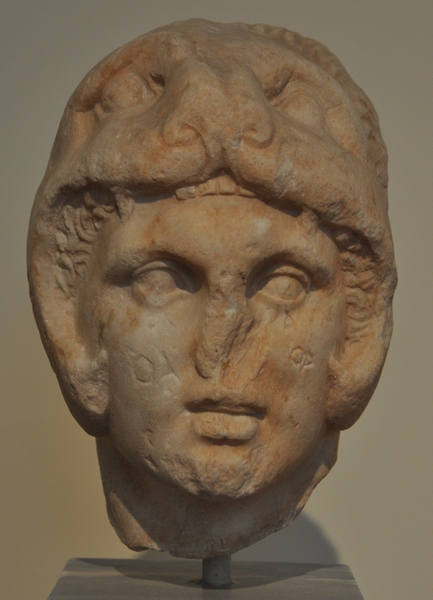
This belief was cemented during his time in Egypt. The following clip describes his journey to the Oracle of Zeus-Ammon at the Siwa Oasis and the "revelation" about his parentage.
Civilization #12: The Tyranny of Alexander the Great
Let's return to the 'Predictive History' video to see how Alexander's visit to Egypt fueled his divine ambitions.
Watch from 32:16 to 35:14. This segment covers his visit to the Temple of Zeus-Ammon and his subsequent demand that his soldiers treat him as a god.
Now believing himself to be the son of a god, Alexander began adopting the customs of the conquered Persian kings. He introduced the practice of proskynesis—forcing visitors to prostrate themselves before him. To his Macedonian and Greek soldiers, who believed only gods were worthy of such veneration, this was blasphemy. It created a deep rift between Alexander and his men, who saw their king turning into an Eastern despot.
This divine self-image also fed his boundless ambition. The Greeks had a word for this: pothos, a passionate, insatiable yearning. For Alexander, it was a yearning for glory, for conquest, for the ends of the earth. It's why he refused a generous peace offer from Darius III that would have given him half the Persian Empire—he had to have it all. This same pothos drove him to invade India for no strategic reason and, as we saw in the last lesson, led to the mutiny at the Hyphasis River when his exhausted men could go no further.
Test your understanding!
Both Alexander's tyranny (killing Cleitus, executing Parmenion) and his megalomania (demanding proskynesis, claiming divinity) alienated his Macedonian veterans. Which of these two traits do you think was more damaging to his relationship with his own people, and why?
Show answer
There's a strong case to be made for either, but his megalomania was arguably more fundamentally damaging to his relationship with his Macedonians. While his tyranny was terrifying and created fear, it was often directed at specific individuals he perceived as threats. His megalomania, particularly the demand for proskynesis, was an affront to their entire cultural and religious identity. For a Greek, prostrating yourself before a mortal man, even a king, was an act of sacrilege and a symbol of slavery, the very thing they believed they were fighting against. It forced every soldier and officer to choose between their king and their core beliefs, creating a deep and widespread cultural crisis within the army that individual acts of cruelty, however horrific, did not.
Part 4: A Complex and Contradictory Portrait
So far, we have painted a dark picture of a brilliant man who descended into tyranny. But this is too simple. Alexander's character was a labyrinth of contradictions. The same man who could murder a friend in a drunken rage could also show incredible compassion and generosity.
To get a more balanced view, it's essential to look at the accounts of ancient historians who also grappled with these contradictions.
Alexander the Great's Character
The webpage 'Alexander the Great's Character' from Facts and Details compiles passages from ancient writers like Plutarch and Arrian, as well as modern historians. It presents a more nuanced view, highlighting his virtues alongside his flaws.
Please read the following sections from the article: Start at 'Arrian on Alexander the Great's Character' and read to the end of that section. Note Arrian's argument that Alexander often repented his errors. Read the section that begins with 'Describing Alexander after his army looted the Persian treasury, Plutarch wrote...' It's full of anecdotes about his incredible generosity. Read the section 'Alexander’s Acts of Kindness and Friendship'. This shows a side of him that was deeply concerned with his friends' well-being.
As these passages show, Alexander was capable of profound kindness, loyalty, and munificence. He shared his wealth freely, wrote letters of concern to sick friends, and felt deep remorse for his outbursts. He was also a man of immense intellectual curiosity, a student of Aristotle who brought scientists and philosophers with him on his campaigns.
This doesn't excuse his cruelty, but it complicates the picture. His virtues were as extreme as his vices. His capacity for love and friendship was as great as his capacity for rage and paranoia. He was not a good man who became evil, but a man in whom these opposing forces were constantly at war.
Conclusion
So, who was Alexander the Great? He was, as the historical evidence shows, all of it at once.
- A Military Genius: His tactical brilliance and leadership from the front are legendary and beyond dispute.
- A Tyrant: He became increasingly paranoid, demanding absolute obedience and ruthlessly eliminating anyone he perceived as a threat, including old friends and loyal generals.
- A Megalomaniac: Driven by pothos, he saw himself as a demigod destined to conquer the world, a belief that alienated his own people and knew no limits.
- A Charismatic and Generous Friend: He was also capable of immense kindness, generosity, and loyalty, inspiring a level of devotion few leaders in history have ever matched.
He was not one thing or the other; he was a man of radical extremes. Perhaps the most fitting summary comes from the historian Arrian, who, after listing Alexander's flaws, concluded he was still without equal. Understanding this complexity is the key to understanding Alexander's enduring fascination. He embodies both the greatest heights of human achievement and the most dangerous depths of unchecked power.
Preview of the Next Lesson:
Having analyzed the man, we will, in our final lesson, turn to his work. What was the immediate impact of his life and conquests on the world he left behind? We will assess his monumental legacy, which was as chaotic, brilliant, and transformative as the man himself.