Hello! Welcome to the next lesson in your AI video creation journey.
In our last session, we focused on the proactive strategies for achieving consistency, creating "Character DNA" documents, using anchor images, and building scenes sequentially. You now have the essential toolkit to prevent many common issues before they start.
Today, we're adding a crucial quality assurance step to your workflow. The learning outcome for this lesson is to review a multi-scene draft to check for plot holes, pacing issues, and continuity errors. Think of this as the final architectural review of your blueprint before you start the expensive and time-consuming process of generating footage. Catching problems now will save you hours of frustration later.
The Reviewer's Mindset: Gaining Objective Distance
The single most challenging part of reviewing your own work is that you are too close to it. You know what's supposed to happen, so your brain automatically fills in the gaps. To be an effective editor of your own ideas, you first need to gain some distance.
Better Editing Pacing: Keep It Interesting
Filmmaker Brandon Li shares a piece of advice that is absolutely critical for any creative review process. It's tough but incredibly effective.
Please watch the section from 03:36 to 04:36. Focus on the core recommendation and the reason why it's so important for seeing your work objectively.
The key takeaway is simple but powerful: step away from your draft for at least 24 hours. When you come back to your outline, you'll be able to see it more like a first-time viewer would, making it much easier to spot the three types of problems we're looking for:
- Plot Holes: Logical gaps or contradictions.
- Pacing Issues: The story feels too rushed, too slow, or lacks rhythm.
- Continuity Errors: Inconsistencies in visual details.
Let's tackle each of these systematically.
Part 1: Hunting for Plot Holes with the "Therefore" Test
A plot hole occurs when the chain of cause and effect is broken. A character acts without motivation, an event happens for no reason, or a resolution appears out of nowhere. The best way to find these is to ensure every key moment in your story is a direct consequence of the moment before it.
A fantastic mental tool for this is the "Therefore" or "Because of this..." test.
How To Write Any Story - Why Pacing Is Everything
The YouTube channel The Second Story offers an incredibly practical method for ensuring your plot is logically sound. It's a simple trick that forces you to connect the dots in your narrative.
Please watch from 21:03 to 23:26. Pay close attention to how the narrator connects story arcs using the words 'therefore' and 'because of this'.
To apply this to your multi-scene outline, read through it scene by scene and place the word "therefore" between each one.
- Scene 1: A spaceship pilot discovers her navigation system is offline.
- Therefore...
- Scene 2: She is forced to land on a mysterious, uncharted planet.
- Therefore...
- Scene 3: She must explore the strange alien jungle to find resources to repair her ship.
If the "therefore" connection feels weak or nonsensical, you've likely found a plot hole or a missing beat. You might need to add a bridging scene or rethink the character's motivation. This simple exercise ensures your story flows with unstoppable logic.
Test your understanding!
Consider this three-scene outline:
- A baker is stressed because he's run out of a rare flower needed for his prize-winning cake.
- The baker wins the baking competition.
- The baker confronts his rival, who is holding a bouquet of the rare flowers.
Where does the "Therefore" test fail, and what's the plot hole?
Show answer
The test fails between Scene 1 and Scene 2.
- Scene 1: The baker is out of a key ingredient.
- Therefore...
- Scene 2: He wins the competition.
This doesn't make sense. The plot hole is: how did he win if he didn't have the ingredient? The story is missing a scene where he either finds a substitute, finds a new source for the flower, or perhaps even fails at the competition, which then motivates his confrontation in Scene 3. The current sequence lacks logical cause and effect.
Part 2: Analyzing Pacing and Rhythm
Pacing is the rhythm of your story—the flow of tension and release that keeps the audience engaged. A story with poor pacing might feel like it drags on in some parts and rushes through important moments in others.
In the video you just watched, the narrator also introduced a powerful concept for managing pacing: the mini-arc. Every scene, or small group of scenes, should have its own small-scale setup, conflict, and resolution that builds toward the story's main climax.
When you review your draft, look at each scene and ask:
- What is the "mini-arc" of this scene?
- Does this scene build tension, or does it release it?
- Is the length I've planned for this scene appropriate for its function? (e.g., a quick action beat vs. a slower emotional moment).
Multi-Scene Sequences with Sora 2: Continuity & Narrative ...
The article 'Multi-Scene Sequences with Sora 2' provides a helpful breakdown of how to balance scene and shot durations to control the overall rhythm.
Please read the section titled 'Narrative Pacing and Rhythm'. Focus on the concepts of 'Scene Duration Balance' and 'Building and Releasing Tension'.
By thinking of your story not as one giant arc, but as a series of connected mini-arcs, you can better control the narrative flow. If your outline feels like it's dragging in the middle, it may be because a scene doesn't have a clear mini-arc or purpose. If the ending feels unearned, it might be because the preceding mini-arcs didn't build enough tension.
Part 3: A Checklist for Continuity Errors
Continuity errors are mismatches in visual details from one shot to the next. In traditional film, this might be a prop that disappears or a costume that changes inexplicably.
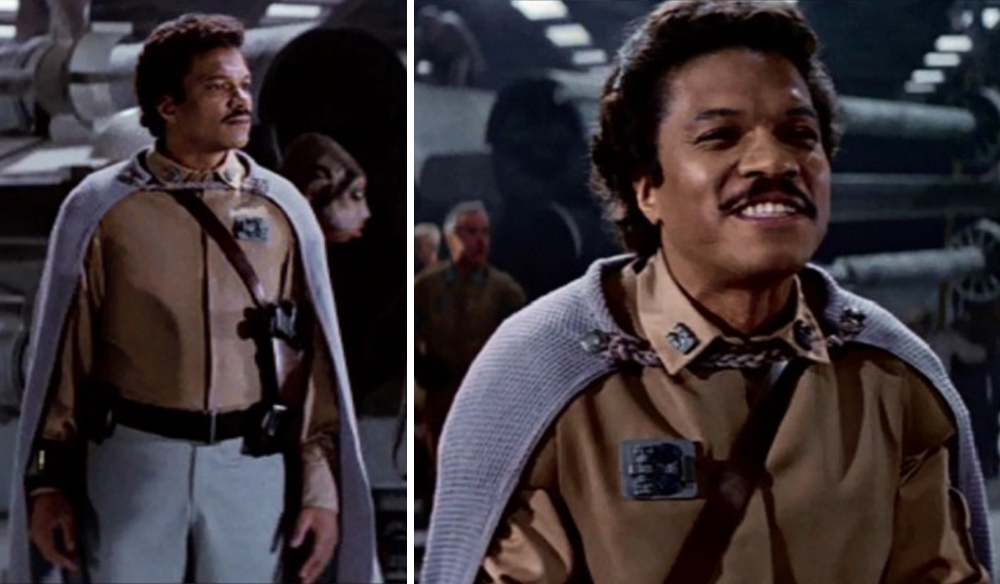
With AI video, you aren't just at risk of losing a detail; the AI might actively change it. A character's hairstyle might shift, the lighting might change illogically, or the layout of a room might alter between shots.
Based on your work in the previous lesson, your draft review should involve checking your plan against your "Character DNA" document and shot list. For a person with your consulting background, a structured checklist is often the most effective tool.
Continuity Review Checklist:
Go through your shot list or outline and ask these questions for every scene transition:
1. Character Continuity:
- Does my plan rely on the character looking identical to the previous shot?
- Have I noted any intentional changes (e.g., putting on a hat, getting a scar)?
- Action: Confirm your anchor image and structured "Identity Block" prompt are ready for this sequence.
2. Wardrobe Continuity:
- Is the character wearing the exact same outfit as the last shot in this scene?
- If the scene changes, is there a logical reason for a wardrobe change (e.g., time has passed)?
- Action: Add specific wardrobe notes to your shot list (e.g., "Scene 2 Wardrobe: Same as Scene 1 but now with a coffee stain on the shirt").
3. Environmental Continuity:
- Are props and furniture in the correct place?
- Is the weather and time-of-day consistent?
- Action: Use a consistent "Environment" description in your prompts for all shots in the same location. Note any changes, like "the room is now messy after the fight."
4. Technical Continuity:
- Will the camera style, color palette, and lighting style remain consistent?
- Action: Ensure your style prompts (e.g., "cinematic 35mm film look," "warm earth-tone color palette") are applied uniformly.
The article "Multi-Scene Sequences with Sora 2" has an excellent list of common mistakes that you can use to prime your thinking. Reviewing the section "Common Multi-Scene Mistakes and Solutions" (sections 8 and 9) will give you a clear idea of what to hunt for.
Conclusion
By taking the time to review your multi-scene draft with a critical and objective eye, you transform your role from just a creator to a director and editor. This crucial step ensures that the story you've outlined is logical, engaging, and visually coherent before you invest significant time in generation.
Key Takeaways:
- Review with Fresh Eyes: Always take a break from your draft to gain objectivity before reviewing it.
- Check for Logic with the "Therefore" Test: Ensure every scene is a clear consequence of the one before it to eliminate plot holes.
- Analyze Pacing through Mini-Arcs: Check that your scenes have a purpose and contribute to the overall rhythm of tension and release.
- Use a Systematic Checklist for Continuity: Proactively check your plan for potential errors in character, wardrobe, and environment to ensure a seamless visual experience.
Preview of the Next Module:
This lesson concludes our module on "Scaling the Narrative." You now have all the strategic tools needed to plan a longer video. You're ready for the final challenge: The Capstone Project. In the next module, you will plan and execute a complete 3-5 minute narrative video project, bringing together everything you have learned about story structure, visual consistency, and the review process.