Ciao! Welcome back.
In our last lesson, you learned to combine verbs with days of the week and time expressions to talk about your plans, creating sentences like Sabato vado al cinema (On Saturday, I'm going to the cinema). This was a big step in being able to talk about your life in Italian.
Today, we're going to make your language even more social and interactive. This lesson focuses on turning those statements into questions, so you can suggest activities and invite others to join you. We'll move from "I'm going..." to "Do you want to go...?" This is a core skill for achieving your goal of having casual conversations and socializing while traveling.
1. The Two Main Ways to Suggest an Activity
Let's start by looking at a natural conversation. Your preference for seeing phrases in action first will be very helpful here.
Che ne dici di: Meet up with your friends in ITALIAN
The article 'Che ne dici di: Meet up with your friends in ITALIAN' from italiano-bello.com begins with a great, simple dialogue. Read it to see how an invitation is made and negotiated.
Read the short dialogue under the heading 'Dialogo: Ti va di venire?'. Notice the phrases used to make the initial suggestion and the counter-proposal.
As you saw in the dialogue, two phrases are extremely common for making informal invitations:
- Che ne dici di...? (What do you say about... / How about...?)
- Ti va di...? (Do you feel like... / Do you want to...?)
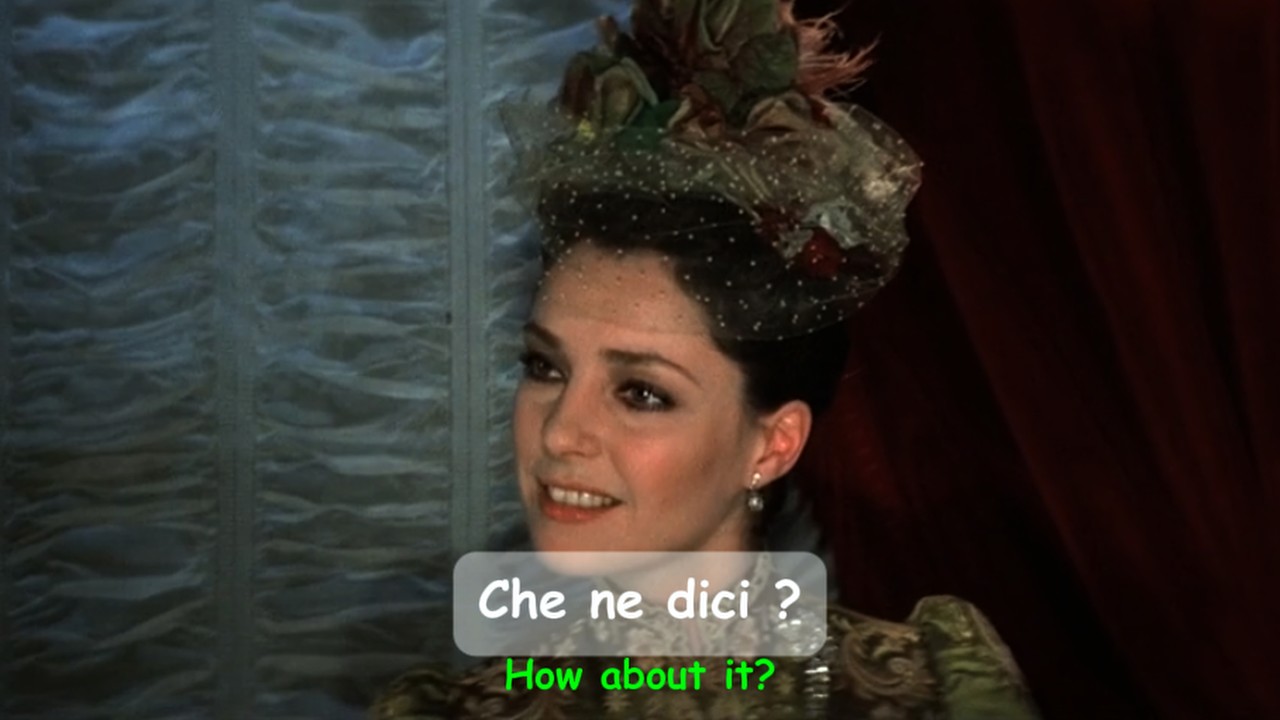
These expressions are the workhorses of Italian invitations. Let's look at their structure, which your programming background might appreciate for its logical consistency.
Both phrases are typically followed by either an infinitive verb (e.g., andare, mangiare) or a noun.
-
With a verb:
Che ne dici di **andare** al cinema?(How about going to the cinema?)Ti va di **prendere** un caffè?(Do you want to get a coffee?)
-
With a noun:
Che ne dici di **una pizza**?(How about a pizza?)Ti va **un caffè**?(Do you want a coffee?)- Notice that with a noun,
Ti vadoes not usedi.
Now, let's hear these phrases in action to get the pronunciation and rhythm right.
27. Learn Italian Elementary (A2)- Espressioni per invitare, accettare e rifiutare un invito
The video 'Learn Italian Elementary (A2) - Expressions for inviting...' by Passione Italiana provides excellent, clear examples of these key phrases.
Watch from 00:39 to 02:19. The presenter, Marta, will explain and give examples for 'Ti va di...' and 'Che ne dici di...'. Pay attention to her pronunciation.
2. Other Common Invitation Phrases
While the first two phrases will get you very far, Italians use a few other common expressions to invite people.
The Simple Andiamo...?
In the last lesson, you learned to use the noi (we) form of andare to state a plan: Andiamo al mare (We are going to the sea). You can turn this into a simple, direct suggestion just by changing your intonation to make it a question:
Andiamo al cinema stasera?(Shall we go to the cinema tonight?)Prendiamo una pizza?(Shall we get a pizza?)
Hai voglia di...?
This is very similar to Ti va di... and literally means "Do you have the desire to...?". It follows the same grammatical pattern.
Hai voglia di fare una passeggiata?(Do you feel like going for a walk?)Hai voglia di un gelato?(Do you feel like an ice cream?)
Test your understanding!
You want to invite a friend to go to a concert with you this evening (stasera). Using the phrases you've just learned, how could you ask them? Try to come up with at least two different ways.
(Hint: "to go to the concert" is andare al concerto)
Show answer
Here are a few possibilities:
Ti va di andare al concerto stasera?Che ne dici di andare al concerto stasera?Hai voglia di andare al concerto stasera?Andiamo al concerto stasera?
3. Being Polite: Formal vs. Informal Invitations
Just as you learned with greetings (ciao vs. buongiorno) and "how are you" (come stai? vs. come sta?), invitations also change depending on whether you are speaking to a friend (tu) or someone you need to show respect to, like a professor or an older person (Lei).
Your experience with formal systems in logic and computer science can be applied here. The change is systematic: you simply switch from the second-person singular (tu) to the third-person formal (Lei).
This next resource lays out the differences very clearly.
How to invite accept or decline an invitation in Italian
The article 'How to invite accept or decline an invitation in Italian' from Easitalian gives a straightforward comparison of informal and formal phrases.
Read the sections 'INFORMAL (with TU)' and 'FORMAL (with LEI)'. Pay close attention to how the verbs and pronouns change.
Here is a summary of the transformations:
Informal (tu) |
Formal (Lei) |
English Translation |
|---|---|---|
Ti va di...? |
Le va di...? |
Do you want to...? |
Che ne dici di...? |
Che ne dice di...? |
How about...? |
Hai voglia di...? |
Ha voglia di...? |
Do you feel like...? |
Vuoi venire? |
Vuole venire? |
Do you want to come? |
Knowing this distinction is key to navigating social situations politely and effectively in Italy.
4. Practice Makes Perfect
Now it's time to put your knowledge to the test. The Passione Italiana video has a great interactive section at the end.
27. Learn Italian Elementary (A2)- Espressioni per invitare, accettare e rifiutare un invito
Let's return to the 'Passione Italiana' video for some practice.
Watch the section 'Tocca a te' starting at 05:48. For each exercise, pause the video and try to choose the correct answer before Marta reveals it. This is a great way to check your understanding.
Final Challenge!
You meet your university professor, Signora Conti, at a café. You want to politely suggest having a coffee together. How would you ask her?
Show answer
Since this is a formal situation, you need to use the Lei form. Any of these would be appropriate:
Buongiorno Signora Conti. Le va di prendere un caffè insieme?Buongiorno Signora Conti. Che ne dice di prendere un caffè?
Conclusion
Ottimo lavoro! (Great work!) You now have the essential phrases to suggest activities and invite people to join you, a fundamental skill for making friends and socializing.
Key Takeaways:
- You can make informal invitations using phrases like
Ti va di...?,Che ne dici di...?, andAndiamo...?. - You understand the grammatical pattern: these phrases are followed by an infinitive verb or a noun.
- You know how to adapt these invitations for formal situations by using the
Leiform (e.g.,Le va di...?,Che ne dice di...?).
In our next lesson, we will cover the other side of this interaction: how to accept and decline invitations politely. After all, once you've asked Andiamo al cinema?, you'll need to understand if the answer is "Yes, great idea!" or "Sorry, I can't."
A presto