Hello! Let's dive into our second lesson on "learning how to learn" Spanish.
In our last session, we focused on when to review vocabulary by applying spaced repetition principles. You learned how an SRS like Anki can automate your review schedule to build strong, long-term memories.
Today, we'll address the other side of the coin: how to make new words memorable from the very first encounter. Our goal is to use mnemonic techniques to create memorable associations for Spanish words. This is a powerful method for "encoding" information into your brain more effectively, which will make your initial SRS reviews much easier and accelerate your learning.
Why We Need More Than Rote Memorization
Simply repeating a word and its translation over and over is incredibly inefficient. It's like trying to remember a random string of numbers. To make new vocabulary stick, we need to connect it to something our brain can latch onto—a sound, an image, or a story. This process is called encoding.
A well-encoded memory is easier to retrieve later. The following video introduces this idea and explains why interacting with a word is crucial for learning.
The 2 things you need to memorize & remember Spanish vocabulary
The video 'The 2 things you need to memorize & remember Spanish vocabulary' from the Breakthrough Spanish channel explains why simple repetition fails and introduces the concept of encoding.
Please watch from the beginning to 03:12. Pay close attention to the distinction between rote learning and 'encoding,' where you actively look for familiar clues or connections within a new word.
As the video explains, effective learning requires you to be an "investigator." You need to find a personal connection to the word. One of the most systematic ways to do this is a mnemonic strategy called the Keyword Method.
The Keyword Method: A Practical Guide
The Keyword Method is a technique for creating a strong, memorable link between a new word's sound and its meaning. It generally involves three steps. Let's watch a short video that walks through the process with clear examples.
The Babbel video 'The Keyword Method' provides a fantastic step-by-step guide to this technique.
Watch from 00:49 to 02:37. Focus on the three main steps: Pick a 'keyword' in English that sounds similar to the Spanish word. Connect the keyword and the meaning with a vivid image or sentence. Actively use the connection (draw it, say it, write it).
To summarize the process:
- Find the Keyword: Listen to the Spanish word and think of an English word (or phrase) that sounds similar. For the Spanish word
perro(dog), the keyword could be "pear." - Create an Interactive Image: Form a mental picture where the keyword and the meaning interact. Don't just picture a pear next to a dog. Picture a dog balancing a pear on its head. The more unusual or absurd the image, the more memorable it will be.
- Reinforce the Link: Briefly write down the sentence or even sketch the image. Saying "The dog has a pear on its head" out loud solidifies the link.
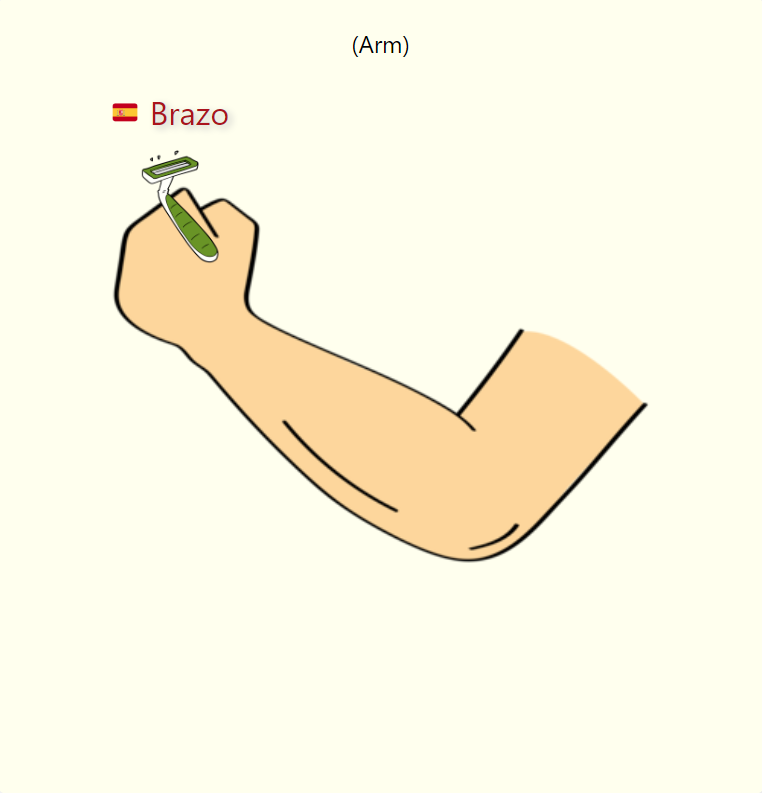
Here are a couple of visual examples of this technique:

What Makes a Mnemonic Effective?
Not all mnemonics are created equal. As you create your own, keep these three principles in mind to ensure they work well.
3 Step To Improve Your Memory With Mnemonics
The article '3 Step To Improve Your Memory With Mnemonics' from Real Fast Spanish outlines what makes a mnemonic truly effective.
Please read the section titled 'Choosing An Effective Mnemonic'. Focus on the three numbered points about making the mnemonic memorable, visual, and tied to the word's meaning.
The key takeaways from the article are:
- Make it more memorable than the information itself: The connection should be vivid, outrageous, funny, or even a bit shocking. Our brains are wired to remember novelty.
- Make it visual: We are far better at remembering images than abstract concepts. Always try to create a mental picture.
- Tie it back to the meaning: The image shouldn't just link to the keyword; it must also incorporate the word's actual meaning.
Let's try creating a few for words you might hear at a wedding:
-
Spanish word:
la boda(the wedding) -
Keyword: "bodega"
-
Mnemonic Image: A bride and groom are having their wedding (
la boda) in a tiny corner store (bodega), with guests sitting on crates of soda. -
Spanish word:
el vestido(the dress) -
Keyword: "vest"
-
Mnemonic Image: The bride is wearing a beautiful, long dress (
el vestido) that is surprisingly made out of a tiny man's vest.
Test your understanding!
Let's say you want to remember the Spanish word for "to dance," which is bailar. Try to create a mnemonic for it using the keyword method. What keyword and mental image would you use?
Show answer
There's no single right answer, as the best mnemonics are personal! But here's one possible approach:
- Spanish word:
bailar(to dance) - Keyword: "buy lard"
- Mnemonic Image: Imagine someone shouting, "I have to buy lard to grease the floor so I can dance (
bailar) properly!" The absurdity of greasing a dance floor with lard makes it memorable.
What About Abstract Words?
The keyword method is straightforward for concrete nouns like perro or vestido. But what about verbs, adjectives, or abstract words like "this," "who," or "to think"?
For these, instead of a static image, you create a visual scenario that demonstrates the word's meaning.
The Mnemonic Keyword Method – My Wildcard for Foreign Language Learning
The article 'The Mnemonic Keyword Method' has a fantastic answer to this exact question in its comment section.
Please find the first comment by 'Lewis' who asks about words like 'this, that, who, what, when'. Read the author's detailed reply, which explains how to encode meaning through a scenario.
As the author explains, you can represent an abstract concept through an action or situation.
Let's take the verb pensar (to think).
- Keyword: "pen"
- Mnemonic Scenario: Imagine a statue of "The Thinker," but instead of resting his chin on his hand, he is tapping a giant pen against his forehead to help him think (
pensar). The action of tapping the pen represents the act of thinking.
This technique is a "wildcard" or a special tool. You don't need to create a mnemonic for every single word. Many words will stick on their own. But for those "tough nuts" that you keep forgetting in your SRS reviews, investing a minute to create a mnemonic is incredibly effective.
Conclusion
You now have a powerful two-part system for learning vocabulary. When you encounter a new word, you can first use a mnemonic to encode it, and then use your SRS app to schedule its review. The mnemonic helps you get the answer right, especially during the crucial first few reviews.
Key Takeaways:
- Mnemonics are memory aids that create strong, memorable connections for new information.
- The Keyword Method is a powerful mnemonic technique: find an English word that sounds like the Spanish word and create a vivid, interactive mental image linking the two.
- The most effective mnemonics are visual, absurd, and personal.
- For abstract words, create a scenario or action instead of a static image.
- Use mnemonics selectively for words you find difficult to remember.
Preview of the Next Lesson:
We've now covered two powerful techniques for how to learn and remember vocabulary. But with thousands of words in Spanish, what should you learn first? In our next lesson, we will focus on identifying and practicing high-frequency words to ensure that every word you learn gives you the maximum possible conversational ability.