Hello! Welcome to the second module of your course, Social Media Marketing Foundations.
In our last lesson, we wrapped up the first module by exploring the "how" of reaching your audience, differentiating between organic and paid marketing strategies. We established that the most powerful approach combines the long-term trust-building of organic content with the targeted, fast-acting reach of paid ads.
Now, we shift our focus from "how" to "where." This lesson addresses the learning outcome: Compare the characteristics and primary audiences of major social media platforms (e.g., Instagram, TikTok, LinkedIn, Facebook).
Choosing the right platform is one of the most critical decisions in social media marketing. It's not about being everywhere at once; it's about being in the right place to connect with your specific target audience. By the end of this lesson, you'll be able to analyze the biggest social media platforms and make an informed decision about which ones are the best fit for a given business or goal.
The First Step: Know Your Goal and Your Audience
Before we dive into the specifics of each platform, it's crucial to understand the strategic thinking behind the choice. You don't pick a platform because it's the most popular or because it's the one you personally enjoy using. You choose it based on two key factors we've discussed before:
- Your Target Audience Persona: Where do they spend their time online?
- Your Marketing Goal: Are you trying to find new customers (Growth) or deepen your relationship with existing ones (Nurture)?
Some platforms are search-engine-like and great for getting discovered by new people, while others are better for building a community and fostering loyalty.
How to Choose the Right Social Media Platform for Your Business
To start, let's watch a video from marketing expert Courtney Sanders. She explains this foundational concept of choosing platforms based on where your audience is and whether your goal is growth or nurturing.
Please watch the video from 01:19 to 04:31 and then from 07:12 to 09:32. Focus on these key ideas: The importance of asking "Where are my clients?" not "What platform do I like?" The distinction between using a platform for 'growth' (finding new people) versus 'nurture' (deepening relationships with your current audience).
A Comparative Look at the Major Social Media Platforms
Now that we have a strategic framework, let's examine the major players. Each platform has a distinct personality, content style, user base, and marketing strength. We'll explore Facebook, Instagram, TikTok, LinkedIn, and YouTube.
For a comprehensive overview, the following reading provides detailed demographic data for each major platform. As we discuss each one, refer back to this guide to see the specific numbers behind the trends.
The Ultimate Social Media Demographics Guide
The article 'The Ultimate Social Media Demographics Guide' by Khoros provides a fantastic, data-rich breakdown of who uses each platform. We'll use this as a reference throughout this section.
Skim through the demographic data for the following platforms: Facebook Instagram LinkedIn YouTube TikTok For each one, pay close attention to the Age and Gender distributions. You don't need to memorize the numbers, just get a feel for the general audience profile of each platform.
Now, let's combine that demographic data with insights on how these platforms work for businesses today.
Social Media Marketing Has Changed in 2025 (Here's what's working now)
The video 'Social Media Marketing Has Changed' by Wes McDowell offers an up-to-date analysis of the pros, cons, and best uses for each major platform. We'll watch it in segments as we go through each one.
I will guide you to specific timestamps for each platform below. Keep this video ready to play as we proceed.
- Watch: Wes McDowell video from 03:39 to 05:16.
Facebook is the largest social network globally. While its organic reach for business pages has declined significantly, its strength now lies in its older user base, hyper-targeted advertising capabilities, and community-building through Facebook Groups.
- Primary Audience: Broad, but skews older. It's very strong for reaching users over 35, as confirmed by the demographics guide.
- Content Type: Versatile. It supports text, images, videos, and live streams. Video content and posts within Groups tend to perform best.
- Best For: Building local communities, running highly specific paid ad campaigns, and reaching an older demographic.
- Watch: Wes McDowell video from 01:47 to 03:39.
Owned by Meta (the same company as Facebook), Instagram is a visual-first platform. It has evolved from a photo-sharing app to an entertainment hub dominated by short-form video (Reels).
- Primary Audience: Primarily users aged 18-34. It's the powerhouse for reaching Millennials and older Gen Z.
- Content Type: Highly visual. Reels (short videos), Stories (temporary content), and high-quality images are essential.
- Best For: Brands with a strong visual element (fashion, food, beauty, travel), influencer marketing, and building a brand "portfolio." As you can imagine, a pharmacy could use it to showcase wellness products, skin care lines, or behind-the-scenes content in a visually appealing way.
TikTok
- Watch: Wes McDowell video from 05:16 to 07:26.
TikTok is an entertainment platform known for short, creative, and often trend-based videos. Its algorithm is incredibly powerful at serving content based on user interest, not just who they follow, which gives new accounts the potential for massive viral growth.
- Primary Audience: Heavily dominated by Gen Z and younger Millennials (under 25).
- Content Type: Short-form, authentic, and entertaining video. Educational "hacks," "how-to" clips, and trend participation work very well.
- Best For: Reaching a younger audience, brand awareness through viral trends, and showcasing a more authentic, less polished side of a brand.
- Watch: Wes McDowell video from 09:12 to 11:12.
LinkedIn is the world's largest professional network. It's not a place for casual entertainment; it's a platform for career development, industry news, and business-to-business (B2B) networking.
- Primary Audience: A professional audience, with a core demographic of users aged 25-34 who are in a career-building phase.
- Content Type: Text-based posts, articles, professional insights, and industry-related news. The tone is more formal and value-driven.
- Best For: B2B marketing, establishing thought leadership, recruiting talent, and networking with industry peers. A pharmacist might use it to connect with other healthcare professionals or share insights on pharmaceutical industry trends.
YouTube
- Watch: Wes McDowell video from 11:12 to 13:15.
YouTube is the world's second-largest search engine, after Google. People go to YouTube to learn, be entertained, and solve problems. This makes it an incredibly powerful platform for building deep trust and authority.
- Primary Audience: Extremely broad, spanning all age groups, but particularly strong with users aged 18-44.
- Content Type: Long-form and short-form video. It excels at "how-to" guides, educational content, product reviews, and in-depth tutorials.
- Best For: Educational marketing, demonstrating expertise, building long-term trust, and creating "evergreen" content that works for you for years. A pharmacy could create videos on "How to Choose the Right Sunscreen" or "A Pharmacist Explains Cold & Flu Medications."
Summary Chart and Application
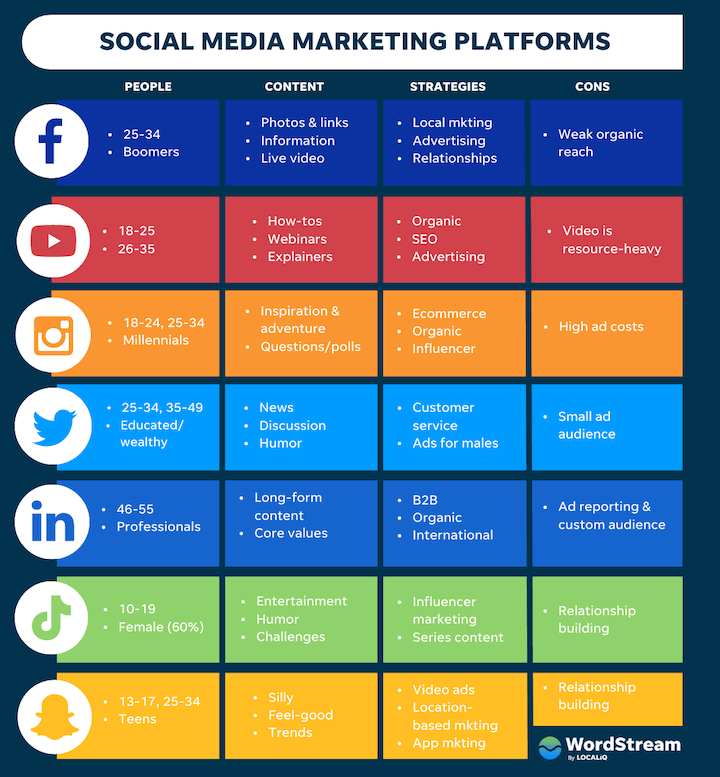
To help you visualize these differences, here is a chart that summarizes the key characteristics of each platform.
Test your understanding!
Imagine a local pharmacy wants to achieve two goals:
- Launch a new line of high-end, organic skincare products targeting women aged 25-40 who are interested in wellness.
- Recruit a new, qualified pharmacy technician.
Based on what you've learned, which single platform would you prioritize for each goal, and why?
Show answer
-
For launching the skincare line: Instagram would be the best choice. Its audience aligns perfectly with the 25-40 age demographic, and it's a visual platform ideal for showcasing skincare products through high-quality images, Reels (e.g., demonstrating product texture), and influencer collaborations.
-
For recruiting a pharmacy technician: LinkedIn is the clear winner. It's the premier platform for professional networking and job searching. You can post a job listing and reach qualified individuals actively looking for career opportunities in the pharmaceutical field.
Conclusion
Choosing the right social media platform isn't about guesswork; it's a strategic decision based on your audience and goals. Trying to be everywhere at once is a recipe for burnout with minimal results. The smart approach is to select one or two platforms where your target audience is most active and create content that is native to that environment.
Key Takeaways:
- Your platform choice should be driven by your target audience and your primary objective (growth vs. nurture).
- Facebook is ideal for community building and reaching older demographics.
- Instagram excels at visual storytelling for younger to middle-aged adults.
- TikTok is the king of short-form, entertaining video for a very young audience.
- LinkedIn is the essential platform for professional networking and B2B marketing.
- YouTube is a powerhouse for long-form educational content that builds deep trust over time.
Now that you know how to choose where to post, our next lesson will tackle the question of what to post. We will explore the purpose of a content strategy and a content calendar, which are the tools you'll use to plan your social media activities effectively.