Hello! Welcome to the third lesson in our Digital Marketing Basics course.
In our last session, we mapped out the customer journey using the marketing funnel. We learned the importance of guiding potential customers through the stages of Awareness, Consideration, Conversion, and Retention. But to guide someone effectively, you first need to know who they are. A generic message sent to a faceless crowd rarely works.
Today, we'll focus on answering that crucial "who" question. This lesson directly addresses the learning outcome: Describe how to create a target audience persona using demographic and psychographic traits. A persona is a detailed profile of your ideal customer. For someone interested in social media, mastering this is key. It's the difference between shouting into the void and having a meaningful conversation with people who are genuinely interested in what you have to say.
From Broad Audience to Specific Persona
First, let's clarify the terms. A "target audience" is a broad group of people you want to reach. A "persona" (or buyer persona) brings that group to life. It's a semi-fictional character who represents your ideal customer, complete with a name, a backstory, and motivations.

Creating a persona helps you understand your customers' needs and craft marketing messages that truly resonate with them.
The Building Blocks of a Persona: Demographics and Psychographics
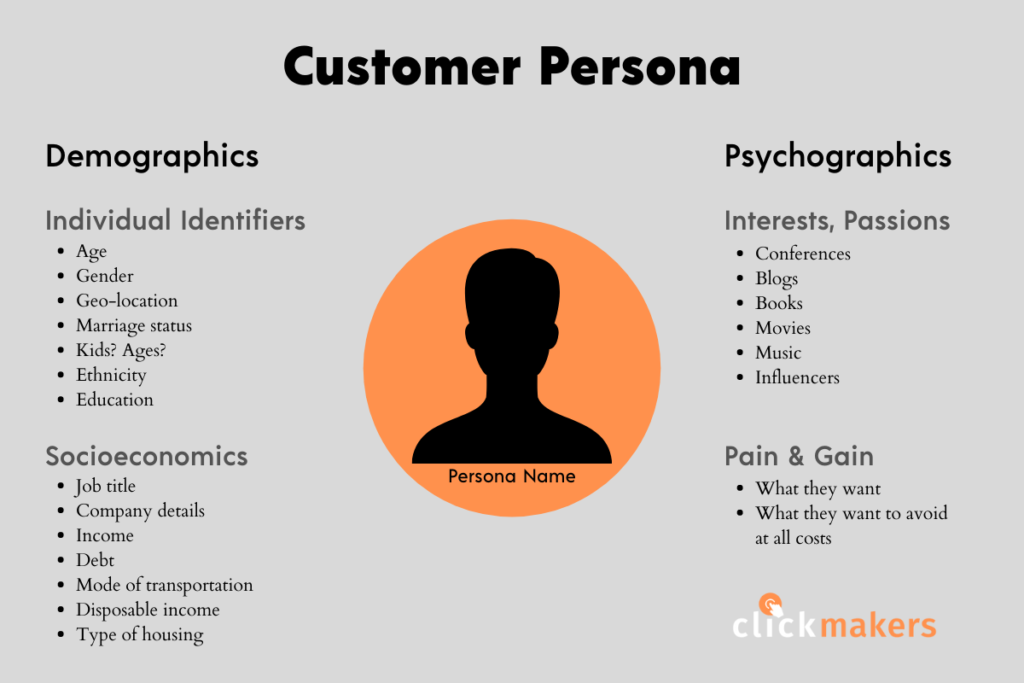
A strong persona is built from two types of information: demographics and psychographics.
- Demographics tell you who your customer is. This is objective, factual data.
- Psychographics tell you why they might buy. This is subjective, psychological data about their motivations, values, and interests.
Let's dive deeper into this distinction with an article from HubSpot, a leader in digital marketing education.
How to Use Psychographics in Your Marketing
This article, 'How to Use Psychographics in Your Marketing,' clearly defines psychographics and contrasts them with demographics. It will help you understand why knowing your customer's mindset is just as important as knowing their age or location.
Please read the beginning of the article, starting from the top down to the end of the section titled 'Psychographic Profiling.' Pay close attention to the table comparing psychographics and demographics, and the example profiles provided.
As the article highlighted, combining these two data types gives you a powerful, three-dimensional view of your customer. Demographics help you find them, while psychographics help you connect with them.
Here is a visual summary of the key components that make up a customer persona.
How to Define Your Target Audience and Create a Persona
Now for the practical part: how do you actually gather this information and structure it into a useful persona? Personas aren't just creative writing; they're based on research and data.
The following video from Google provides an excellent, beginner-friendly introduction to defining a target audience and using a template to structure your findings.
Understanding Your Target Audience on Social Media
This video, 'Understanding Your Target Audience on Social Media,' explains the core characteristics used to define an audience and provides a simple template for building a persona.
Please watch the video from 00:53 to 14:39. It covers three key areas: Defining a target audience with demographics and psychographics (00:53 - 02:55). Using a template to build a persona, using a flower business as an example (06:02 - 09:40). How to research your audience by analyzing current customers, monitoring competitors, and talking to people (09:40 - 14:39).
A Practical Example: Creating a Persona
Let's apply what you've learned. Imagine you're handling social media for a local pharmacy. Based on the template from the video and your own background knowledge, you might create a persona like this:
Persona Name: "Wellness Wendy"
- Need: Wants to find reliable, evidence-based ways to keep her family healthy and manage minor ailments without resorting to unnecessary medications.
- Demographics:
- Age: 35-45
- Gender: Female
- Location: Lives in the suburbs near the pharmacy.
- Education: College-educated.
- Occupation: Works part-time or is a stay-at-home parent.
- Psychographics (Interests & Lifestyle):
- Interests: Natural health, nutrition, fitness, parenting tips.
- Habits: Follows wellness influencers on Instagram, is active in local mom groups on Facebook, searches for health information on Google.
- Values: Trusts professional advice (especially from a pharmacist), values product transparency, prioritizes her family's well-being.
- Pain Points: Feels overwhelmed by conflicting health advice online; is short on time; worries about the ingredients in products.
With "Wellness Wendy" in mind, your social media strategy becomes much clearer. You know to create Instagram content about reading supplement labels, post helpful tips in Facebook mom groups, and write blog posts that answer common health questions in a clear, trustworthy way.
From Persona to Personalized Marketing
The ultimate goal of creating a persona is to use it to make your marketing more effective. To see a step-by-step example of how a persona is built using an online tool and then translated into a real marketing campaign, watch this next video from HubSpot.
FREE Buyer Persona Generator Tutorial (Fast & Easy)
This video provides a fast-paced tutorial on using a free tool to build a persona. It clearly shows how each piece of information (goals, pain points, etc.) directly informs your marketing strategy.
Watch the video from the beginning until 07:57. It covers: What a persona is and the data you need (0:00 - 01:27). A step-by-step walkthrough of creating a B2B persona (for a business customer) and a B2C persona (for a direct consumer) (01:50 - 05:26). How to use the finished persona to create personalized marketing campaigns, including content and ads (05:59 - 07:57).
Test your understanding!
Imagine you are creating social media content for a new, independent coffee shop in a university town. Your goal is to attract students.
Create a mini-persona for your ideal student customer. List at least two demographic traits and three psychographic traits (think about their goals, pain points, and habits). Give your persona a name!
Show answer
Here is one possible example. Your answer might be different, and that's okay!
Persona Name: "Stressed-out Sarah"
- Demographic Traits:
- Age: 19-22
- Occupation: Full-time university student.
- Psychographic Traits:
- Pain Point: Needs a quiet, comfortable place to study that isn't the crowded library, especially during exam season.
- Habit: Spends a lot of time on TikTok and Instagram; looks for "Instagrammable" spots.
- Value: Is on a tight budget and looks for student discounts or loyalty programs.
Based on this persona, you might decide to run an Instagram campaign showcasing your coffee shop's quiet corners and cozy chairs, offer a student discount, and use hashtags like #StudySpot and #[YourUniversityName].
Conclusion
You've now learned how to create one of the most powerful tools in a marketer's toolkit. By moving beyond broad generalizations and creating detailed personas, you can ensure your marketing efforts are targeted, relevant, and effective.
Key Takeaways:
- A target audience persona is a detailed, semi-fictional profile of your ideal customer.
- Personas are built using demographics (the "who") and psychographics (the "why").
- Demographics include objective data like age, location, and income.
- Psychographics include subjective data like goals, values, interests, and pain points.
- Research is essential for creating accurate personas; you can analyze existing customer data, survey your audience, and study competitors.
- A well-defined persona is the foundation for creating personalized content, choosing the right marketing channels, and crafting messages that resonate.
In the final lesson of this module, we will explore the two primary strategies for reaching your target persona: organic and paid marketing. Now that we know the customer's journey (the funnel) and who the customer is (the persona), we'll look at how to get our message in front of them.