Welcome back! In our last lesson, we established the crucial difference between an audience and a community, focusing on the shift from one-to-many broadcasting to many-to-many connections. This foundational understanding sets the stage for everything that follows.
Now that you can distinguish a community from other groups, our next step is to explore the diverse landscape of communities themselves. This lesson is dedicated to identifying different types of online communities, such as those built around shared interests, professional practice, or specific products. Recognizing these types isn't just an academic exercise; it's a strategic necessity. The purpose of a community dictates its goals, the platform it lives on, and the content that will make it thrive. This knowledge will be invaluable as you build and manage communities, whether in Web3 or any other context.
A Framework for Understanding Communities
Communities can be categorized based on the primary "glue" that binds their members together. Why do people show up and connect with each other? A helpful way to start is with five broad categories that cover the fundamental human drivers for joining a group.
To introduce this framework, we'll use a guide that clearly outlines these core types.
Types of Communities: a guide for marketers - Hall
This article from Hall provides a concise and powerful model for classifying communities. While it's framed for marketers, the core concepts are universal for any community builder.
Please read the introduction and the definitions for the five types of communities listed. Start with the section listing the five types. Then, read the "What defines..." subsection for each of the following: Community of Interest Community of Practice Community of Place Community of Action Community of Circumstance
This framework gives us a solid starting point. Let's briefly translate these types into the Web3 world you're familiar with:
- Community of Interest: This is one of the most common types. Think of a Discord server for fans of a specific NFT artist or a Telegram group dedicated to discussing a particular blockchain game. The shared passion is the centerpiece.
- Community of Practice: These communities are about "leveling up" professionally. A group for smart contract developers sharing security best practices or a private chat for Web3 community managers exchanging engagement strategies would fall into this category.
- Community of Action: This is the very essence of many DAOs (Decentralized Autonomous Organizations). Members pool resources and coordinate to achieve a specific goal, like funding a public good, investing in assets, or influencing a protocol's development.
- Community of Circumstance: Members are brought together by a shared life event or situation. A support group for people who lost funds in a specific exchange collapse or who are all learning to navigate the complexities of crypto taxes for the first time would be a community of circumstance.
- Community of Place: While Web3 is often global, these communities connect people in a specific geographic area. Examples include "CryptoMondays London" meetups or a WhatsApp group for blockchain enthusiasts in your city.
Expanding the Categories: A Deeper Look
The five types above provide a great lens, but in practice, communities can be more specific, especially when tied to a business, product, or organization. For example, where does a group for users of a specific software fit?
To explore this, we'll look at a more extensive list that includes these business-oriented categories. Think of this not as a replacement for the first framework, but as a more detailed map of the community landscape.
15 Main Types of Online Communities (With Examples)
This guide from Group.app breaks down 15 distinct community types, offering detailed descriptions, key features, and real-world examples for each. It's an excellent resource for understanding the nuances between different community models.
Please read the section Top 15 Types of Online Communities. Skim through the descriptions of all 15 types to get a broad overview. Pay closer attention to the following, as they are especially common: Brand Communities Support Communities Learning Communities Social Communities Membership Communities
This detailed list introduces several crucial types for a community manager. A Brand or Product Community (like the Lego Ideas or Sephora Beauty Insider examples) is built around people's connection to a specific product or company. In Web3, nearly every project—from a Layer 1 protocol to an NFT collection—aims to build a brand community. Their goal is to turn users into loyal advocates.
A Support Community is also vital. The help channels in a project's Discord, where users answer each other's questions about setting up a wallet or troubleshooting a transaction, are a perfect example. This peer-to-peer support reduces the load on the official team and strengthens member bonds.
The Reality: Communities are Hybrids
After reviewing these lists, you might wonder how to categorize a group like the one in the image below.
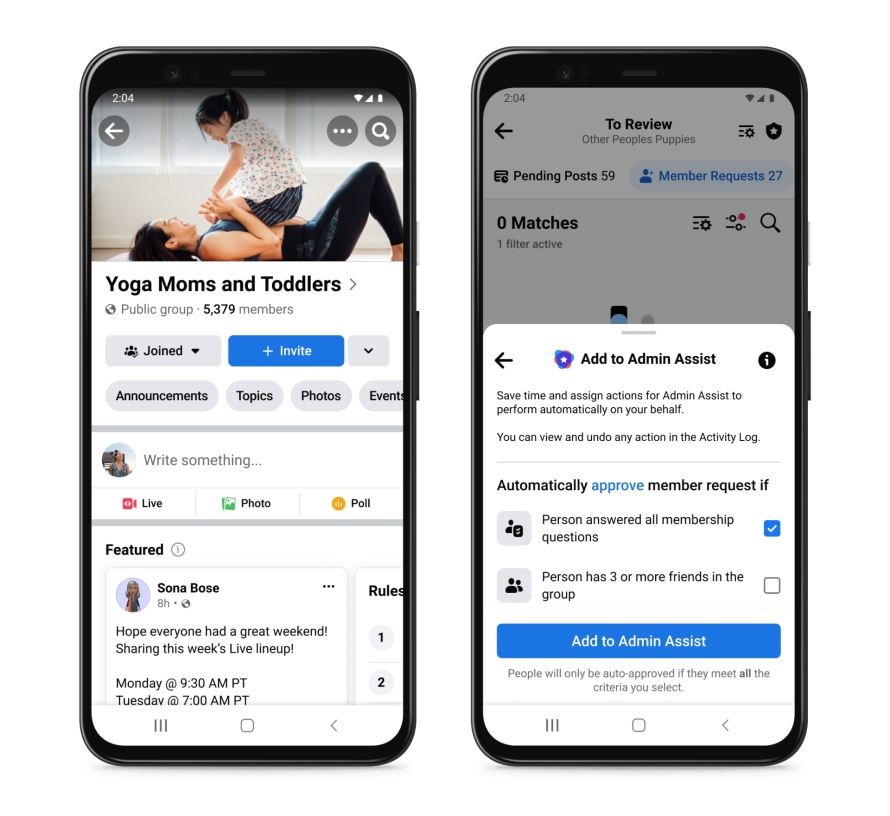
Is the "Yoga Moms and Toddlers" group a Community of Interest (yoga)? A Community of Circumstance (parenthood)? Or a Social Community (general connection)? The answer is: it's all three.
This is a critical insight. Communities rarely fit into one neat box. They are often hybrids, blending elements from different types. What starts as a support community for a new product can evolve into a social space where members form friendships. A community of interest for gamers might organize and become a community of action to advocate for changes from the game developers.
Understanding this overlapping nature is key to effective community management.
Types of Communities: a guide for marketers - Hall
Let's revisit the first article to formalize this idea of blended communities.
Please read the short section titled The overlapping nature of communities. It does an excellent job of explaining this fluidity.
Your role as a community manager is not to force a community into a single category, but to identify its primary and secondary purposes. This clarity will help you decide what kind of content to create, what conversations to encourage, and how to measure success.
Take a moment to think about the WhatsApp group you manage. Is its primary purpose social connection, sharing an interest, or something else? Recognizing its core identity is the first step toward managing it more intentionally.
Conclusion
In this lesson, we moved from defining what a community is to identifying the different forms it can take. You now have a mental toolkit for classifying communities and understanding their core purpose.
Here are the key takeaways:
- Communities can be broadly categorized by the "glue" that holds them together, such as Interest, Practice, Place, Action, and Circumstance.
- More specific types exist, like Brand, Support, Learning, and Membership communities, which are often tied to organizational goals.
- Most communities are hybrids, blending elements from multiple types. Identifying the dominant purpose(s) is key to a sound strategy.
In our previous lesson, you learned what a community is. Now, you can identify what kind of community it is. The next logical question is: who leads it? In our next lesson, we will dive into the core roles and responsibilities of a community manager, defining the skills and duties that make this role so critical.