Hello! Welcome to your next lesson.
In our last session, we dug into the specifics of evaluating narrative nonfiction, focusing on how a single author blends factual accuracy with storytelling craft. Today, we're expanding our scope from a single voice to a chorus. We will explore the unique challenges and responsibilities that come with editing anthologies and multi-author essay collections.
Your experience editing articles for magazines will be a valuable reference point today, as many of the principles of creating a cohesive magazine issue apply to building a compelling book from multiple contributors.
The learning outcome for this lesson is to identify editorial considerations unique to anthologies and multi-author essay collections. This involves shifting your mindset from just an editor of prose to also a curator of ideas and a manager of projects.
1. The Editor as Curator: Creating a Cohesive Whole
Whether it's a collection of short stories, academic essays, or personal narratives, the fundamental challenge of a multi-author book is to make it feel like a unified, intentional work, not just a random assortment of texts. The editor is the architect of this cohesion.
An anthology editor's first job is to establish a strong, unifying concept. This concept is the gravitational center that holds all the individual pieces in orbit.
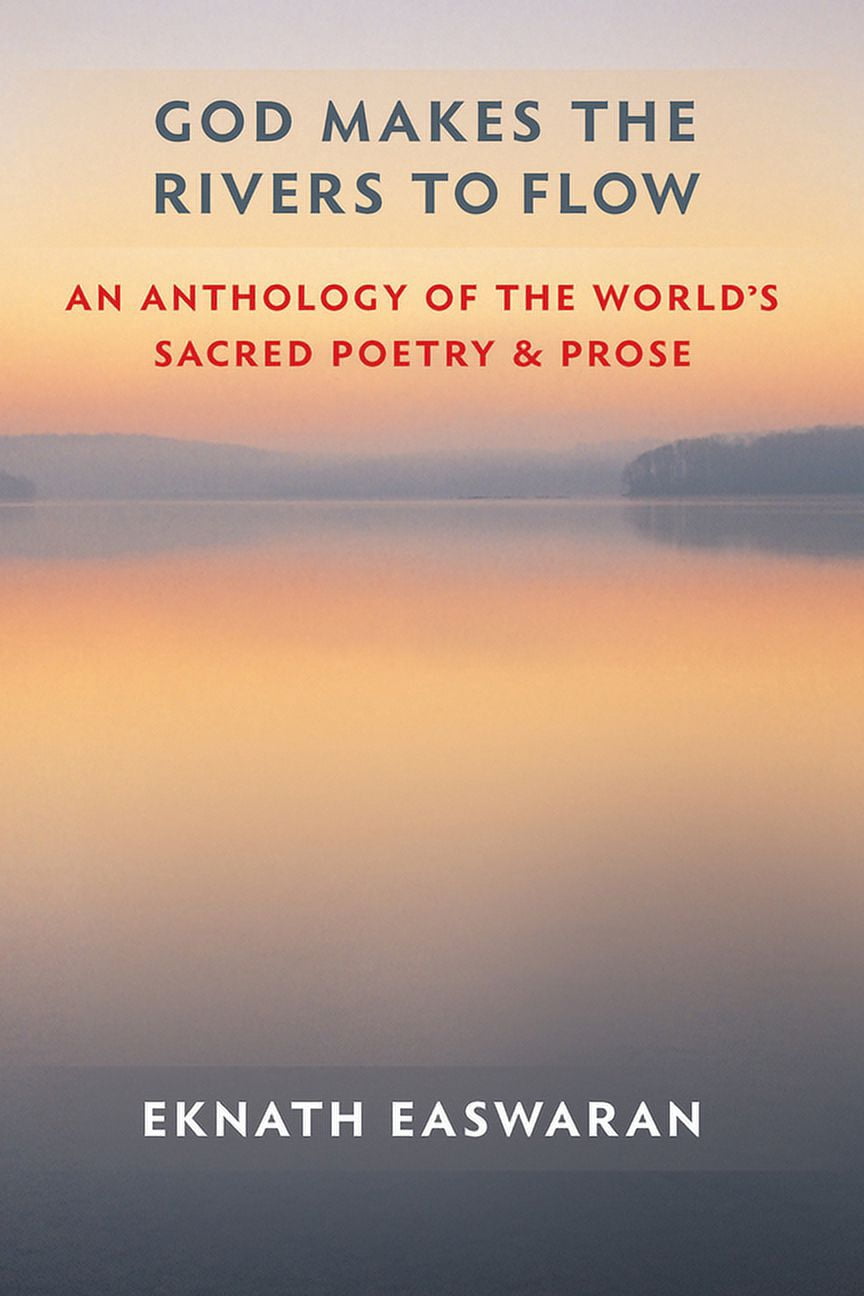
This curatorial process involves both selecting the right pieces and, just as importantly, arranging them to create a deliberate experience for the reader. Let's explore this idea from the perspective of an author compiling her own work, as the core creative principles are the same.
Writing, Compiling, and Arranging Short Stories in a Collection
This article from Writer's Digest, 'Writing, Compiling, and Arranging Short Stories in a Collection,' offers great insight into the art of curation. Author Ronna Wineberg compares it to arranging a music album—a perfect analogy for an editor's work.
Please read the sections titled 'Gather Your Work' and 'Consider the Arrangement'. Focus on how a unifying theme can emerge from a body of work and how the order of the pieces creates a 'flow' for the book.
As the article highlights, the editor's curatorial role involves several key decisions:
- Defining the Theme: What is the central question, topic, or idea that connects every piece?
- Selection: Which contributions best serve the theme? This often means making difficult cuts, even of high-quality pieces that don't quite fit.
- Arrangement: How does the order of the pieces create a meaningful journey? You might arrange them:
- Chronologically: To show a progression over time.
- Thematically: Grouping essays or stories by sub-topic.
- For Narrative Arc: Starting with a powerful hook, building through the middle, and ending with a resonant, thought-provoking piece. The advice to "start with a pisser, end with a pisser" is a memorable rule of thumb.
2. The Volume Editor: Project Manager and Consistency Guardian
When you're editing contributions from multiple different authors, the role expands beyond curation into project management and quality control on a larger scale. This is where the process differs most significantly from editing a single-author manuscript.
For academic and many nonfiction collections, the "volume editor" is the central hub for the entire project. Let's look at a real-world set of guidelines to understand the full scope of these responsibilities.
[PDF] GUIDELINES FOR EDITORS OF MULTI-AUTHOR VOLUMES
These guidelines from Vernon Press for editors of multi-author volumes provide a clear, professional checklist of the unique duties involved. This is a great window into the practical, day-to-day work.
Read section 1, 'Responsibilities of the editor(s),' and pay close attention to the bulleted list under the heading 'Editorial aspects for which you may want to decide early on...'. This outlines the full range of the role, from big-picture strategy to detailed execution.
As these guidelines show, editing a multi-author volume requires you to be the primary decision-maker and liaison. Your unique responsibilities include:
A. Author and Contribution Management
This is a complex communication challenge. Unlike working with one author, you are the single point of contact for many. This involves:
- Recruiting and selecting contributors.
- Clearly communicating deadlines, word counts, and submission requirements.
- Collecting and collating all chapters into a single master document.
- Managing the peer-review process (for academic works), which includes protecting reviewer anonymity and mediating feedback.
B. Ensuring Global Consistency
This is perhaps the most meticulous editorial task in a multi-author project. While you want to preserve each author's unique voice, the book as a whole must be internally consistent. Your job is to create a "house style" for the book. Key areas include:
- Referencing System: Is it Chicago, Harvard, or another system? You must ensure every author follows the same one.
- Language and Spelling: Will the book use American or British English?
- Terminology: If the book is on a technical subject, key terms must be used consistently across all chapters.
- Formatting: Ensuring all chapters follow the same structure for headings, subheadings, and notes.
To manage this, you would create a volume-specific style sheet that you share with all contributors and use as your guide during the copyediting stage.
C. Checking for Cross-Chapter Issues
When you are the only person who has read every chapter, you have a unique responsibility to spot issues that no individual author could see. This includes:
- Unintentional Repetition: Do three different authors use the same anecdote or statistical data to make their point?
- Contradictions: Does one chapter present a fact or argument that is directly contradicted in another?
- Gaps: Is there a logical leap between chapters that requires a bridge?
Often, the editor's own writing—in the form of a main introduction, and sometimes short introductions to each part or chapter—is essential for weaving the disparate threads together and addressing these issues.
3. Practical Application
Let's put this theory into practice.
Scenario:
You're the editor for a nonfiction anthology titled Urban Futures: Reimagining the 21st-Century City. You have just received the final drafts of 15 essays from 15 different authors, who are a mix of architects, sociologists, and city planners.
Your Task:
Based on today's lesson, create a checklist of 5-7 unique editorial tasks you must now perform for this anthology. Think about what's different from editing a single-author manuscript on the same topic.
Take a moment to draft your checklist before reading my analysis below.
My Checklist:
Here are some of the critical, anthology-specific tasks I would prioritize:
- Comprehensive Read-Through for Cohesion: Read all 15 essays back-to-back to get a holistic sense of the collection. I'd look for the natural "conversations" happening between essays and identify the overarching narrative.
- Strategic Ordering: Experiment with the chapter order. Should I group them by theme (e.g., transportation, housing, public space)? Or create a progression from problem-focused essays to solution-focused ones?
- Global Style and Terminology Check: Create a master list of key terms (e.g., "gentrification," "smart city," "mixed-use development") to ensure they are used consistently. I'd enforce the chosen referencing style (e.g., Chicago) across all essays, correcting citations as needed.
- Identify and Resolve Repetitions/Contradictions: Flag instances where authors use the same case study (e.g., The High Line in NYC) or cite conflicting data. I'd then decide whether to ask an author to change their example, or to use my introduction to frame the different perspectives.
- Write the Editor's Introduction: Draft a substantial introduction that defines the book's purpose, outlines the key themes, and provides a "road map" for the reader, explaining the logic of the chapter arrangement.
- Standardize All Contributor Biographies: Collect and edit all author bios to a consistent length and format for the "About the Contributors" section.
- Collate the Master Manuscript: Combine all individual files into a single, consistently formatted document to be sent for copyediting and typesetting.
Conclusion
Editing anthologies and multi-author collections elevates the editor's role to that of an architect. It requires a vision for the project as a whole, a diplomatic touch in managing multiple creative partners, and an obsessive eye for consistency.
Key Takeaways:
- Editing a collection is a dual role of curator (shaping the theme and arrangement) and project manager (handling authors, deadlines, and technical consistency).
- The primary creative challenge is to create cohesion from disparate parts through a strong unifying concept and strategic ordering.
- The primary practical challenge is enforcing global consistency in style, formatting, and terminology, often managed with a volume-specific style sheet.
- The editor's own writing, especially the introduction, is a crucial tool for framing the work and weaving the different voices together.
In our next lesson, we will move into the final module of the course, "Author Management and Editorial Strategy." Building on what we've learned about communicating with multiple authors, we'll focus on the art of writing to a single author, starting with how to draft a comprehensive and constructive editorial letter that balances macro-level feedback with encouragement.