Hello! Welcome to the final lesson in our module on Line Editing: Practical Application.
In our last session, we explored how to resolve tonal inconsistencies to ensure a cohesive reading experience. We looked at the overall attitude and mood of a passage. Today, we will narrow our focus from the general tone of the narrative to the specific voices of the characters who inhabit it.
This lesson directly addresses the learning outcome: Refine dialogue in a fiction excerpt to enhance subtext and character voice. Mastering dialogue is one of the most impactful skills a line editor can possess. It's the difference between characters who feel like puppets for the plot and characters who feel like living, breathing individuals with their own secrets and motivations.
We'll cover the theory behind crafting unique character voices and then delve into the art of subtext—what characters don't say. Finally, you'll apply these concepts in a practical revision exercise.
1. Crafting Authentic Character Voice
A character's voice is their unique verbal fingerprint. It's how they sound on the page, shaped by their history, personality, and place in the world. As an editor, your job is to help the author sharpen and differentiate these voices so that no two characters sound alike.
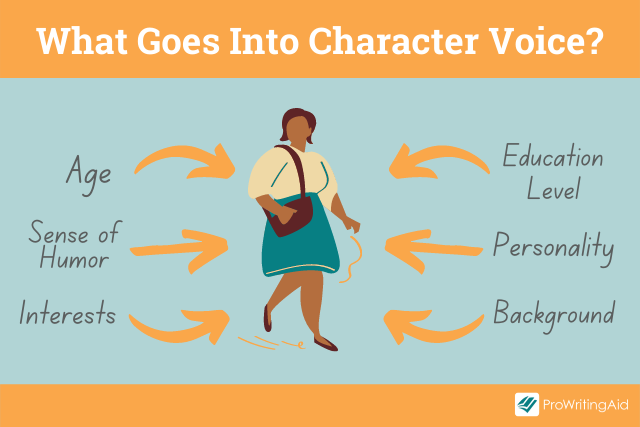
To move from these abstract ingredients to concrete techniques, let's explore how specific stylistic choices can build a character's voice.
8 Steps to Nail a Character Voice (even for people totally unlike you)
The Bookfox YouTube channel offers an excellent breakdown of how to translate a character's internal world into their external language. We'll watch a few segments that highlight powerful techniques for differentiating character voices.
Please watch these three segments. Pay close attention to how the presenter connects a character's background and psychology to their specific speech patterns. 2:09 - 3:13: 'Generate your character's metaphors and similes.' Notice how a character's comparisons should be rooted in their unique experiences and environment. 5:19 - 7:06: 'Active versus passive divide.' Consider how sentence structure can reveal a character's sense of agency or victimhood. 11:43 - 13:34: 'Make their social position influence their speech.' Observe how power dynamics manifest in word choice and conversational patterns.
As you can see, giving a character a distinct voice is about more than just a memorable catchphrase. It involves a consistent application of stylistic choices—in vocabulary, syntax, and rhetoric—that reflect who they are. When you're editing, you might ask:
- Does the scientist character use precise, analytical language?
- Does the anxious character speak in fragments or use passive constructions to avoid responsibility?
- Does the powerful CEO interrupt others or speak in declarative statements?
2. The Power of Subtext: Saying More by Saying Less
While voice is about how a character speaks, subtext is about what they don't say directly. It's the underlying, unspoken meaning in a conversation. Dialogue without subtext often feels "on the nose"—it's too direct, too honest, and ultimately, unrealistic.

Subtext is what creates tension, intrigue, and emotional depth. It trusts the reader to understand that there's a gap between what's being said and what's actually meant.
Writing with Subtext: Saying More by Saying Less
To better understand why subtext is so essential for compelling fiction, let's read a short article from the website My Story Doctor.
Please read the sections 'Why Subtext Matters' and 'Where Subtext Lives,' focusing particularly on the 'Dialogue' subsection. This will ground our understanding of what subtext is and why it's a powerful narrative tool.
Now, let's see how master storytellers use subtext to create unforgettable moments.
6 Levels of Dialogue Every Writer MUST Master
This next video segment from Bookfox provides powerful examples of subtext from literature and film, demonstrating how it works in practice.
Please watch from 17:11 to 20:38. Notice how the examples from Hemingway's 'Hills Like White Elephants,' The Godfather, and When Harry Met Sally show characters communicating something entirely different from the literal meaning of their words.
The key to editing for subtext is to identify dialogue where characters are being too direct and to find ways to bury their true intentions beneath the surface of the conversation.
The Art of Masterful Fiction Dialogue
So, how do we transform 'on-the-nose' dialogue into something with more layers? The article 'The Art of Masterful Fiction Dialogue' by C. S. Lakin provides a clear, practical example.
Please read the section titled 'Subtext: Don’t Have Characters Say What They Mean'. The 'Before and After' example with John and Mary is a perfect demonstration of the revision process: replacing direct statements of emotion with actions and indirect dialogue that imply those same emotions.
3. Practical Application: Dialogue Revision Exercise
Now it's your turn to apply these principles. Below is a dialogue excerpt from a contemporary fiction manuscript. The scene features two former colleagues, Liam and Sarah, meeting for coffee. Liam was recently laid off from the company where Sarah still works as a senior manager.
The dialogue as written is flat, on-the-nose, and the characters' voices are indistinct. Your task is to revise it to enhance both character voice and subtext.
Character Notes for Your Revision:
- Liam: In his late 20s. Anxious about his future but trying to appear confident. Feels a mix of resentment and awkwardness toward Sarah.
- Sarah: In her early 40s. Feels guilty and uncomfortable about the layoffs, though she wasn't directly responsible for firing Liam. She wants to be supportive but also wants to avoid confrontation.
Original Passage:
"Hey, Sarah. Thanks for agreeing to meet me," Liam said.
"Of course, Liam. It's good to see you. How are you doing after the layoff?" Sarah asked.
"I'm doing okay. It was a shock, but I'm looking for new jobs now. I'm sure I'll find something soon," Liam replied. "I'm feeling optimistic."
"That's great to hear. I feel really bad about what happened. It was a corporate decision, you know. I had no control over it," Sarah said.
"I know. It's just a tough situation. So, do you know if there are any openings at other companies?" Liam asked.
Instructions:
- Read the passage and identify its weaknesses in terms of voice and subtext.
- Rewrite the scene. You can add actions, internal thoughts (for Liam, our presumed POV character), and change the dialogue.
- Your goal is to make the characters' voices distinct and to convey their true feelings (Liam's anxiety/resentment, Sarah's guilt/discomfort) indirectly.
Take 15-20 minutes for this exercise.
Analysis and Sample Revision
There are many ways to approach this revision. Below is one possible version that focuses on strengthening voice and subtext.
Analysis of Weaknesses:
- Indistinct Voices: Liam and Sarah sound almost identical. Their language is generic and professional.
- On-the-Nose Dialogue: Characters state their feelings directly ("I feel really bad," "I'm feeling optimistic"). There is no tension because nothing is left unsaid.
- Lack of Subtext: The conversation is a simple, direct exchange of information. It doesn't reveal the complex emotions simmering beneath the surface.
Revised Passage:
Liam spotted her near the window, already halfway through a latte. "Sarah. Thanks for coming."
She gave him a tight, professional smile. "Liam. Of course. You're looking well." Her eyes scanned his slightly-too-casual t-shirt before flicking away. "How are... things?"
"Things are fine," he said, the lie tasting like stale coffee. He folded his hands on the table to keep them from fidgeting. "The job market is what it is. Lots of opportunities out there."
"Absolutely. A person with your skills won't be on the market for long," she said, her voice a little too bright. She took a long sip of her drink. "It was just... a terrible situation. The whole thing. Just top-down."
Liam nodded, letting the silence hang for a moment. He watched a barista wipe down a clean counter. "Right. So, you still hear from anyone at Ackerley Consulting?"
Justification for Edits:
- Distinct Voices:
- Liam's voice is now more hesitant and passive ("The job market is what it is"). His actions (fidgeting) betray his stated confidence. His final question is indirect—instead of asking for job leads, he asks about a specific company, a subtler way of probing for information.
- Sarah's voice is now evasive and overly positive ("a little too bright"). She uses corporate jargon ("top-down") and generic platitudes ("You're looking well") to create distance. Her actions—the tight smile, the long sip of her drink—signal her discomfort.
- Enhanced Subtext:
- The layoff is now the unspoken elephant in the room. Sarah avoids the word, calling it "things" and "a terrible situation."
- Liam's statement "Lots of opportunities out there" is subtext for "I'm trying to convince you (and myself) that I'm fine." The added internal thought, "the lie tasting like stale coffee," makes this explicit to the reader while keeping it hidden from Sarah.
- Sarah's comment "A person with your skills" is a classic example of using a compliment to bypass a difficult emotional subject.
- Liam's final question about a different company is a pivot. He's signaling that he understands she can't help him directly with his old job, but he's still looking for an opening, creating a slight power imbalance in the conversation.
This revised version is richer and more realistic because it operates on two levels: the polite, surface-level conversation and the undercurrent of guilt, anxiety, and resentment.
Conclusion
In this module, we've journeyed from the broad strokes of tonal consistency to the fine details of character voice and subtext. You've learned that effective line editing isn't just about correcting errors; it's about shaping the reader's experience, clarifying meaning, and breathing life into the author's world. Refining dialogue is a perfect example of this principle in action.
Key Takeaways:
- Character Voice is created through a consistent pattern of stylistic choices (vocabulary, syntax, rhythm) that reflect a character's unique background and personality.
- Subtext is the art of conveying meaning indirectly, creating a realistic and emotionally resonant gap between what characters say and what they mean.
- As an editor, your role is to identify "on-the-nose" dialogue and revise it to reveal character and create tension through voice and subtext.
Next Up:
This lesson concludes our module on the practical application of line editing. We now transition from the more creative and stylistic aspects of editing to the technical and rule-based discipline of copyediting. In our next module, Advanced Copyediting and Style Management, we will begin with a foundational skill: how to apply the Chicago Manual of Style to resolve complex grammatical and stylistic queries.