Hello! Welcome back to our course on editorial publishing.
In our last lesson, we broke down the components of book proposals, looking at the distinct structures for nonfiction and fiction. We saw that a proposal is much more than a summary; it's a strategic document designed to provide an editor with specific information.
Today, we'll learn how to act on that information. The goal of this lesson is to evaluate a manuscript's market viability and suitability for a publisher's list. We will move from simply identifying the parts of a proposal to using them to make one of the most critical decisions in publishing: whether to champion a project for acquisition. This is where your editorial eye starts to merge with a business mindset.
The Business of Belief: Why Market Viability is Paramount
Before we dive into the "how," let's establish the "why." A publisher invests a significant amount of money and resources into every book it acquires. This includes the author's advance, staff salaries, design, printing, and marketing costs. The decision to acquire a book is, therefore, a significant financial bet. Your job as an editor is to make that bet as informed as possible.
Acquisition Basics: From Submission to Contract
To understand the stakes, let's start with a short reading from 'Acquisition Basics' by Harold Underdown. This will frame the acquisition process as a crucial business function.
Please read the section titled 'The Importance of Acquisition.' Focus on the financial commitments and risks a publisher takes on when acquiring a new book.
As the article makes clear, acquiring a book isn't just an act of creative appreciation; it's a strategic investment. An editor's evaluation, therefore, must balance a passion for the project with a pragmatic assessment of its potential to succeed in the marketplace.
We can think of this assessment as having four core components.
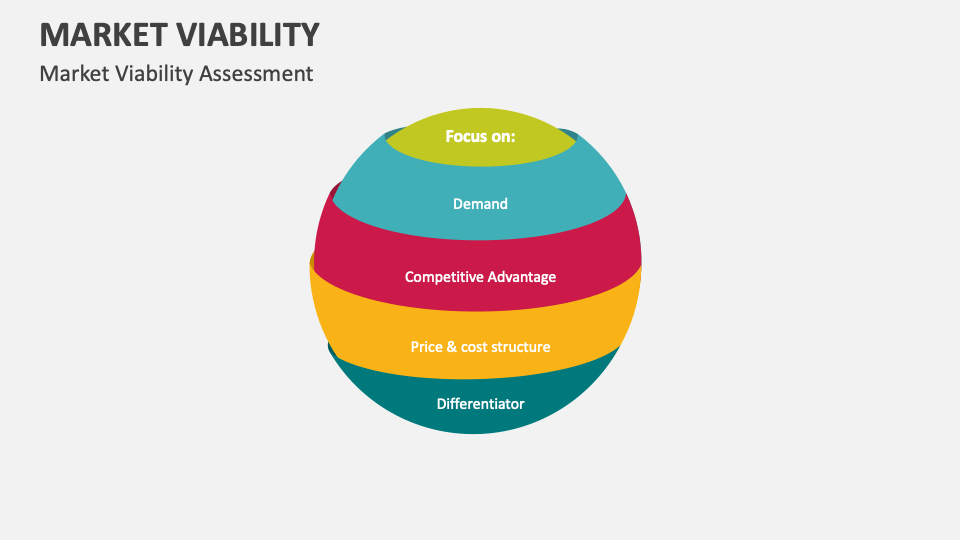
The Editor's Evaluation Framework: Three Core Questions
When a manuscript or proposal lands on your desk, your evaluation of its viability and suitability will be guided by a series of questions. Let's focus on the three most important ones.
1. Who is this book for? (Audience & Demand)
In the previous lesson, we saw that a nonfiction proposal includes a detailed "Target Audience" section. For fiction, the audience is implied by the genre and comparable titles. Your first job is to critically assess this.
- Is the audience specific and identifiable? A proposal that claims to be for "everyone" is a major red flag. A proposal for "millennial women navigating their first management roles who listen to the 'WorkLife' podcast" is far more convincing. Your background in journalism has already trained you to think about specific reader demographics; this is a similar exercise, but with the added question of whether that demographic buys books.
- Is there demonstrated demand from this audience? Does the topic tap into a current cultural conversation? Is the author a recognized authority with a platform that proves people are already listening to them?
To see how a professional editor thinks about audience, let's watch a short clip.
The Acquisitions Process: What Should Authors Know?
In this video from the Authors Guild, editor Jen Haley discusses the acquisitions process. In this first clip, she explains the critical importance of defining the audience for a book.
Watch from 00:12:50 to 00:14:58. Pay close attention to her example of acquiring for the Amistad imprint and how a clearly defined audience (e.g., 'Black and brown teens') dictates which projects are a good fit.
Haley’s example is powerful. A book's suitability isn't just about its quality, but about its ability to connect with an existing, defined community of readers that the publisher knows how to reach.
2. Where does this book fit in the market? (Comparable Titles)
"Comparable titles" or "comps" are your primary tool for understanding a book's position in the literary marketplace. They serve two functions:
- Creative Positioning: They give the publishing team a shorthand for the book's tone, style, and content (e.g., "It has the sharp social commentary of Such a Fun Age with the workplace setting of The Devil Wears Prada").
- Commercial Benchmarking: They provide sales data that helps the publisher forecast a book's potential revenue, which directly influences the advance offer.
Finding good comps is an art. They need to be recent, successful (but not once-in-a-generation blockbusters), and relevant.
How to Choose Strong Comparable Titles for Your Query Letter
The channel Alyssa Matesic offers a concise guide on how to select strong comps. While it's aimed at authors, the criteria she outlines are exactly what editors use to judge the quality of the comps presented in a proposal.
Watch from 01:22 to 06:49. Focus on the definitions of good and bad comps: why they should be recent, why outlier bestsellers are unhelpful, and how to gauge a book's success.
As you saw, a weak list of comps (e.g., citing Harry Potter for a new fantasy novel) signals that the author—and potentially the project—is disconnected from the current market reality. As an editor, you'll use your own knowledge to validate or replace the author's suggested comps to build a realistic business case.
3. Does this book fit our list? (Suitability)
This is the final, crucial filter. A book might have a clear audience and a strong market position, but if it doesn't align with your publisher's identity, it's not a viable acquisition. A publisher's "list" is its curated collection of titles. An imprint might specialize in literary fiction, narrative nonfiction, commercial thrillers, or academic monographs.
A book is suitable for a list if:
- It aligns with the imprint's brand. Jen Haley's example from the Amistad imprint perfectly illustrates this. A book that "explains Blackness" doesn't fit a list built for the Black community.
- The publisher knows how to sell it. The sales and marketing teams have established relationships with reviewers, booksellers, and media outlets that cater to the imprint's target audience. A sci-fi imprint will struggle to market a historical romance, no matter how good it is.
- It doesn't directly compete with another recent or forthcoming title. Publishing two very similar books in the same season would mean they cannibalize each other's sales.
Evaluating suitability requires you to have an intimate knowledge of your own publisher's strengths, weaknesses, and strategic goals.
From Evaluation to Decision: The Internal Process
Once you've done your evaluation and decided you want to acquire a project, you must persuade your colleagues. You do this by formalizing your assessment into an internal document and presenting it at an acquisitions meeting.
This is where all the pieces come together: your analysis of the audience, the market, the comps, and the book's suitability for the list are used to build a business case.
Let's watch a longer clip from the same video, where the editor walks us through exactly what happens inside the publishing house.
The Acquisitions Process: What Should Authors Know?
Here, Jen Haley details the internal documents and meetings that are central to an acquisition.
Watch from 00:34:37 to 00:43:05. Listen carefully for her descriptions of the 'acquisitions memo,' 'editorial comps vs. sales comps,' and the 'P&L' (Profit & Loss statement). This is the practical application of the evaluation we've been discussing.
Haley's description reveals the mechanics of the decision. Your evaluation isn't just a thought exercise; it becomes a concrete document—the acquisitions memo—that argues for the book. Your analysis of comps informs the P&L statement, a spreadsheet that projects the book's profitability.
This process involves multiple departments, including sales, marketing, and finance, who all weigh in.
Acquisition Basics: From Submission to Contract
The 'Acquisition Basics' article also describes this internal meeting, reinforcing what we just heard.
Read the section 'The Acquisition Proposal and Acquisition Meeting.' Notice how the editor's initial evaluation must be translated into a proposal (the 'AP') that can be defended in front of a publishing board.
The entire journey, from an author's submission to a signed contract, is a series of evaluation checkpoints designed to vet a project's creative merit and market viability.

Practice Your Evaluation Skills
Let's apply these concepts with a quick exercise. Imagine you are an editor at Riverbend Press, an imprint known for publishing prize-winning literary fiction and serious narrative nonfiction about history and current affairs.
You receive the following pitch in a proposal:
Title: The Crimson Galaxy
Pitch: An action-packed space opera about a galactic rebellion against a tyrannical empire. This book is perfect for anyone who loves grand adventures and epic battles.
Comparable Titles: Dune by Frank Herbert (1965), the Star Wars film series, and Project Hail Mary by Andy Weir (2021).
Audience: A broad general audience of sci-fi and adventure fans, aged 15-55.
Using the framework from this lesson, answer these three questions:
- Audience: What is the primary weakness of the "Audience" description?
- Comparable Titles: What are two distinct problems with the list of comps?
- Suitability: What is the most significant challenge this project faces regarding its fit for the Riverbend Press list?
Click to see my analysis
- Audience: The described audience is far too broad. "A broad general audience... aged 15-55" is not a specific, identifiable market segment. It shows a lack of focused understanding of who the core reader is.
- Comparable Titles:
- Problem 1 (Relevance/Scale): Dune and Star Wars are cultural touchstones and massive, multi-generational franchises, not realistic commercial benchmarks for a debut novel. Citing them appears naive.
- Problem 2 (Recency): Dune was published over 50 years ago. The market has changed dramatically since then, making it a poor indicator of current market performance. While Project Hail Mary is recent, the other two comps weaken the list significantly.
- Suitability: The biggest challenge is the clear mismatch with the imprint's brand. Riverbend Press publishes literary fiction and serious nonfiction. A "fun, action-packed space opera" is a commercial genre fiction project that falls completely outside the imprint's established identity and expertise. The sales and marketing team would not know how to position it, and it would not appeal to the booksellers and reviewers who follow the Riverbend list.
Conclusion
Today we moved from theory to practice, exploring how an editor assesses a project's potential for success. You've learned that this evaluation is a blend of creative insight and sharp business analysis, grounded in a deep understanding of audiences and the market.
Key Takeaways:
- Acquisition is an investment. Editors must build a strong business case to justify the publisher's financial risk.
- Evaluation hinges on key questions: Who is the book for (audience)? Where does it fit in the market (comps)? Does it fit our list (suitability)?
- Comps are critical tools. They position the book creatively and provide a financial benchmark, but must be chosen carefully to be credible.
- The editor's evaluation is formalized in an acquisitions memo and a P&L statement, which are presented to a publishing board for a final decision.
Next Up:
Once you've evaluated a manuscript and believe in its potential, you often need to articulate your full assessment in detail. In our next lesson, we will focus on how to write a professional reader's report, a document that summarizes a manuscript's strengths and weaknesses and forms the foundation for your editorial feedback.