Welcome back to your course on runner duck care. In our previous lesson, we analyzed the critical decision of flock composition, weighing the pros and cons of all-female, all-male, and mixed-gender groups. With a clear understanding of the ideal flock structure for your goals, we can now address the equally important question of where to acquire your ducks.
This lesson is dedicated to evaluating the different sources available for obtaining runner ducks: hatcheries, private breeders, rescues, and farm supply stores. Your starting point—where your ducks come from—has a profound impact on their health, temperament, and genetic background. By the end of this lesson, you will be equipped with the knowledge to critically assess these sources and make a responsible, informed decision that sets you and your future flock up for success.
The Landscape of Duck Acquisition
There are four primary avenues for acquiring ducks, each with a distinct set of advantages, disadvantages, and ethical considerations. We will examine them in order, from the most common and often most problematic, to the more specialized and recommended options.
1. The Impulse Buy: Farm Supply Stores
Large farm supply or "big box" stores are a common place for people to encounter live ducklings, especially in the spring. While convenient, this source is widely considered the most problematic by experienced poultry keepers for several reasons rooted in animal welfare and consumer preparedness.
Raising Ducks for Beginners | What you Need to Know
This short clip from Two Toe Farm gives a direct and common piece of advice shared among duck owners.
Please watch the segment from know is do not buy them. The speaker's warning against buying from these stores reflects a broad consensus in the backyard poultry community.
The core issue is that these sales often encourage impulse purchases by individuals who are not prepared for the long-term commitment. The following article from Tyrant Farms provides an excellent, detailed analysis of the consequences.
Rescue ducks vs buying from stores & breeders - which is best? - Tyrant Farms
This article breaks down the systemic problems associated with buying ducks from farm supply stores. Your background in biology will give you a unique appreciation for the discussion of genetics and population impacts.
Please read the two sections titled Animals are not like candy bars and What happens to ducks. Pay close attention to these key issues: Unsexed Ducklings: The stores sell "straight run" (unsexed) ducklings. As you learned in the last lesson, this often leads to an improper drake-to-hen ratio, causing aggression and injury. Abandonment: Unprepared owners often abandon unwanted ducks, particularly males, in public ponds. Welfare and "Genetic Pollution": Domestic ducks are ill-equipped to survive in the wild. The article also introduces the concept of "genetic pollution," where interbreeding with wild mallards can introduce maladaptive domestic traits into the wild gene pool, reducing the fitness of subsequent generations.
In summary, while accessible, farm supply stores are a high-risk source that contributes to significant animal welfare problems. It is not a recommended path for a responsible start in duck ownership.
2. The Volume Source: Large Commercial Hatcheries
Large hatcheries are the primary source for the entire poultry industry, supplying farm stores, smaller resellers, and individual customers through mail order. They offer a vast selection and the significant advantage of selling sexed ducklings, allowing you to choose an all-female or all-male flock. However, their business model is based on volume, which has important implications for the quality of the birds.
This is where your scientific background is directly relevant. The principle of selection pressure is fundamental to understanding the difference between hatchery stock and birds from a specialized breeder. Large hatcheries primarily select for traits that maximize their profit: fertility, hatchability, and rapid growth. Traits like temperament, correct breed conformation (the classic upright "runner" stance), or even egg-laying prowess are often secondary, if they are selected for at all.
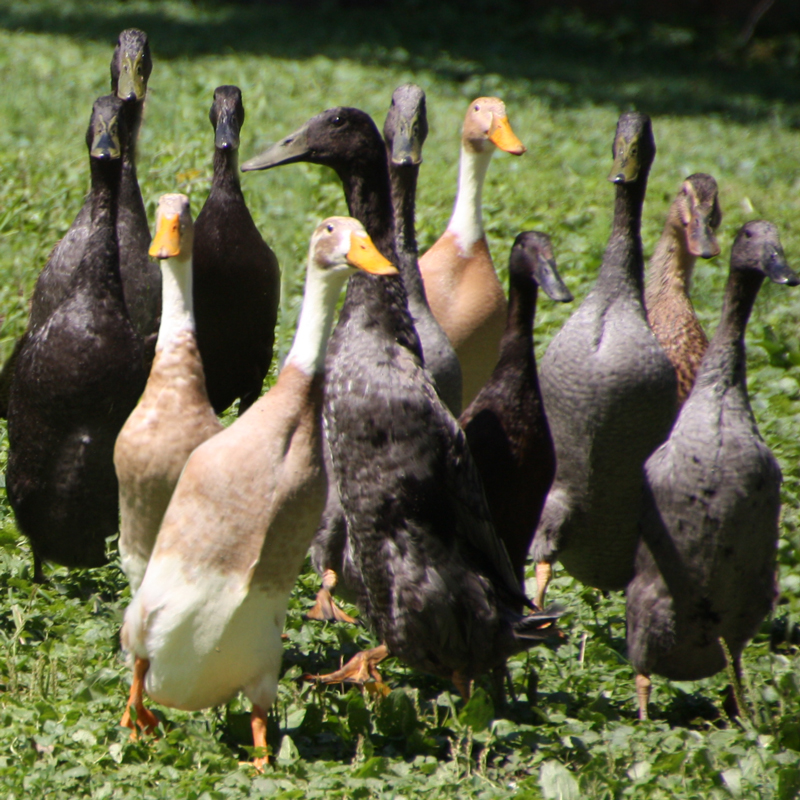
This video provides an outstanding explanation of how this lack of specific selection pressure impacts the birds a customer receives, particularly for a breed like the Indian Runner.
Duck Breeds Ranked by Egg Production (Hatcheries Lie About These Numbers)
The creator of "Amazing Livestock Breeds" uses a data-driven approach to compare catalog claims with real-world performance. The segment on runner ducks is especially illuminating.
Please watch the following clips: First, watch Selection pressure collapse for a clear definition of how production traits can decline in hatchery stock. Next, watch the detailed segment on runner ducks from Number four, runner shelines. This explains the critical split between "show lines" and "production lines." Finally, pay close attention to the advice given from How to tell the difference?. This provides a concrete method for vetting a source.
The key takeaway is that most hatcheries sell runner ducks from show-oriented lines because they are more readily available, not because they are the best representatives of the breed for a purpose like egg-laying. While this may be perfectly acceptable for your goals (pets and pest control), it's crucial to know what you are getting and not to rely on inflated egg production numbers in catalogs.
3. The Specialized Sources: Private Breeders and Rescues
For a first-time owner seeking healthy, well-adjusted animals, turning to specialized sources like private breeders or rescue organizations is highly recommended.
Private Breeders and NPIP Certification
A dedicated private breeder specializes in one or a few breeds. They are more likely to be selecting for a balance of traits, including temperament, health, and breed standards. This is where you are most likely to find high-quality runner ducks from either show or production lines, and the breeder can tell you which they focus on.
When evaluating a breeder, the most important credential to look for is NPIP certification.
The NPIP is a voluntary program that provides a standardized framework for monitoring poultry flocks for specific diseases.
NPIP Certification: The Complete Guide (2026)
This guide from FarmKeep offers a clear and thorough explanation of the NPIP program. It details what the certification means, why it matters, and importantly, what its limitations are.
Please read the following sections: What Is NPIP Certification? to understand the program's purpose. Why NPIP Certification Matters to see the benefits, particularly regarding disease control and buyer trust. Common Misunderstandings About NPIP. This is a critical section for an analytical perspective, as it clarifies that NPIP is a risk-reduction tool, not a guarantee of a completely disease-free animal.
Sourcing from an NPIP-certified breeder is a strong indicator of responsible husbandry. It demonstrates the breeder is proactive about flock health and is a key criterion for your search.
Rescue Organizations
Adopting from a waterfowl rescue is an excellent and ethical choice. As you read earlier, a huge number of domestic ducks are abandoned each year. These animals need responsible homes.
Rescue ducks vs buying from stores & breeders - which is best? - Tyrant Farms
Let's return to the Tyrant Farms article to explore the practicalities and benefits of adopting from a rescue.
Please read the sections How to help waterfowl and Can rescue ducks become socialized? Focus on the pros of adoption and the discussion on whether rescue ducks can be tamed.
Pros of Adopting:
- You are providing a home for an animal in need.
- You can often adopt adult or juvenile birds, skipping the fragile brooder stage.
- You may be able to adopt a pre-bonded group (e.g., a trio of hens or drakes).
- The ducks' genders and personalities are often already known.
Cons of Adopting:
- The ducks may not be purebred runner ducks.
- They may have an unknown health history or past trauma.
- They may be less socialized to humans, requiring more patience to tame.
For your goal of keeping ducks for pets and pest control, adoption is a very strong option to consider.
A Comparative Framework for Your Decision
To synthesize this information, here is a comparative table summarizing the four sources:
| Source | Health & Genetics | Temperament | Ethical Concerns | Vetting |
|---|---|---|---|---|
| Farm Supply Store | Low (Unknown genetics, unsexed, potential health issues) | Unknown | High (Supports impulse buys, leads to abandonment) | Not possible |
| Large Hatchery | Variable (NPIP common, but selection pressure is low for pet traits) | Unknown (Stress from shipping) | Moderate (Mass production, shipping stress) | Check NPIP status |
| Private Breeder | High (Specialized lines, transparent breeding goals) | Good (Often handled more) | Low (if responsible) | Crucial: NPIP, ask about selection goals, visit if possible |
| Rescue | Unknown (History may be incomplete) | Variable (Depends on past experience) | Excellent (Provides a needed home) | Meet the animals, talk to staff |
Conclusion
You now have a framework for evaluating the places where you might acquire your first runner ducks. The key takeaway is that your source is a choice with significant consequences. While farm supply stores are best avoided, large hatcheries can be a viable option if your expectations are managed. However, for the best start, seeking out a reputable, NPIP-certified private breeder or contacting a local waterfowl rescue are the most responsible and rewarding paths. By asking the right questions—about NPIP status, about breeding goals for production versus show, and about a rescue duck's history—you can make a choice that aligns with your humane and analytical approach to animal care.
In our next lesson, we will dive into the specifics of the breed you've chosen. We'll explore the key physical and temperamental traits that distinguish runner ducks from all other domestic breeds, so you know exactly what to expect from these unique and engaging birds.