Hello! Welcome back to our history of Christmas.
In the last lesson, we explored the distinctive Christmas traditions of Germany and France. We saw how Germany's focus on the Advent season and its complex mythology of gift-bringers contrasts with France's emphasis on regional folklore, like the santons, and gastronomic highlights like le réveillon.
Today, we journey beyond Europe to two countries renowned for their uniquely vibrant and extended Christmas celebrations: the Philippines and Mexico. Both were under Spanish rule for centuries, resulting in a fascinating blend of deep-rooted Catholicism and pre-colonial or indigenous cultures. As our learning outcome states, we will describe distinctive Christmas traditions in various cultures, including Mexico and the Philippines. You'll see how a shared colonial history can lead to parallel traditions, yet result in wonderfully distinct cultural expressions.
The Philippines: The World's Longest Christmas
The Philippines is famous for having the longest Christmas season in the world, starting as soon as September rolls around. The explanation for this is far more profound than just a love for festivities or clever marketing. It's a story of ecological rhythms, ancient harvest celebrations, and cultural syncretism.
To understand these deep roots, let's watch a video that explores the pre-colonial foundations of this extended festive period.
The TRUTH About Why Filipino Christmas Starts in September
The video 'The TRUTH About Why Filipino Christmas Starts in September' by historian Kirby Araullo explains why the 'ber' months became the Christmas season. It moves beyond common explanations to discuss the environmental and agricultural cycles that our ancestors followed.
Please watch the following segments: Deeper Origins (04:11 - 07:48): Focus on how the arrival of the cool north wind (Amihan) signaled the end of typhoon season and the beginning of a season of abundance. Natural Calendars (07:48 - 10:28): Pay attention to the role of migratory birds as a natural signal for harvest and celebration. Syncretism (13:02 - 16:42): Note how Christianity didn't erase these ancient celebrations but layered new meanings onto them, a process known as syncretism.
As the video explains, the long celebration is not a modern invention but an adaptation. The arrival of Spanish Catholicism provided a new religious framework for a pre-existing, multi-month period of community celebration tied to the harvest and survival. This layering of new beliefs onto existing cultural structures is a key theme in understanding Christmas in both the Philippines and Mexico.
Now, let's look at the specific traditions that define the Filipino Christmas season. The Wikipedia article on the topic provides an excellent, structured overview of the key terms and events.
To get familiar with the specific vocabulary and structure of the Filipino Christmas, we'll consult the Wikipedia article 'Christmas in the Philippines'.
Please read the following sections: Start with 'Religious practices' and read through the subsection 'Simbang Gabi and Misa de Gallo'. Then, jump to the 'Symbols and media' section and read the subsections on 'Parol' and 'Belen'. Focus on understanding the definitions and significance of Simbang Gabi, Misa de Gallo, the parol, and the belen.
From these resources, we can identify several cornerstone traditions:
- Simbang Gabi ("Night Mass"): A nine-day series of dawn masses from December 16th to 24th. Completing the novena is a form of devotion, and folk belief holds that it can lead to a wish being granted.
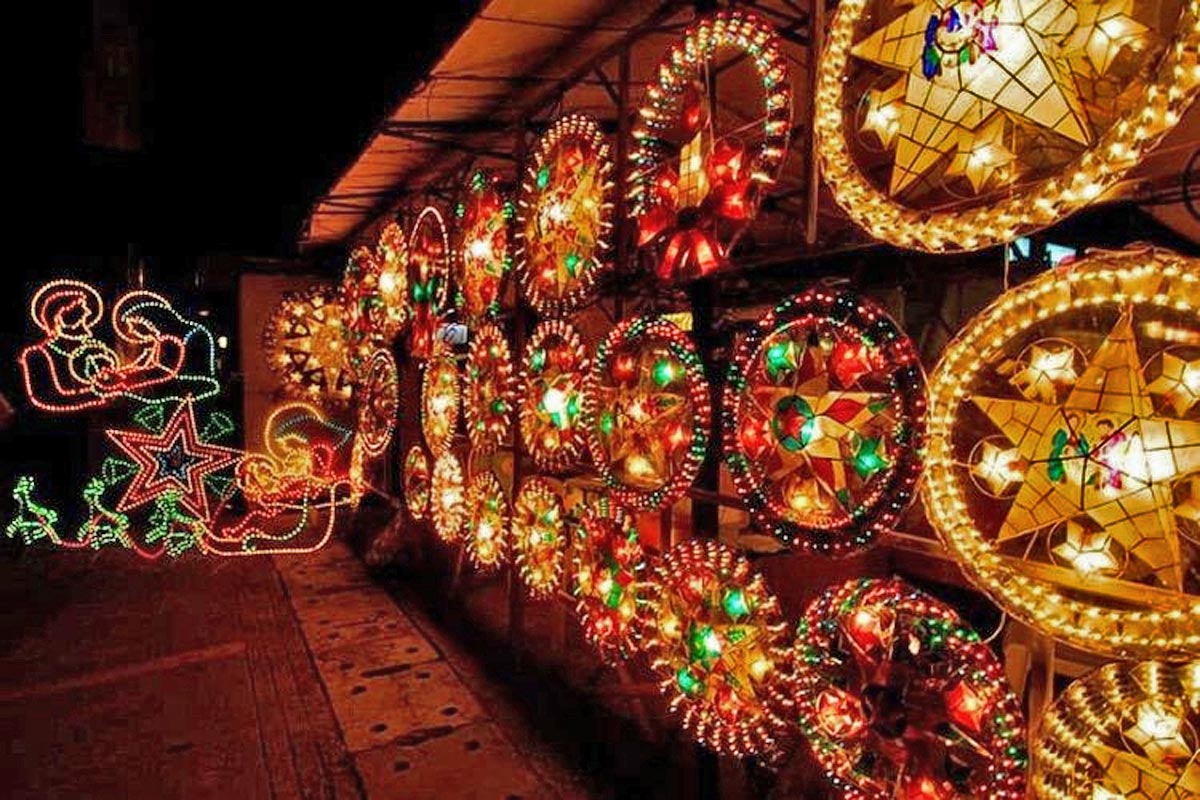
- Paról: Perhaps the most iconic symbol of Filipino Christmas, this is a star-shaped lantern representing the Star of Bethlehem. Originally simple, they are now often intricate and brilliantly lit. The paról is a beautiful example of local artistry adapting a religious symbol.
- Noche Buena: Like in other Hispanic cultures, this is the grand family feast on Christmas Eve. It takes place after the midnight Misa de Gallo and is the heart of the family celebration.
Let's explore the cultural importance of Noche Buena in more detail.
Why Noche Buena Is the Heart of Christmas in the Philippines
The video 'Why Noche Buena Is the Heart of Christmas in the Philippines' delves into the food, history, and cultural values embodied by this essential family feast.
Please watch from 01:03 to 05:25. Pay attention to: The historical connection to the Spanish Misa de Gallo. The types of dishes served, blending Spanish and Filipino flavors. The core values it represents, such as family togetherness (bayanihan) and generosity (pakikipagkapwa).
The Noche Buena is more than just a meal; it's an expression of core Filipino cultural values, emphasizing family, community, and generosity.
Test your understanding!
Using the Filipino Christmas as an example, can you explain the concept of syncretism? How did pre-colonial traditions and Spanish Catholicism merge to create the modern celebration?
Show answer
Syncretism is the blending of different belief systems and cultures. In the Philippines, the long pre-colonial harvest festival, which occurred from roughly September to January and was dictated by natural cycles like the Amihan wind and migratory birds, provided a cultural template. When Spanish missionaries introduced Christmas, the existing celebratory season was not erased. Instead, Christian meanings were layered on top. The long period of feasting and community gathering was re-contextualized as the Christmas season, culminating in traditions like Simbang Gabi and Noche Buena. The paról itself is a local adaptation of a Spanish religious symbol.
Mexico: A Season of Ritual and Fiesta
Christmas in Mexico, or Navidad, is not a single day but an entire season of celebrations stretching from mid-December to early February. It is a structured and ritual-rich period where solemn religious processions blend seamlessly with lively community fiestas.
The Wikipedia article "Christmas in Mexico" provides a fantastic chronological guide to the season's main events. We'll use it to walk through the festivities.

Let's explore the key traditions that structure the Christmas season in Mexico using the 'Christmas in Mexico' Wikipedia article.
Please read the following three sections: 'Las Posadas' (from Dec 16 to 24): Focus on the description of the procession that re-enacts Mary and Joseph's search for an inn, and the symbolic meaning of the star-shaped piñata. 'Christmas Eve and Christmas Day': Note the importance of the midnight 'Mass of the Rooster' and the traditional dishes of the midnight feast. 'Three Kings' Day (Epiphany)': Understand why January 6th is so important, especially for children receiving gifts, and the tradition of the 'Rosca de Reyes' bread.
This reading gives us a clear timeline of the most important Mexican Christmas traditions:
-
Las Posadas (December 16-24): For nine nights, communities engage in processions that dramatize Mary and Joseph's search for lodging (posada means "inn" or "lodging"). Participants go from house to house, singing to ask for shelter, until they are finally welcomed into a designated home for a party. These parties famously feature a piñata, traditionally a seven-pointed star representing the seven deadly sins, which is broken to release the "blessings" (candy and fruit) inside.
-
Nochebuena (December 24): The final posada is followed by the Misa de Gallo ("Mass of the Rooster"). Afterwards, families gather for a midnight feast featuring dishes like bacalao (salt cod), turkey, and romeritos (a greens dish in mole sauce).
-
Día de los Tres Reyes Magos (January 6): For many children in Mexico, Epiphany, or Three Kings' Day, is the main day for receiving gifts, which are brought by the Three Wise Men, not Santa Claus. Families share a special ring-shaped sweet bread called Rosca de Reyes. Hidden inside is a small figurine of the baby Jesus. Whoever finds the figurine in their slice is obligated to host a party and provide tamales for everyone on February 2nd.
-
Día de la Candelaria (February 2): Candlemas officially ends the season. It commemorates the presentation of Jesus at the temple. This is the day for the tamale party promised by the person who found the figurine in the rosca, bringing the entire cycle of festivities to a close.
Conclusion
Today we explored how Christmas is celebrated in the Philippines and Mexico, two cultures where centuries of Spanish Catholic influence have intertwined with local customs to produce rich and distinctive traditions.
Key Takeaways:
- The Philippines is defined by the world's longest Christmas season, a practice rooted in pre-colonial harvest celebrations that were later syncretized with Christian holidays. Key traditions include the nine-day dawn masses of Simbang Gabi, the iconic star-shaped paról lanterns, and the vital family feast of Noche Buena.
- Mexico's Christmas is a highly structured season of ritual and celebration running from December to February. It is marked by unique traditions like Las Posadas (the nightly processions), the symbolic breaking of the piñata, and the central role of Día de los Tres Reyes Magos (Three Kings' Day) for gift-giving and the sharing of the Rosca de Reyes.
Both celebrations show us a version of Christmas that is deeply communal, rich in symbolism, and integrated into the annual rhythm of life in a way that differs significantly from the modern, commercialized American Christmas.
In our next lesson, we will examine an even more distinct form of cultural adaptation. We'll travel to Japan to analyze the adoption and adaptation of Christmas in a non-Christian culture, exploring how a religious holiday can be transformed into a purely secular and commercial one.