Hello! Welcome to the final lesson in our course on the history of Christmas.
In our last session, we explored the vibrant Christmas traditions of the Philippines and Mexico. We saw how centuries of Spanish Catholicism merged with pre-colonial and indigenous cultures, creating rich, syncretic celebrations like Simbang Gabi and Las Posadas.
Today, we turn to a fascinatingly different case: Japan. Here, a Christian holiday has been adopted and thoroughly adapted by a predominantly non-Christian society. This lesson will analyze the adoption and adaptation of Christmas in non-Christian cultures, using Japan as a case study. We will trace its journey from a forbidden foreign religion to a major secular and commercial event, exploring how traditions like eating fried chicken on Christmas Eve came to be.
A Tale of Two Christmases: The First Encounter
The story of Christmas in Japan doesn't begin with department stores and festive jingles, but with missionaries and shoguns in the 16th century. To understand the modern celebration, we first need to look at this initial, and ultimately suppressed, introduction.
The video 'Christmas In Feudal Japan' by The Shogunate channel provides an excellent overview of this early history.
Please watch from 00:56 to 07:18. As you watch, focus on: How Christmas was first introduced by Jesuit missionaries like Francis Xavier. The nature of the first recorded public Christmas celebration in 1552. The reasons for the ban on Christianity and Christmas under the Tokugawa Shogunate. The clever adaptation of the 'Dutch New Year' (Oranda Shōgatsu) at Dejima during Japan's period of isolation.
As the video explains, Christmas first arrived during Japan's turbulent Sengoku period. It was celebrated openly for a short time before being driven underground. For over 200 years, during the Edo period, Christianity was forbidden. The only trace of a Western winter celebration was the "Dutch New Year" held at the trading post of Dejima—an early and telling example of adapting a foreign custom to fit local circumstances.
Rebirth as a Secular Holiday: The Meiji Era and Beyond
The modern story of Christmas in Japan begins in the late 19th century with the Meiji Restoration. As Japan opened its borders and embarked on a rapid course of modernization and Westernization, Christmas was reintroduced—not as a religious observance, but as a fashionable Western custom.
The article "The Evolution of Christmas in Japan" from Tokyo Weekender provides a concise summary of this transformation.
The Evolution of Christmas in Japan
This article outlines the key phases of Christmas's reintroduction and evolution in modern Japan.
Please read the section titled 'Meiji Christmas.' Focus on how the holiday entered public consciousness through commercial channels like department stores and how it became a secular celebration of 'cheer' rather than religion.
This secular adoption set the stage for Christmas to evolve in a uniquely Japanese way, heavily influenced by consumer culture, especially during the post-war economic boom.
The following video provides a more detailed narrative of this evolution, connecting the dots from the early 20th century to the lavish celebrations of the 1980s economic bubble.
Christmas in Japan: A Brief History
The video 'Christmas in Japan: A Brief History' traces the development of modern Japanese Christmas traditions.
Please watch from 01:25 to 06:06. Pay attention to: How women's magazines helped popularize Christmas as a family holiday in the early 20th century. The early substitution of chicken for the harder-to-find turkey. The explosion of consumerism and the shift towards extravagant celebrations and romantic dates during the post-war economic boom.
As you've seen, from its reintroduction, Japanese Christmas was largely disconnected from its religious roots. It was a canvas onto which new, commercial, and social meanings could be painted.
The Holy Trinity of Japanese Christmas: Cake, Couples, and Kentucky Fried Chicken
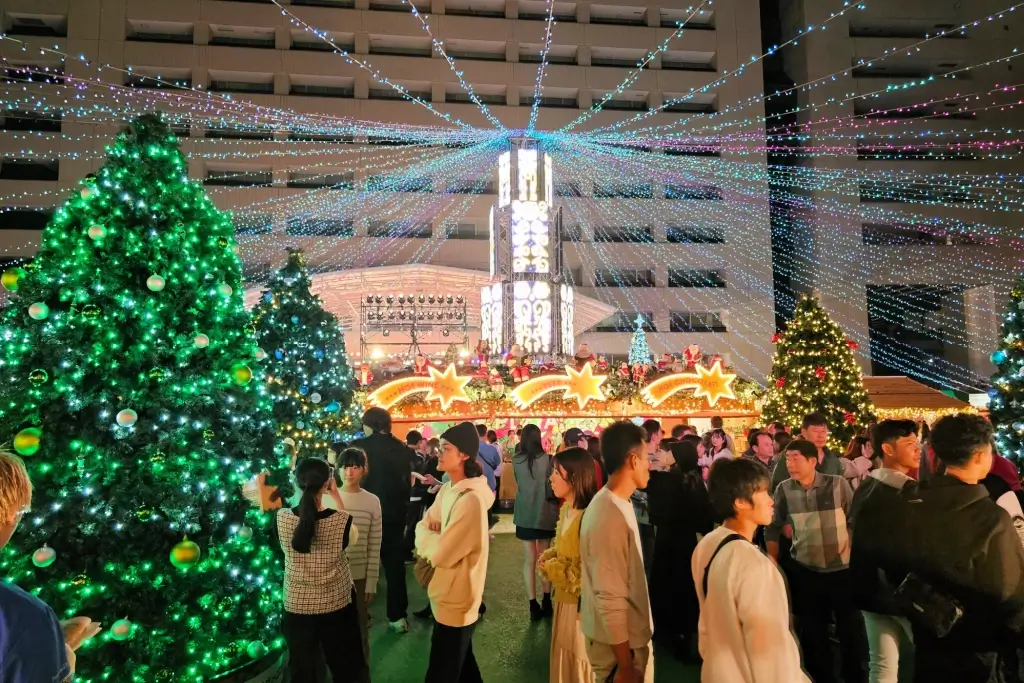
Today, Christmas in Japan is defined by a set of traditions that can seem surprising to outsiders. Let's analyze the three most prominent pillars of the modern Japanese Christmas.
1. Christmas Cake (クリスマスケーキ)
The "Christmas Cake," typically a strawberry shortcake, is a ubiquitous symbol of the season. Available everywhere from high-end bakeries to convenience stores, its red and white colors are festive, and its consumption is a non-negotiable part of the celebration for many families.
2. A Holiday for Couples
Unlike the family-centric Christmas in many Western countries, in Japan, Christmas Eve is widely considered the most romantic night of the year, akin to Valentine's Day. Couples exchange gifts and go out for expensive dinners, and hotels and restaurants are booked months in advance. This transforms the holiday into an occasion for romantic expression.
3. Kentucky for Christmas (クリスマスはケンタッキー)
The most famous and fascinating adaptation is the tradition of eating KFC for Christmas dinner. This is not a fringe custom; it's a nationwide phenomenon where families place their orders for special "party barrels" weeks or even months in advance. How did this happen? It was a masterful act of marketing that perfectly met a specific cultural and practical need.
To understand this phenomenon, let's look at the story in detail.
How KFC Hijacked Christmas in Japan
The article 'How KFC Hijacked Christmas in Japan' analyzes the practical and cultural reasons behind this tradition's success.
Please read the section 'Social gaps, ovens, and imagery.' Focus on the three key reasons presented for why fried chicken became a holiday anchor in Japan.
The success of KFC's campaign is a perfect case study in the creation of an "invented tradition." The campaign filled a void: there was no native tradition for Christmas dinner. It offered a practical solution for households without large ovens needed to roast a turkey. And it used powerful, resonant imagery, with Colonel Sanders's grandfatherly figure easily mapping onto the image of Santa Claus.
The following segment of the "Christmas in Japan" video details the history of the campaign and its impact.
Christmas in Japan: A Brief History
Now, let's see the story of the KFC campaign brought to life, including its origins and its solidification during Japan's economic downturn.
Please watch from 06:06 to 15:00. Note the two origin stories for the campaign and how the introduction of the 'Party Barrel' and the economic bust of the 1990s cemented KFC's place as a Christmas tradition.
The story of KFC in Japan is a powerful example of how a commercial campaign can create a durable cultural tradition by being in the right place at the right time with the right message.

Test your understanding!
Based on the lesson, what were the key factors that allowed for the successful secular adoption and commercial adaptation of Christmas in Japan? Think beyond just "good marketing."
Show answer
Several key factors converged:
- Lack of Religious Competition: As a non-Christian nation, Japan had no deeply rooted religious winter solstice festival that Christmas would have to compete with or displace.
- Historical Context of Westernization: Christmas was reintroduced during the Meiji era, a period when Japan was actively importing Western customs and technologies as part of its modernization drive. This framed Christmas as "modern" and "fashionable" rather than "religious."
- Cultural and Practical Voids: There was no traditional Japanese Christmas dinner. KFC filled this void with a convenient, Western-style meal that was practical for smaller Japanese kitchens, which often lack large ovens.
- Economic Drivers: The post-war economic boom fueled a consumer culture eager for new ways to celebrate. Later, the economic bust of the 90s made the affordable luxury of a KFC party barrel more appealing than the extravagant dinners of the 80s, solidifying its place.
- Effective Symbolism: The holiday was successfully reframed around accessible secular concepts: romance (for couples), family fun (Christmas cake), and festive cheer (illuminations, Santa Claus).
Conclusion: A Global History of Adaptation
This lesson, and our course, concludes with Christmas in Japan—a holiday almost entirely transformed from its religious origins into a secular celebration of romance, consumerism, and fun. It stands in stark contrast to the syncretic celebrations in the Philippines and Mexico, demonstrating the sheer flexibility of cultural traditions.
This concludes our journey through the history of Christmas. We began in the ancient world with winter solstice festivals like Saturnalia, traced the holiday's birth and theological development in the early Church, and saw it blossom in medieval Europe. We witnessed its suppression during the Reformation and its grand reinvention in the Victorian era. Finally, we have seen how this single holiday has been adopted and adapted across the globe, taking on entirely new forms in places like Mexico, the Philippines, and Japan.
Key Takeaways from Today's Lesson:
- Christmas was first introduced to Japan in the 16th century but was quickly banned and suppressed for over 200 years.
- It was reintroduced in the late 19th century as a secular, Western custom during Japan's modernization.
- Modern Japanese Christmas is defined by unique, non-religious traditions, including KFC for dinner, strawberry shortcake, and celebrating Christmas Eve as a romantic holiday.
- The success of these traditions illustrates how a cultural void can be filled by commercial forces that offer practical solutions and resonate with secular values like family, fun, and romance.
Thank you for joining me on this historical exploration. I hope it has given you a richer and more nuanced understanding of how this global holiday came to be celebrated in so many fascinating and diverse ways.