Welcome to the final lesson of our introductory module. In our previous sessions, we've traced the social and philosophical currents that gave rise to literary realism and established a four-part framework for identifying its core characteristics: verisimilitude, ordinary subjects, detailed social observation, and psychological depth.
To bring our understanding of realism into sharp focus, this lesson will contrast it directly with its immediate predecessor, Romanticism. Defining a concept by what it is not is a powerful analytical method. By examining the aims, subjects, and techniques that the realists rejected, we can more fully appreciate the radical nature of their project. This lesson will equip you with the final set of conceptual tools needed to begin our analysis of the novels themselves, starting with Balzac's Père Goriot.
The Romantic Sensibility
Before we can draw a contrast, we must first establish a clear picture of Romanticism. It was not just an artistic style but a comprehensive intellectual and emotional orientation—a reaction against the Enlightenment's emphasis on pure reason and the emerging industrial world's mechanization of life.
To grasp the spirit of Romanticism, I'd like you to watch several segments from the following video by The School of Life. It presents Romanticism as a series of historical and philosophical "moments" that collectively define its worldview.
HISTORY OF IDEAS - Romanticism
This video offers a highly conceptual overview of the key ideas that animated the Romantic movement, framing it as a reaction against modernity.
Please watch the following clips to build a picture of the Romantic mindset: The introduction, which defines Romanticism as a reaction to industrialization and secularization. The doomed artist: Pay attention to the idealization of the sensitive individual rejected by a vulgar, commercial world. Passionate love: Notice how emotion (the "heart") is privileged over all rational or practical considerations. The worship of nature: Observe how nature is presented as a spiritual antidote to the mechanical, industrial world. The idealization of the past: Note the fascination with a pre-industrial, medieval world seen as more "noble" than the present.
This video gives you the philosophical and emotional texture of the movement. Romantics valued intuition over reason, the individual over society, and nature over industry. They championed intense emotion, the power of the imagination, and the idea of the lone, visionary artist.
A Tale of Two Movements: A Direct Comparison
With this understanding of Romanticism in place, we can now systematically contrast it with Realism across the three axes laid out in our learning outcome: aims, subjects, and techniques.
The following brief reading provides a clear, academic summary of the core distinctions.
[PDF] 5. Major Literary Movements: Romanticism, Realism, and Modernism
This document offers a concise comparison between the movements. It will serve as the backbone for our analysis.
Please read the first paragraph of the section titled "Comparison of Romanticism, Realism, and Modernism." It begins on page 13. Focus on the core assertion made about how each movement approaches experience and truth.
This reading crystallizes the central opposition: "While Romanticism invited transcendence through imagination, Realism sought truth through representation." Let's break this down further.
1. Aims: Transcendence vs. Representation
The fundamental goals of the two movements were diametrically opposed.
- Romanticism's Aim: Transcendence. The Romantics sought to rise above the mundane and the ordinary. Their art was a vehicle for accessing higher truths through intense emotion, communion with nature, or the power of the imagination. The goal was not to replicate reality but to explore the inner world of feeling and the sublime beauty of the natural world. A Romantic work wants you to feel deeply and to be transported.
- Realism's Aim: Representation. The Realists, grounded in the philosophies of empiricism and positivism, sought to document the world as it was. Their aim was to provide a faithful, accurate, and objective representation of contemporary life and society. They believed truth was found not by transcending reality, but by observing it closely and analyzing its mechanisms. A Realist work wants you to see clearly and to understand.
2. Subjects: The Extraordinary vs. The Ordinary
This difference in aims led to a stark divergence in their choice of subject matter.
- Romantic Subjects: The Extraordinary. Romantics were drawn to the exceptional: the heroic or doomed individual (like Lord Byron's heroes or Goethe's Werther), sublime and untamed landscapes, supernatural events, and idealized historical pasts. Their protagonists are often artists, visionaries, or rebels who stand apart from society.

- Realist Subjects: The Ordinary. Realists turned their attention to the mundane, the typical, and the contemporary. Their subjects were the burgeoning middle and lower classes—merchants, doctors, clerks, factory workers—and their everyday struggles with money, social status, and personal relationships. The setting is not the untamed wilderness but the rapidly growing, complex, and often harsh urban environment.
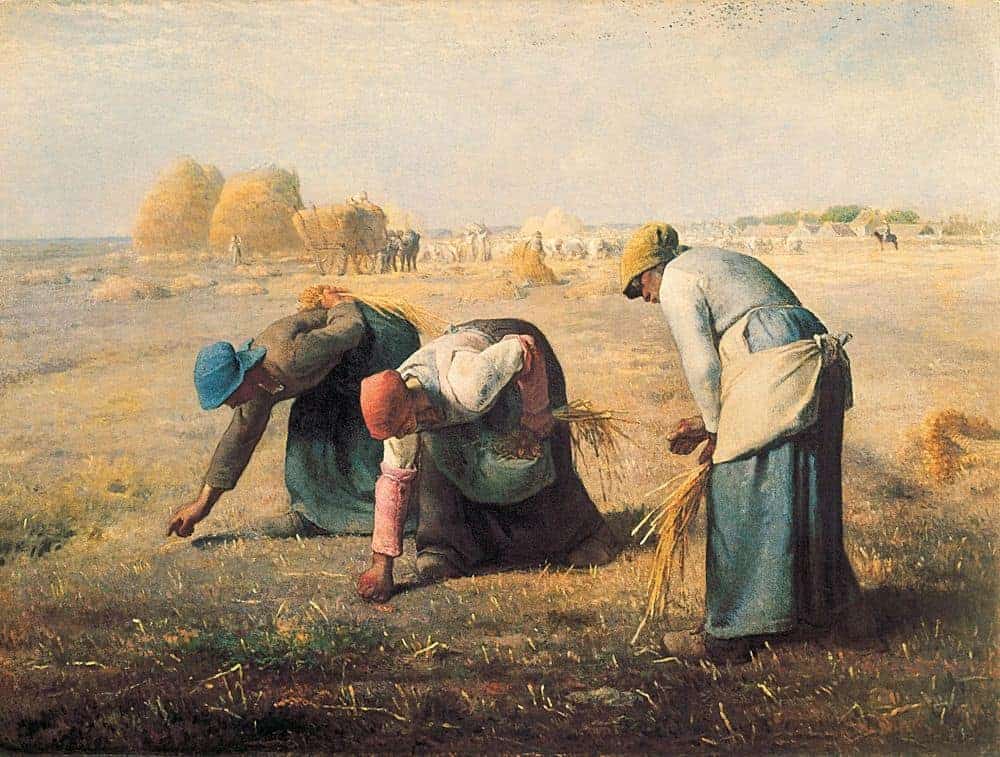
3. Techniques: Subjective Expression vs. Objective Description
Finally, their methods and styles were as different as their aims and subjects.
- Romantic Technique: Subjective Expression. Romantic writers often used a passionate, elevated, and lyrical style. The author's voice and feelings are frequently present. The goal of the language is to evoke emotion, and tools like metaphor, symbolism, and personification are common. The first-person perspective, particularly in poetry, is a hallmark of the movement.
- Realist Technique: Objective Description. Realist writers cultivated a plain, precise, and seemingly objective style. They aimed for what Flaubert would call "authorial impersonality," where the author's own opinions and emotions are hidden from view. This is often achieved through a third-person omniscient narrator who can report on the external world and the internal thoughts of characters with a clinical, analytical detachment. The style is built on the accumulation of specific, concrete, sensory detail, grounding the narrative in a verifiable reality.
For a final summary of these contrasts, the following short video neatly recaps the key differences.
Romanticism vs. Realism: Literary Movements Explained
This video provides a direct, point-by-point comparison that will help consolidate your understanding of the two movements.
Please watch the entire video from the start of the explanation of Romanticism to the end. It serves as an excellent high-level review of everything we've discussed.
Conclusion
Today we have placed Realism in its historical and artistic context by contrasting it with Romanticism. This opposition is fundamental to understanding the 19th-century novel and will be a recurring theme throughout this course.
Here are the key distinctions to remember:
| Feature | Romanticism | Realism |
|---|---|---|
| Aim | Transcendence, emotion, imagination | Representation, truth, observation |
| Subject | The extraordinary, heroic, natural, sublime | The ordinary, typical, social, mundane |
| Focus | The individual | Society and the individual's place within it |
| Style | Subjective, lyrical, passionate, metaphorical | Objective, plain, detached, detailed |
| Worldview | Idealistic, spiritual | Materialistic, scientific |
You have now completed the foundational module of this course. You have a grounding in the basic elements of narrative, the historical and philosophical context of realism, a four-part definition of the movement, and now, a clear understanding of how it defined itself against its predecessor.
In our next module, we will put this theoretical framework into practice. We will begin our study of Honoré de Balzac's Père Goriot, a novel that is considered a foundational text of French Realism. As you read, you will be uniquely positioned to identify how Balzac employs realist techniques to create a panoramic and searing portrait of Parisian society.