Welcome to the final lesson of our foundational module on LLMs and generative AI. In our previous session, we examined the common failure modes of LLMs—hallucinations, stale knowledge, and prompt injection. Understanding these weaknesses is a prerequisite for building robust systems. Today, we shift from problems to practical decisions, addressing a question that every AI developer faces: which model should I use?
This lesson will guide you through a comparative analysis of the three major model providers: Google (with its Gemini family), OpenAI (with GPT models), and Anthropic (with Claude models). We won't just look at marketing benchmarks; we will evaluate them on the criteria most critical for developing the kind of production-grade AI agents you aim to build. Specifically, we will focus on:
- Tool Calling Support: An agent's ability to interact with the world.
- Context Size: An agent's working memory.
- Latency: The speed of an agent's thoughts and actions.
- Cost: The economic viability of running an agent at scale.
By the end of this lesson, you will have a framework for choosing the right model for the right job, a crucial skill for making informed architectural decisions.
The Big Picture: Three Competing Visions
Before we dive into technical specifications, it's valuable to understand the strategic philosophies of the major players. Their technical decisions and the nature of their ecosystems are direct reflections of what they believe the future of AI looks like. A recent analysis provides a clear breakdown of these diverging visions.
Anthropic vs OpenAI vs Google: Three Different Bets on the Future of ...
This article from MindStudio offers a strategic overview of how Anthropic, OpenAI, and Google are approaching the development of AI agents. It frames the comparison not just on model capabilities but on their core philosophies.
Please read the following sections to grasp the strategic landscape: Start with the introduction to understand the four key dimensions of comparison: autonomy philosophy, ecosystem architecture, reasoning approach, and deployment. Read the section on Anthropic: Safety as Infrastructure. Pay attention to the "Minimal Footprint Principle" and the concept of the open Model Context Protocol (MCP). Next, read OpenAI: The Full-Stack Play. Note their strategy of vertical integration, from consumer apps like ChatGPT to the mature developer API and Agents SDK. Finally, read Google: The Platform Integrator. Focus on their advantages in "Grounding" with real-time search, the massive context window of Gemini, and deep integration with Google Cloud and Workspace.
As you can see, the choice isn't just about which model is "smarter." It's about aligning with an ecosystem. Anthropic bets on safety and open standards, OpenAI on owning the full stack with maximum capability, and Google on leveraging its vast data and existing enterprise platforms. Your choice of GCP as a target platform already gives you a natural affinity with Google's ecosystem, a point we'll revisit.
A Head-to-Head Technical Comparison
With the strategic context set, let's get tactical. We will now compare the models on the four key criteria for agent development.
1. Context Window: The Agent's Working Memory
The context window, as we've learned, is the amount of information (text, code, images) a model can process at once. For an agent, a large context window is critical for maintaining long conversations, understanding complex documents, or analyzing entire codebases without losing track of details.
In this area, there is a clear leader.
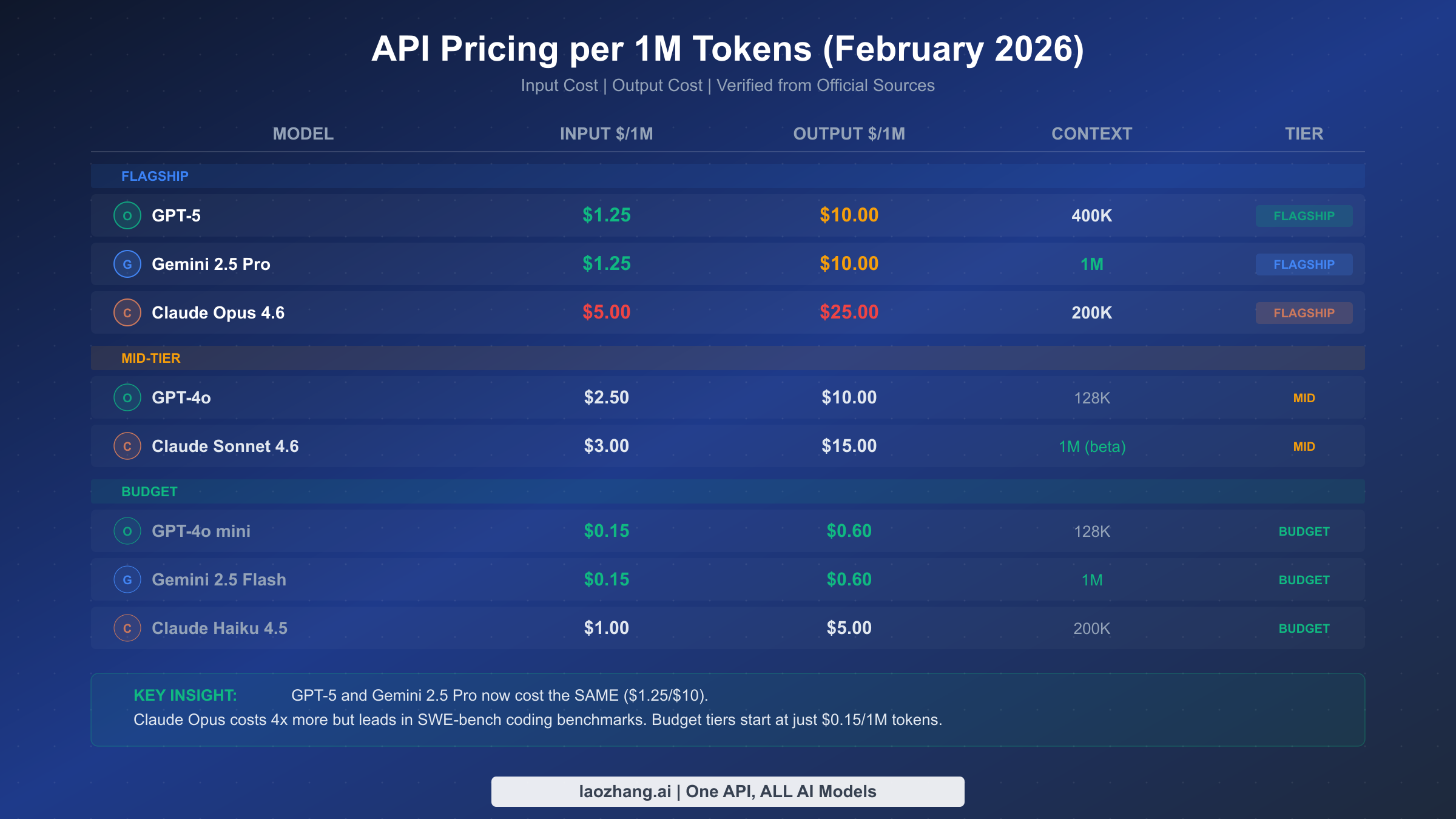
The table clearly shows Google's Gemini 1.5 Pro with a context window of 1 million tokens (and a 2M token version available), far surpassing OpenAI's 128K and Anthropic's 200K. For your goal of building logistics agents that might need to process lengthy shipping manifests, regulatory documents, or conversation histories, this is a significant practical advantage.
2. Tool & Function Calling: The Agent's Hands
An agent that can't act is just a chatbot. Tool calling is the mechanism that allows an LLM to interact with external systems—APIs, databases, or your own C# functions. Its reliability is non-negotiable for production agents. While most modern models claim to support tool calling, their real-world performance, especially under pressure, can vary dramatically.
The following video provides an intensive benchmark focused specifically on this capability, testing how well models can execute long, sequential, and parallel chains of tool calls—a scenario that directly mirrors complex agentic workflows.
Best LLM for Parallel Function Calling: 14 LLM, 420 Prompt, 1 Winner Benchmark
This video from IndyDevDan, "Best LLM for Parallel Function Calling," provides a rigorous, live benchmark of various models' ability to handle complex tool-calling scenarios. It demonstrates the importance of empirical testing over relying on marketing claims.
First, watch the introduction from the beginning to understand why reliable tool calling is the cornerstone of "long running agentic workflows." Next, jump to the section from where the test is scaled up. Here, the presenter starts chaining many tool calls together, including repeated calls to the same tool, to simulate a complex plan. Finally, watch the summary and conclusion from the final analysis. Pay close attention to the surprising winner and the stark difference in performance and cost between the top performers and the hyped models.
The video's conclusion is striking: in this demanding benchmark, Gemini 1.5 Flash emerged as the clear winner, delivering nearly 100% accuracy on long chains of tool calls at a fraction of the cost and with superior speed. Conversely, some other highly-regarded models struggled significantly, proving that you cannot take this capability for an granted.
This is a powerful lesson: for agent-specific tasks, you must test, not just assume.
Within the Semantic Kernel framework that you'll be using, this capability is exposed through features like FunctionChoiceBehavior and ToolCallBehavior. The maturity of a provider's tool calling API directly impacts how well it integrates with SK.
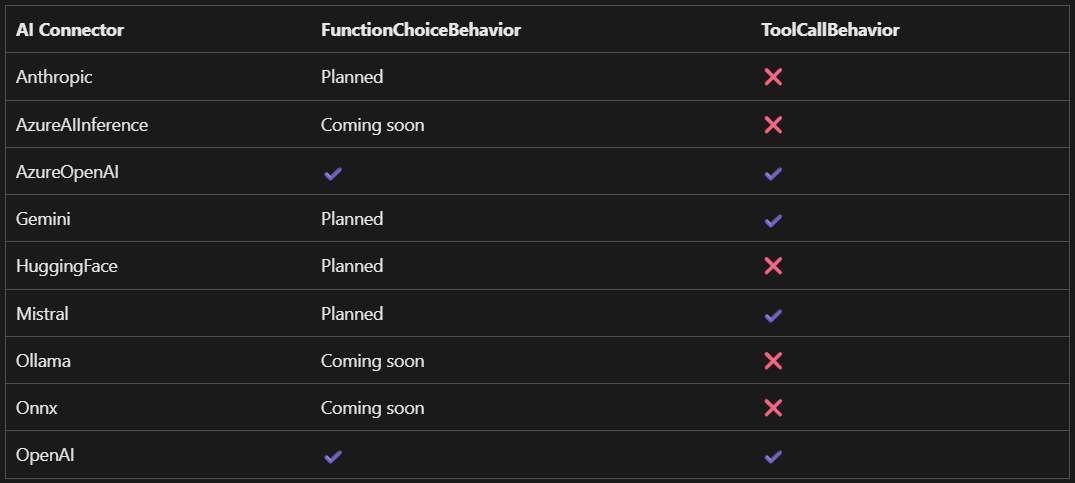
As the table shows, providers like Azure OpenAI and OpenAI have historically had very mature support within the SK ecosystem. However, with Google's rapid improvements in Gemini's tool-calling, and its strong performance in benchmarks, its support and reliability within the ecosystem are also advancing quickly.
3. Latency: The Agent's Reaction Time
For many applications, especially interactive ones, an agent's perceived intelligence is directly tied to its speed. High latency can make an agent feel sluggish and unusable. This is another area where benchmarks reveal significant differences.
Let's look at another experiment, this time focused on a Retrieval-Augmented Generation (RAG) task, which also provides a clean measure of end-to-end latency.
Best Model for RAG? GPT-4o vs Claude 3.5 vs Gemini Flash 2.0 (n8n Experiment Results)
In this video, "Best Model for RAG?," Nate Herk conducts an experiment comparing GPT-4o, Claude 3.5, and Gemini Flash. While the focus is RAG, it includes an excellent direct comparison of speed.
Please watch the segment on the speed test, from 10:28 to 12:08. The presenter runs the same query through all three models and compares the raw execution time.
The result is unambiguous: Gemini Flash completed the task in 6.7 seconds, while GPT-4o took 11 seconds and Claude 3.5 took nearly 21 seconds. For latency-sensitive tasks, the "Flash" variant of Gemini is engineered specifically for this speed, often making it a top choice for real-time interactions.
4. Cost: The Agent's Economic Viability
Finally, we must consider the cost. An agent that costs dollars per task is a novelty; one that costs fractions of a cent is a scalable production system.
Claude vs GPT-4 vs Gemini: Which LLM for Production AI Agents? – Athenic Blog
This blog post from Athenic provides a concise, feature-level comparison of the leading models, including a very practical breakdown of pricing.
First, review the Feature comparison table at the top. Note the input and output prices per million tokens for each model. Then, examine the Pricing comparison scenario, which calculates the monthly cost for a hypothetical workload. This makes the abstract token prices much more concrete.
The numbers speak for themselves. In the provided scenario, Gemini 1.5 Pro is less than half the cost of GPT-4o and about a third of the cost of Claude 3.5 Sonnet. The tool-calling benchmark video reinforced this, showing Gemini Flash completing its tasks for less than a cent while other models racked up charges for failed attempts. For a logistics agent that might handle thousands of queries a day, this cost difference is a deciding factor.
Conclusion: Choosing the Right Tool for the Job
We've covered a lot of ground, moving from high-level strategy to specific technical and financial metrics. The most important takeaway is that there is no single "best" model. The "best" choice is a function of your specific needs.
Here’s a summary to guide your decisions:
-
Choose Anthropic/Claude when:
- Your primary concerns are safety, reliability, and predictable behavior (e.g., in regulated industries like finance or legal).
- You need to perform nuanced reasoning over very long, complex documents and are willing to pay a premium for that quality.
-
Choose OpenAI/GPT when:
- You want the most mature and well-documented developer ecosystem with the largest community.
- You are building consumer-facing applications and can leverage OpenAI's brand and experience.
- You need access to frontier reasoning models for exceptionally complex problem-solving.
-
Choose Google/Gemini when:
- Cost is a primary driver, and you need to build a scalable, economically viable service.
- You require a massive context window to process large volumes of data (documents, code, video).
- Low latency is critical for user experience, making Flash models an ideal choice.
- You are building on GCP and want to leverage tight integrations with services like Vertex AI, which we will explore next.
For your stated goal of building a logistics agent on .NET and GCP, the Gemini family of models presents a very compelling case. The combination of a massive context window for processing logistics documents, top-tier performance in tool-calling, excellent speed, and industry-leading cost-effectiveness aligns perfectly with the requirements of a production system.
This lesson concludes our foundational module. You now have a solid theoretical understanding of what LLMs are, how they work, their limitations, and how to choose among them. In our next lesson, we will leave theory behind and get our hands dirty. We'll begin Module 2 by setting up your GCP environment, enabling the necessary APIs, and preparing to make your first call to the Gemini API from a .NET application.