Welcome to our third lesson. In our previous session, we delved into Cognitive Load Theory, establishing a crucial principle: by minimizing unnecessary (extraneous) mental load, we free up our students' precious working memory for the productive effort of learning. We called this productive effort 'germane load,' which is the cognitive work involved in building and refining mental models.
Today, we will focus entirely on these mental models, more formally known as schemas. We will explore precisely what they are, the psychological mechanisms behind their formation, and why they are the absolute bedrock of learning—especially for complex, abstract subjects like computer science. For you as an instructor, understanding schemas is like a civil engineer understanding load-bearing structures; they are the invisible framework upon which all durable knowledge is built.
What is a Schema?
At its simplest, a schema is a mental framework that helps organize and interpret information. Think of it as a dynamic filing system in the brain. When we encounter new information, we don't just store it as an isolated fact. Instead, our brain tries to connect it to an existing "file" or category.
The video below offers a clear and accessible introduction to this concept.
Schema in Psychology and Education EXPLAINED!
This video from the Sharp Cookie channel provides an excellent starting point, using the analogy of a mental file system.
Please watch the first part of the video, from the beginning to this point. Notice how the example of a child's schema for "car" evolves with more experience. This illustrates that schemas are not static but grow and change.
As the video explains, we have schemas for everything from concrete objects like cars to abstract ideas like "justice" or, in your field, "iteration." These schemas are not just simple collections of facts; they are interconnected networks of concepts, relationships, attributes, and procedures.

To formalize this a bit, let's turn to a more detailed text.
Schema Theory – Design in Progress: A Collaborative Text on ...
This chapter from "Design in Progress" provides a solid academic definition of schema theory and its origins.
Please read the Introduction section. It will introduce you to the formal definition of a schema as a collection of related concepts and briefly touch upon its history in psychology and education.
The most important bridge to our last lesson is understanding that forming and using schemas is the brain's primary strategy for bypassing the limitations of working memory. By chunking vast amounts of information into a single, cohesive schema, an expert can manipulate a complex idea as if it were a single item in their working memory. A novice, who lacks the schema, has to juggle all the individual pieces, quickly becoming overwhelmed.
This brief video perfectly connects the dots between Cognitive Load Theory and schemas.
Teaching Strategies: Cognitive Load Theory
This clip from McGraw Hill explicitly links the concept of schema formation to managing working memory's limited capacity.
Watch this short segment from the video. It directly states that sorting information into schemas is the brain's "clever strategy" to avoid being overwhelmed.
How Schemas are Formed: Assimilation and Accommodation
So, how does the brain actually build and refine these structures? The process is a continuous cycle of interacting with the world and updating our internal models. The Swiss psychologist Jean Piaget, a pioneer in this field, described two fundamental mechanisms for this process: assimilation and accommodation.
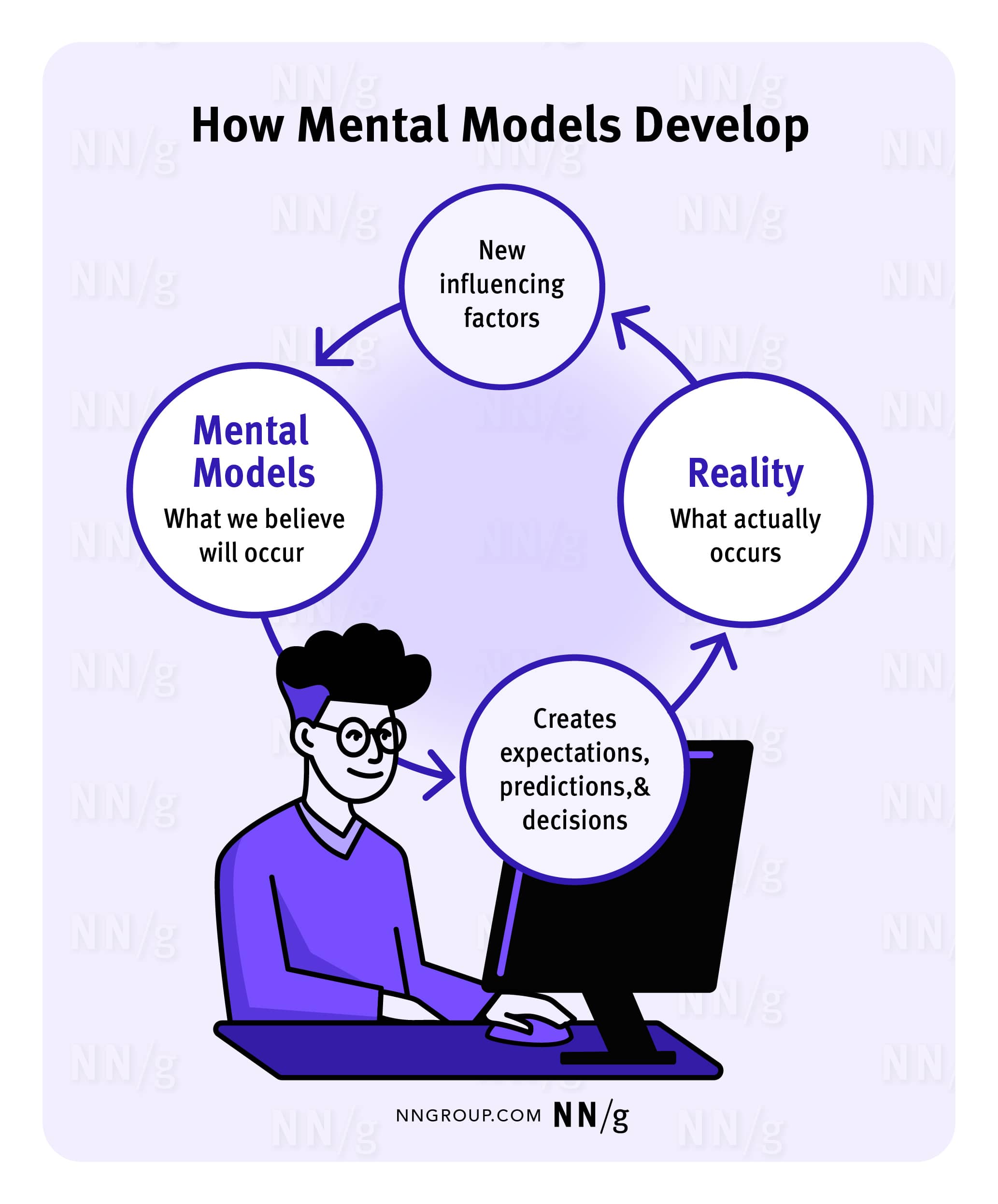
Let's unpack the core mechanisms that drive this cycle.
Schema Theory – Design in Progress: A Collaborative Text on ...
We'll return to the "Schema Theory" text to get a clear definition of the key processes involved in building schemas.
First, in the section "Fundamental Tenets," read the bullet point about these key processes. Then, skip down to the "Supporting Mechanisms" section. Read the descriptions and examples provided for Assimilation and Accommodation under the "Mechanisms" subheading. This is the heart of how schemas are formed.
To put this in the context of your computer science classes:
-
Assimilation: A student has an existing schema for a
forloop that iterates over a list of numbers. You then show them that aforloop can also iterate over the characters in a string. The student can easily assimilate this new information into their existing "iteration" schema. The core concept remains the same; they just expanded its application. -
Accommodation: The same student, comfortable with variables as simple containers for values (e.g.,
x = 10), is introduced to pointers in C++. A pointer is a variable that holds a memory address. This new information fundamentally conflicts with their simple "container" schema. They cannot just assimilate it. They must perform accommodation: either radically changing their variable schema or, more likely, creating a new, more sophisticated schema for "pointers" that co-exists with their schema for "value variables." This is a much more difficult cognitive step and is often where students struggle.
Your interest in AI will find a nice resonance here. The cognitive scientist Marvin Minsky, working on early AI, independently developed a similar concept called "frames" to represent knowledge in machines. He realized that for a machine to show human-like understanding, it needed these pre-packaged structures of knowledge, complete with default values and slots for new information, mirroring how human schemas work.
Why Schemas are Critical for Technical Learning
Understanding how schemas form is crucial, but understanding why they are the goal of learning is what will transform your teaching. Well-developed schemas are not just passive knowledge stores; they are active tools for thinking.
Here are the key reasons why fostering schema development is paramount:
- They Reduce Cognitive Load: As we've discussed, a rich schema allows an expert to treat a complex set of interrelated ideas as a single "chunk" in working memory, freeing up mental bandwidth for problem-solving.
- They Guide Attention: A student with a well-developed schema for "object-oriented programming" knows what to look for when reading a new piece of code—they focus on classes, objects, and methods, not just the individual lines of syntax.
- They Enable Inference: Schemas allow us to fill in the gaps. When a student sees
list.sort(), their schema for "list methods" allows them to infer that the list will be modified in-place, even if they've never seen that exact method before. - They Facilitate Faster Learning and Problem Recognition: An expert programmer facing a bug doesn't start from scratch. They rapidly match the problem's symptoms to a library of "debugging schemas" in their long-term memory, quickly identifying it as "an off-by-one error" or "a race condition."
This next article offers a very practical, hands-on method for helping students consciously build their schemas. It physicalizes the abstract process of connecting ideas.
What Is Schema? How Do We Help Students Build It?
This article by educator Julie Stern moves from theory to a concrete classroom technique using simple tools like index cards or Post-it notes.
First, read the introduction to understand the connection between schema and retention. Then, focus on the section titled "Now—on to the really good stuff." It describes the process of having students physically arrange concepts and write statements about their relationships. The science and math examples vividly illustrate how this helps students see the structure of their knowledge, not just isolated facts.
This index card activity is a direct application of everything we've discussed. It encourages students to move beyond memorizing individual concepts and actively work on building the connections between them, which is the very essence of schema construction.
Conclusion
In this lesson, we've unpacked the concept of mental schemas, moving from a simple "filing cabinet" analogy to the sophisticated cognitive mechanisms that build them. We've seen that learning isn't about accumulating isolated facts, but about weaving those facts into a rich, interconnected web of knowledge.
Here are the key takeaways:
- Schemas are mental structures in long-term memory that organize our knowledge about concepts, allowing us to handle complexity and reduce cognitive load.
- Schemas are built and refined through two key processes: Assimilation (fitting new information into an existing schema) and Accommodation (modifying a schema or creating a new one when information doesn't fit).
- Schemas are critically important because they guide attention, speed up learning, allow for inference, and form the basis of expertise in any technical field.
- As an instructor, your goal is to design activities that don't just present information, but actively help students build and connect their schemas.
We now have a clearer picture of what we're trying to build in our students' minds. But how do we make these structures last? Simply building a schema isn't enough if it's forgotten a week later. In our next lesson, we will explore two of the most powerful principles for strengthening schemas and ensuring long-term retention: the spacing effect and retrieval practice.