Introduction
Welcome to your fifth lesson. In our previous session, we delved into the philosophical underpinnings of global education, contrasting the Western liberal arts tradition with the critical lens of post-colonial theory. We saw how these competing ideas about the purpose of education—one aiming for a universal, rational individual and the other critiquing that very universality as a form of cultural power—shape curriculum debates worldwide.
Today, we transition from the realm of philosophy to the world of policy, connecting those abstract ideas to the powerful institutions that influence education on a global scale. This lesson directly addresses the learning outcome: Identify the key international organizations shaping global education policy (UNESCO, OECD, World Bank) and describe their respective roles.
We will explore the "big three" supranational organizations that create the frameworks, generate the data, and provide the funding that influences what happens in ministries of education and classrooms from Paris to Pretoria. You will discover that these organizations are not a monolith; they have distinct histories, mandates, and methods, often reflecting the very philosophical tensions we discussed in the last lesson.
The Architects of Global Education Policy
While many bodies play a role in international education, three stand out for their profound influence:
- UNESCO (United Nations Educational, Scientific and Cultural Organization)
- The World Bank
- The OECD (Organisation for Economic Co-operation and Development)
To understand their individual roles, it's crucial to compare their core characteristics. The following academic paper provides an excellent framework for this comparison.
This paper, 'A Comparative Study on the Roles of the World Bank, the OECD and UNESCO in Global Education Policy Making' by Xinyu Liu, offers a direct and clear comparison of the three organizations. It will provide us with a solid analytical foundation.
Please read Section 3 of the paper, titled 'ANALYSIS OF THE DIFFERENCES IN THE ROLES OF THE WORLD BANK, OECD AND UNESCO IN GLOBAL EDUCATION POLICY MAKING'. This section runs from page 539 to 541 and is broken into four parts. Focus on how the paper distinguishes the organizations based on: Support Targets: Who are they primarily trying to help? (Developed vs. developing nations) Perceptions of Education: What is the fundamental purpose of education for them? (e.g., economic, political, cultural, humanistic) Work Priorities: What do they actually do? (e.g., provide loans, collect data, set standards) Binding Force: How much power do they have to enforce their recommendations? (e.g., legal requirements vs. voluntary agreements)
Distilling the Differences
Based on the reading, we can summarize the distinct identities of these organizations in a table. This will be a useful reference as we continue our course.
| Criterion | UNESCO | The World Bank | OECD |
|---|---|---|---|
| Primary Target | Developing countries, with a universal mandate. | Developing countries. | Its member states, which are primarily high-income, developed countries. |
| View of Education | A human right and a public good; focus on social and cultural functions (peace, sustainable development). | An investment for economic growth and poverty reduction; focus on economic and political functions. | A key driver of economic growth and social cohesion; focus on economic and market-service functions. |
| Main Activities | Standard-setting (e.g., SDG4), data collection, holding conferences, coordinating global agendas. | Financial support (loans, grants), policy advice tied to funding, large-scale project implementation. | Data collection and analysis (e.g., PISA), setting international standards, peer review, publishing reports and indicators. |
| "Power" Type | Soft Power: Low binding force; relies on conventions, resolutions, and moral persuasion. | Hard Power: High binding force; conditions are often attached to loans, making them legally binding on recipient governments. | Persuasive Power: Low formal binding force, but high influence through peer pressure, rankings, and data-driven recommendations. |
This comparison reveals the different philosophies at play. UNESCO's humanistic approach echoes the ideals of education for personal and societal flourishing, while the World Bank and OECD's economic focus aligns with a more utilitarian, skills-based view of education's purpose.
The Organizations in Their Own Words
Now that we have a comparative framework, let's observe how these organizations present themselves and their priorities. The following panel discussion features senior leaders from the World Bank and UNICEF (a key UN partner agency that works closely with UNESCO).
Education Reforms in Global Context: Policy & Practice
This video, 'Education Reforms in Global Context,' from Penn Graduate School of Education, provides direct insight into the thinking and priorities of these organizations. We'll focus on the contributions from the World Bank and UNICEF.
Please watch the following two segments: Jaime Saavedra (World Bank): Watch from 22:16 to 29:04. Listen for his emphasis on the 'learning crisis' and 'learning poverty,' the four critical elements for reform (design, implementation, political will, funding), and the role of 'domestic resource mobilization.' Notice how this aligns with the World Bank's identity as a financier and policy advisor focused on economic outcomes. Robert Jenkins (UNICEF): Watch from 29:10 to 35:19. Note his focus on a 'skill-focused' curriculum: foundational literacy/numeracy, transferable skills, digital skills, and entrepreneurial skills. This reflects the UN system's work in translating broad goals (like UNESCO's SDG4) into specific, actionable targets for learning.
The discussion highlights the distinct but often overlapping priorities. Jaime Saavedra's language of crisis, measurement, and finance is characteristic of the World Bank's problem-solving, economic approach. Robert Jenkins' focus on a broad range of skills demonstrates how UN agencies are working to define what "quality education" means in the 21st century, moving beyond mere access.
Visualizing the Roles
The organizational structures and project focuses of these institutions also reveal their core nature.
UNESCO's Role as a Coordinator:

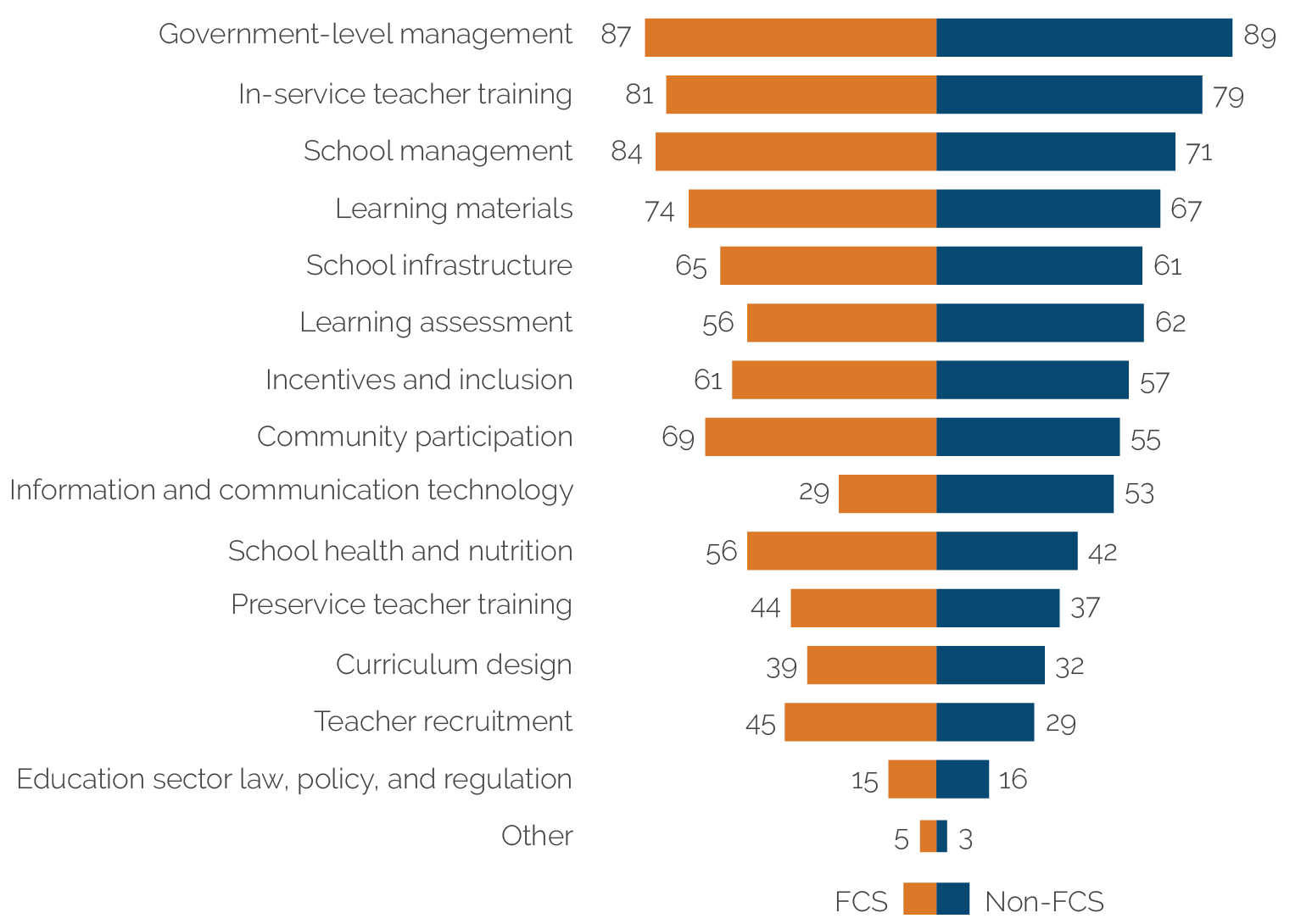
The World Bank's Role as a Funder and Implementer:
Synthesis: Connecting Policy to Philosophy
As you've likely noticed, the differences between these organizations echo the philosophical debates from our last lesson. In a recent analysis, "UNESCO, World Bank, and OECD: Global perspectives on the right to education," scholar Juliana de Fátima Souza frames this dynamic perfectly.
She argues that:
- UNESCO remains grounded in a humanistic vision, linked to the human rights framework, viewing education as a common good.
- The World Bank and the OECD, in contrast, are more aligned with the dominant political economy, viewing education as an instrument of global competition and a means to productivity.
This isn't just an academic distinction; it has profound implications for teachers. The World Bank and OECD's focus on evidence-based policy, competitive comparison (like PISA rankings), and accountability has led to a global emphasis on standardized testing and performance metrics. This approach, often termed "New Public Management," treats education as a system to be managed for efficiency, where teachers are resources for improving student performance. This often stands in tension with UNESCO's more holistic vision of education for peace, citizenship, and personal development.
As a future international educator, you will be working in systems that are shaped by the interplay of these powerful forces—the humanistic ideals promoted by UNESCO, the economic pressures and funding models of the World Bank, and the data-driven benchmarking of the OECD.
Conclusion
In this lesson, we have identified the key international organizations that shape global education policy and described their distinct roles, priorities, and modes of influence.
Key Takeaways:
- UNESCO, the World Bank, and the OECD are the three most influential supranational organizations in education, but they operate with different goals and methods.
- UNESCO acts as the world's "conscience" for education, setting global agendas (like SDG4) and promoting education as a human right. It operates through coordination and soft power.
- The World Bank acts as a global financier, using its "hard power" of loans and grants to drive policy reform in developing countries, with a primary focus on economic development and poverty reduction.
- The OECD acts as a "think tank" and standard-setter for primarily developed nations, using the "persuasive power" of data, international comparisons (like PISA), and peer pressure to promote policies that enhance economic competitiveness.
- The tension between UNESCO's humanistic vision and the World Bank/OECD's economic-instrumental view reflects the broader philosophical debates about the purpose of education and directly impacts policy, curriculum, and the teaching profession.
Preview of the Next Lesson:
Now that we have surveyed the global policy landscape, we will zoom in to the institutional level on the ground. In our next lesson, we will address the learning outcome: "Compare the goals and structures of public, private, and international schooling models." We will explore the different types of schools that exist within and across national systems, examining how they embody different philosophies and serve different populations.