Introduction
Welcome to your fourth lesson. In our last two lessons, we explored the historical implementation of colonial education systems, first in Africa and then in Asia. We saw how these systems were designed not for the holistic development of the colonized, but to serve the administrative, economic, and cultural goals of the colonizers. We ended by noting the enduring legacies of these models in language policies, structural inequalities, and Eurocentric curricula.
Today, we move from the what and how of historical events to the why—the philosophical ideas that have shaped and continue to shape education globally. This aligns perfectly with your preference for understanding the theoretical foundations of educational practice. Our learning outcome for this lesson is to: Explain the philosophical foundations underlying major global education traditions (e.g., liberal arts, post-colonial).
We will examine two powerful, and often conflicting, traditions:
- The Liberal Arts Tradition: A cornerstone of Western education, rooted in antiquity, which emphasizes the development of a free, well-rounded, and rational mind.
- The Post-Colonial Tradition: A critical lens that emerged in the 20th century to challenge the assumptions and power dynamics of Western-dominated knowledge systems, including education.
Understanding these two traditions is essential for navigating the world of international education, as their tensions are visible in curriculum debates, pedagogical approaches, and the very structure of schools around the world.
The Western Tradition of Liberal Arts
The term "liberal arts" can be misleading today; it has nothing to do with modern political liberalism. Its origins are much older, stemming from the Latin artes liberales, meaning the skills or subjects of study befitting a "free person" (liber). In ancient Greece and Rome, this was the education designed for citizens who were not slaves and therefore had the leisure and responsibility to engage in civic life.
The central goal was not job training, but the cultivation of the intellect and character. It was about learning how to think. To explore these historical and philosophical roots, let's delve into a short history of this tradition.
[PDF] In Defense of a Liberal Education | Hadi Nur
The provided text is an excerpt from Fareed Zakaria's book, In Defense of a Liberal Education. It gives an excellent historical overview of this educational philosophy.
Please read the first part of this chapter on the historical evolution, starting from the beginning and ending just before the paragraph that starts 'In the early twentieth century...' (This is the paragraph after the one discussing Samuel Eliot Morison). As you read, focus on: The original link between a broad education and the concept of liberty in ancient Greece. The foundational debate between Plato (education as a search for truth) and Isocrates (education for practical virtue and rhetoric). The formalization of the 'seven liberal arts' and the distinction between the humanities (seen as practical) and sciences (seen as abstract). The evolution of this idea through European monasteries, universities, and finally the English residential college model, which emphasized character building.
The Seven Liberal Arts: Trivium and Quadrivium
As the reading mentioned, the curriculum of a liberal education was eventually formalized into seven distinct arts. These were divided into two stages: the Trivium ("the three-fold way") and the Quadrivium ("the four-fold way").
This structure represented a path to mastery, first over language and then over number—the fundamental components of classical understanding.
What are the Seven Liberal Arts?
This short video from Classical Academic Press, 'What are the Seven Liberal Arts?', provides a clear and concise explanation of the Trivium and Quadrivium.
Please watch the entire video (about 5 and a half minutes). Take note of the specific arts within each group and the purpose attributed to them: The Trivium (Verbal Arts): Grammar, Logic, and Rhetoric (starting around 30 seconds in). The Quadrivium (Mathematical Arts): Arithmetic, Geometry, Astronomy, and Music (starting at about 3 minutes).
The Trivium was seen as the foundation for all learning, teaching a student to read and understand (Grammar), to think and reason correctly (Logic), and to communicate persuasively and beautifully (Rhetoric). Only then would they move on to the Quadrivium to understand the mathematical order of the physical world. The ultimate goal, as the video's conclusion notes, was to create a liberated, well-rounded individual who could then become a creator in their own right.
This philosophy, in various forms, is the bedrock of many Western educational systems, influencing everything from the structure of K-12 schooling to the general education requirements in modern universities.
The Post-Colonial Critique of Education
While the liberal arts tradition presents itself as a universal path to intellectual freedom, the 20th century gave rise to a powerful critique that questions this universality. This is the post-colonial tradition.
Post-colonialism is not an educational model itself, but a critical theory that analyzes the lasting effects of colonialism. As we saw in previous lessons, education was a key tool of the colonial project. Post-colonial theory provides the language and framework to understand how that worked and why its legacies persist.
What is Postcolonialism? A Short Introduction to Postcolonial Theory
To begin, let's watch 'What is Postcolonialism? A Short Introduction to Postcolonial Theory' from Armchair Academics. This video will give you the foundational concepts.
Please watch from the beginning. Pay close attention to: The definition of post-colonialism as a critical theory that examines the long-lasting consequences of colonization. The argument that ex-colonial powers continue to exert influence, particularly through education systems and the control of cultural representation. The mention of key thinkers like Frantz Fanon and Edward Said, whose work is central to understanding this field.
Post-colonial theory argues that the educational systems established by colonizers did more than just teach reading and writing; they fundamentally reshaped societies by imposing a specific worldview. This was achieved through what it calls the knowledge/power nexus. Knowledge, in this view, is never neutral; it is tied to power. The curriculum became a primary vehicle for this.
Let's explore how this critique applies directly to the curriculum.
[PDF] Curriculum in Postcolonial Contexts - QUT ePrints
The paper 'Curriculum in Postcolonial Contexts' by Anne Hickling-Hudson provides a detailed application of postcolonial theory to education. We will focus on a few key sections.
Please read the following three short sections: Start with the introductory section (spanning the first and second pages) to understand how postcolonial theory problematizes curriculum. Next, read the section titled 'The curriculum and cultural identity' (page 6). Note the discussion of Macaulay's Minute, which we covered in the last lesson, and the concept of education creating an ambivalent identity. Finally, read the section 'Whose Language? Whose Knowledge?' (page 7). This part, focusing on the work of Ngũgĩ wa Thiong'o, is particularly relevant to your background in English and Literature.
As the reading highlights, the post-colonial critique focuses on several key areas:
- Language: The imposition of a colonial language (e.g., English) was not just for communication. It positioned European culture as the center of the world and relegated indigenous languages—and the cultures they carried—to the margins.
- The Canon: In your field of literature, this is a central debate. The colonial curriculum promoted a canon of "great works" that was almost exclusively European. This implicitly taught that literature, history, and philosophy of value came from the West, while local traditions were framed as folklore or myth.
- Identity: By internalizing a foreign curriculum, students were encouraged to identify with the culture of the colonizer, leading to what is often called a "colonized mind"—a sense of cultural inferiority and alienation from one's own heritage.
The Call to Decolonize Curriculum
The logical extension of the post-colonial critique is a call to decolonize the curriculum. This is a concept gaining significant traction in educational discussions worldwide. It's not about simply erasing Western knowledge but about fundamentally rethinking how knowledge is structured and presented.
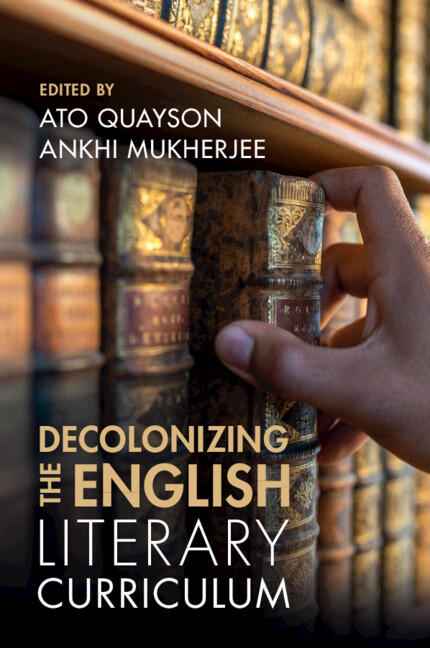
Decolonizing the curriculum involves:
- Challenging Eurocentrism: Actively questioning the assumption that European knowledge is the only or most important framework for understanding the world.
- Integrating Other Knowledges: Incorporating indigenous, local, and non-Western perspectives, histories, and ways of knowing into all subject areas.
- Revealing Power Dynamics: Teaching students to be critical consumers of knowledge by asking questions like: Who created this knowledge? For what purpose? Whose voices are included, and whose are silenced?
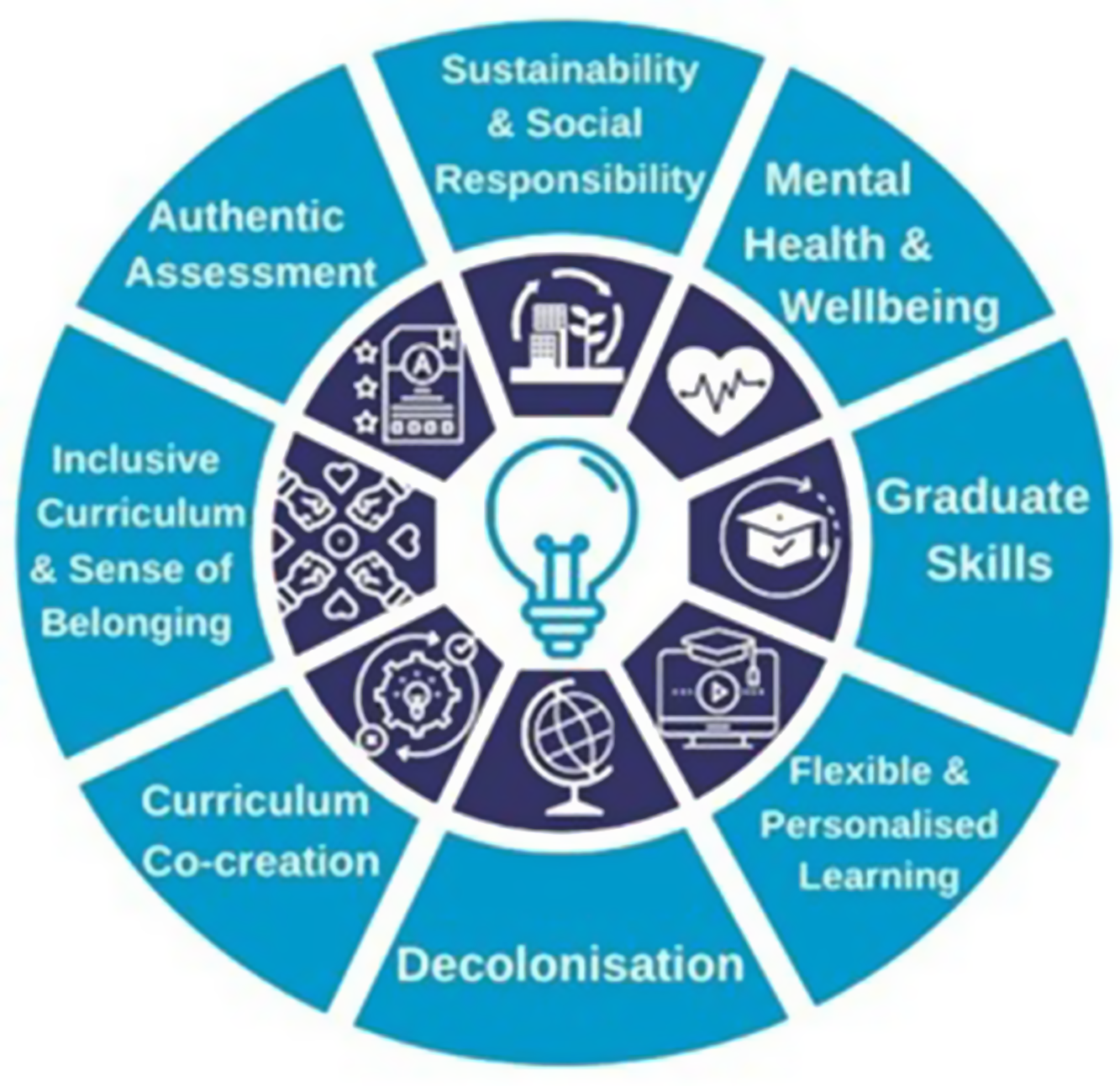
This is part of a broader movement to create more inclusive and equitable educational experiences.
Synthesis: Two Traditions in Dialogue
So, we have two major traditions:
- Liberal Arts: Aims to cultivate a universal, rational individual through a broad intellectual education, historically centered on a canon of "great works."
- Post-Colonialism: A critique that exposes the "universal" as often being a mask for Western cultural dominance and analyzes how education has been used as a tool of power, calling for a decolonization of knowledge.
These two are not always in opposition. Many modern liberal arts institutions are grappling with the post-colonial critique. They are attempting to decolonize their own curricula by:
- Expanding the literary and historical canon to include non-Western voices.
- Creating courses that critically examine the history of colonialism and its legacies.
- Promoting comparative and cross-cultural studies.
The Yale-NUS college mentioned in the Zakaria reading is a prime example of an attempt to build a liberal arts curriculum from the ground up with a global, multicultural foundation, studying Plato alongside Confucius, and the Odyssey alongside the Ramayana. This represents an effort to retain the spirit of the liberal arts—critical inquiry and broad learning—while shedding its Eurocentric baggage.
Conclusion
In this lesson, we have explored the philosophical foundations of two major global education traditions. We have seen how these ideas influence what is taught, how it is taught, and the ultimate purpose of schooling.
Key Takeaways:
- The Liberal Arts Tradition is rooted in the classical ideal of educating a "free person" for civic and intellectual life. It emphasizes broad knowledge and the development of critical thinking, traditionally through the seven liberal arts (Trivium and Quadrivium).
- The Post-Colonial Tradition offers a critical lens to analyze how education was used as a tool of colonial power. It critiques Eurocentrism, the imposition of colonial languages, and the marginalization of indigenous knowledge.
- Decolonizing the curriculum is the practical application of post-colonial theory. It seeks to create more equitable and inclusive educational systems by challenging the dominance of Western perspectives and integrating diverse voices and ways of knowing.
- The tension and dialogue between these two traditions are actively shaping contemporary educational reform and the future of international curricula.
Preview of the Next Lesson:
Having examined the historical and philosophical foundations, our next lesson will turn to the present-day institutional landscape. We will address the learning outcome: "Identify the key international organizations shaping global education policy (UNESCO, OECD, World Bank) and describe their respective roles." We will see how these powerful organizations navigate the complex legacies and philosophical debates we've discussed as they influence education on a global scale.