Hello! Welcome to the next phase of your interview preparation. We've spent a great deal of time on the technical "what" and "how" of system design. Now, we pivot to an equally critical area: communicating your experience and impact.
In our last lesson, we designed a complex distributed task scheduler, demonstrating the technical depth expected of a senior engineer. However, top companies know that building great software is not just about architecture; it's about collaboration, leadership, and resilience. This is where the behavioral interview comes in. As a senior engineer with 10 years of experience, this is often where your level (e.g., Senior vs. Staff) is determined.
This lesson kicks off our module on Behavioral Interview Fundamentals. Your learning outcome today is to describe the purpose and evaluation criteria of behavioral interviews at top companies. We will demystify this interview format, moving beyond the generic advice to understand the specific "signals" that interviewers at top-tier companies are trained to look for.
1. Why Behavioral Interviews Matter More Than You Think
For many engineers, the behavioral interview feels like a soft, less important hurdle compared to the rigors of system design. For senior candidates, this assumption is a significant mistake. At your level of experience, strong technical skills are the baseline expectation. The behavioral interview is where you differentiate yourself and prove you can operate at the scope and complexity the company needs.
Let's start with a short video featuring an ex-Meta Hiring Committee Chair who explains why behavioral interviews are so critical, especially for senior roles.
Behavioral Interview Discussion with Ex-Meta Hiring Committee Member
In this first segment, you'll hear why behavioral interviews are often underprepared for, how they actually make you a better engineer, and why they are the primary tool for leveling senior candidates.
Watch the video from 01:19 to 05:29. Pay close attention to the distinction made between how a senior (L5) and staff (L6) engineer's experience would appear differently in a behavioral interview, even if their system design interviews look similar.
As you just saw, the behavioral interview is not a simple "culture fit" check. It's a structured assessment designed to answer one fundamental question: Is your past performance a good predictor of your future success at this company and at the desired level?
2. The Evaluation Framework: What Are "Signals"?
So, how do interviewers make this assessment? They don't just rely on a "gut feeling." Top companies use a structured framework based on collecting signals—evidence of specific competencies and behaviors. Think of it like a rubric used to grade an exam.
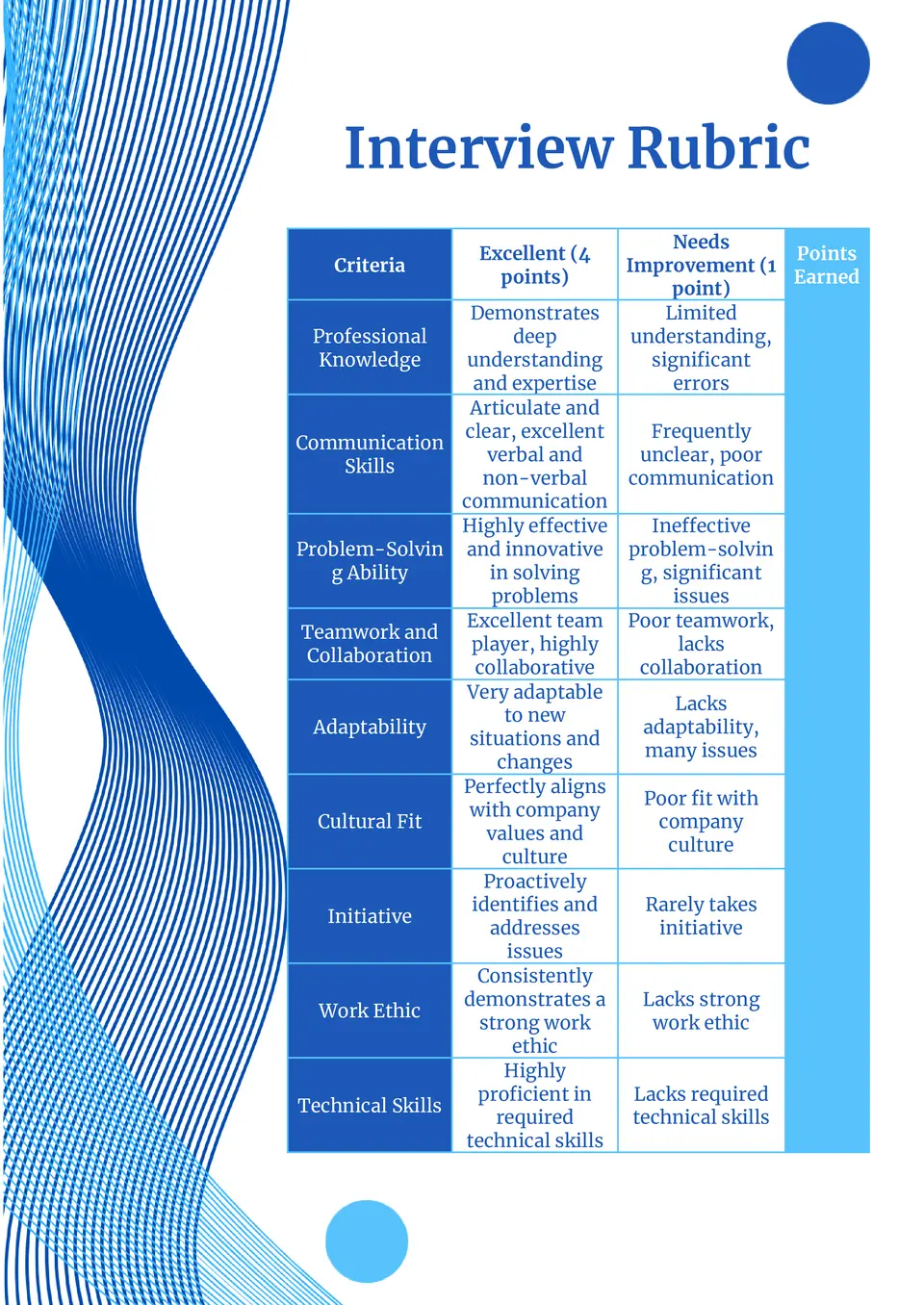
For software engineering roles at top companies, these criteria are much more specific. Let's look at a real-world example.
How SWE behavioral interviews are evaluated at Meta
This article from a former Meta Engineering Manager breaks down the exact evaluation framework used in their behavioral interviews. It provides a clear, structured list of the core areas they assess.
Read the sections 'Purpose of the interview' and 'Example Questions and Answers'. As you read through the eight focus areas (from Motivation to Communication), think about projects from your own 10-year career where you've demonstrated these qualities.
As the article from interviewing.io outlines, interviewers are systematically looking for evidence of qualities like:
- Proactivity & Initiative: Do you wait to be told what to do, or do you identify problems and opportunities yourself?
- Handling Ambiguity: How do you act when the path forward is not clear? Can you break down a vague problem into concrete steps?
- Perseverance & Resilience: What do you do when you face setbacks, technical challenges, or pressure?
- Conflict Resolution: How do you handle disagreements with peers, managers, or other teams? Do you seek win-win outcomes?
- Growth Mindset: How do you learn from your mistakes? How do you react to and give feedback?
- Ownership & Accountability: Do you take full responsibility for your work's success and failures, from start to finish?
Your experience leading projects and mentoring juniors has undoubtedly required you to exercise these skills. The challenge of the interview is to make this implicit experience explicit and compelling.
3. How Signals Determine Your Level
For a senior candidate like yourself, demonstrating these signals isn't just about passing the interview; it's about securing the right level and compensation. The scope of your stories is the primary indicator of your seniority.
Consider the signal of Initiative:
- Mid-Level Engineer: "My task queue was empty, so I proactively asked my tech lead for the next most important task."
- Senior Engineer: "I noticed our team's CI/CD pipeline was slow and flaky, so I took the initiative to research solutions and led the effort to migrate us to a new system, reducing build times by 50%."
- Staff Engineer: "I identified that multiple organizations were rebuilding similar authentication services, leading to duplicated effort and security risks. I wrote a design doc for a centralized identity platform, formed a cross-functional working group, and influenced VPs to fund the new platform team."
Notice how the scope of impact grows from a personal task, to a team-level problem, to an organizational-level strategic initiative. To be hired at a senior or staff level, you must provide examples that demonstrate that broader scope of influence and problem-solving.
How to Nail Big Tech Behavioral Interviews as a Senior Software Engineer
This article provides excellent advice on preparing for behavioral interviews, emphasizing how they are used to determine your level. It also covers common mistakes senior engineers make.
First, read the section 'Behavioral Interview is Where Your Level Gets Determined' to reinforce the concept of scope. Then, read the section 'Common Pitfalls That Cost Senior Engineers Offers'. This will give you a clear understanding of the 'anti-signals' that can lead to being down-leveled or rejected.
4. Common Red Flags and Anti-Signals
Understanding the evaluation criteria also means knowing what interviewers perceive as red flags. Based on the article you just read and insights from experienced interviewers, here are the most common pitfalls for senior candidates:
- Insufficient Scope: Telling stories about small, simple problems. You must showcase your ability to handle complexity.
- Blaming Others: Attributing failures or challenges to "a difficult manager," "another team's bad code," or "company politics." Interviewers are looking for ownership and how you influenced the situation despite the obstacles.
- Lack of Detail ("What did YOU do?"): Using "we" too much without clarifying your specific role and actions. The interviewer needs to understand your individual contribution.
- Not Quantifying Impact: Stating you "improved performance" is weak. Stating you "reduced P99 latency from 500ms to 150ms by implementing a multi-layer cache, which cut database costs by 20%" is strong.
- Unprocessed Frustration: Talking about a past conflict or failure with anger or resentment. This signals a lack of a growth mindset and low emotional intelligence (EQ).
Being aware of these traps is the first step toward avoiding them. In the upcoming lessons, we'll focus on how to select and frame your stories to highlight your strengths and avoid these pitfalls.
Conclusion
In this lesson, we've pulled back the curtain on the behavioral interview process at top tech companies. You've learned that it is a structured, systematic evaluation, not just a casual conversation.
Key Takeaways:
- Purpose: Behavioral interviews aim to predict your future performance by assessing your past behaviors against a set of core competencies, or "signals."
- Evaluation Criteria: Interviewers are looking for specific signals like ownership, handling ambiguity, conflict resolution, and growth mindset. The scope of your examples is the key differentiator for seniority.
- Leveling is Key: For a senior candidate, the behavioral interview is arguably the most critical data point for determining your hiring level (e.g., L5 vs. L6), which directly impacts your role, responsibility, and compensation.
- Avoid Red Flags: Shifting blame, providing low-scope examples, or failing to detail your specific actions are common mistakes that can lead to being down-leveled or rejected.
Next Lesson Preview:
Now that you understand what interviewers are looking for, our next lesson will focus on how to deliver it. We will introduce the STAR method (Situation, Task, Action, Result), a powerful framework for structuring your answers to be clear, compelling, and rich with the signals that matter. You will learn how to take the raw material of your extensive experience and forge it into powerful interview stories.