Hello! Welcome to the final lesson of this module.
In our previous lessons, we've covered how to prepare and present your experiences, from structuring failure stories to asking insightful questions that establish you as a senior peer. You've learned how to proactively shape the interview narrative.
Today, we'll address what happens when the interview takes an unexpected turn. This lesson is about how to handle unexpected or curveball questions gracefully. While you can't prepare for every possible question, you can develop a robust strategy for tackling anything an interviewer throws at you. For a senior engineer, demonstrating poise and clear thinking under pressure is just as important as the answer itself.
1. Why Interviewers Throw Curveballs
First, let's understand the interviewer's motivation. Curveball questions are rarely designed to stump you for the sake of it. They are a tool to assess specific senior-level traits that standard questions might not reveal.
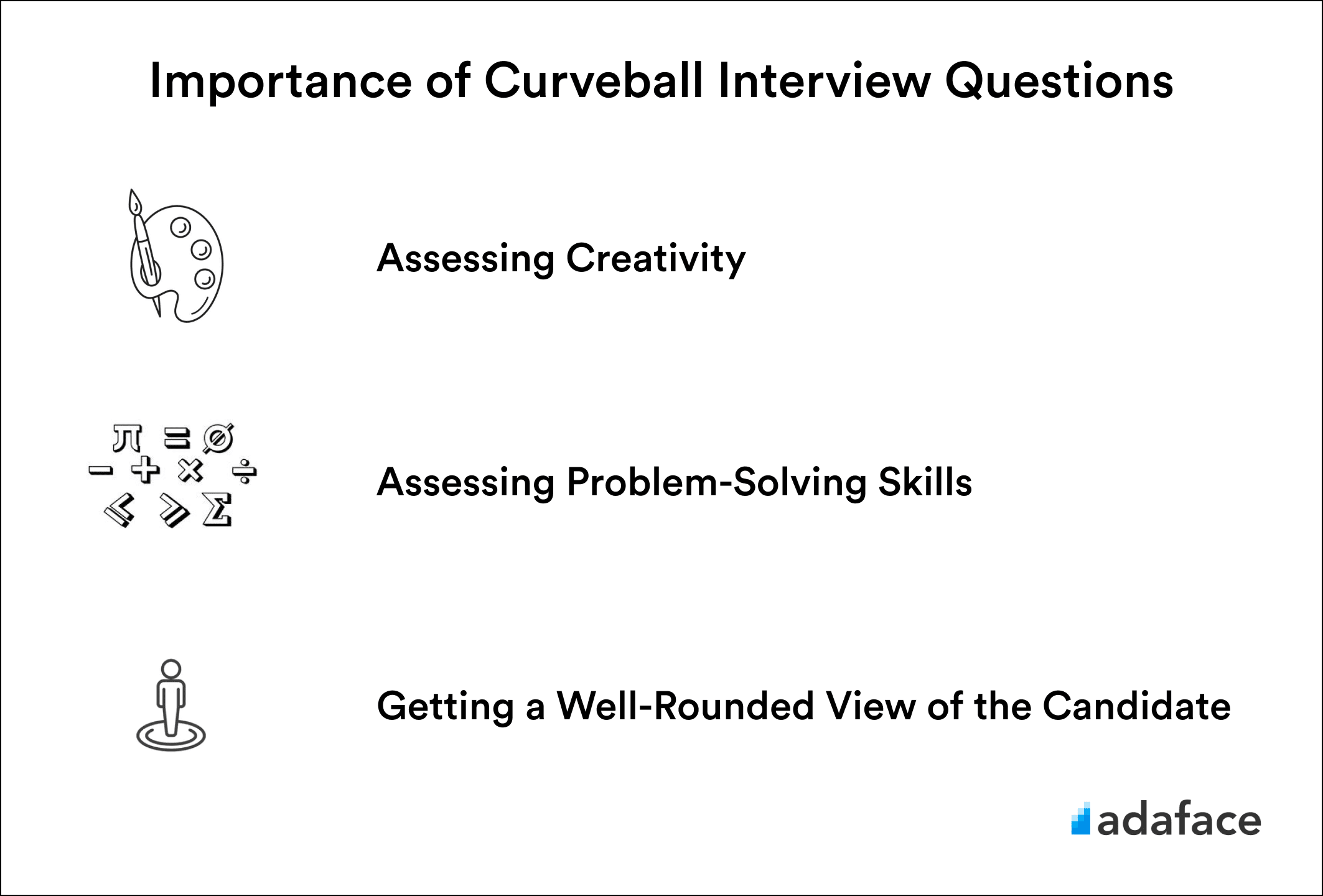
In essence, these questions are a test of how you handle ambiguity and pressure. As the article "Senior Software Engineer Behavioral Interview Questions: A Primer" points out, your ability to navigate ambiguity is a key factor companies use to evaluate senior talent. Your reaction—how you approach the problem—is often more important than the solution you provide.
2. The Universal Strategy: A Four-Step Framework
When you're hit with a question you didn't expect, your mind might go blank. The key is to resist panic and rely on a systematic approach.
Step 1: Stay Calm and Take a Moment
This is the most critical first step. A brief, deliberate pause signals thoughtfulness, not incompetence. It's perfectly acceptable to acknowledge the question and give yourself time to think.
Here's how you can tackle a curveball question during an interview.
This LinkedIn article, 'Here's how you can tackle a curveball question during an interview,' offers excellent advice on managing your immediate reaction.
Read the section titled 'Stay Calm'. Notice the emphasis on how interviewers observe your handling of pressure. It's fine to say, 'That's a really interesting question. Let me take a moment to think about that.'
This simple act takes the awkwardness out of the silence and gives you crucial seconds to collect your thoughts. The video below reinforces this point.
Leadership & Behavioral interviews for Engineers: FOLLOW THESE TIPS from ex-Google EM
In this video from IGotAnOffer, a former Google Engineering Manager discusses strategies for responding to questions.
Watch from 10:33 to 12:22. The speaker highlights that taking a moment to think is a positive signal of 'thoughtfulness and intentionality' to the interviewer.
Step 2: Clarify and Deconstruct the Question
Unexpected questions are often broad or vaguely worded. Don't guess what the interviewer is looking for. Ask clarifying questions to narrow the scope. This shows you're engaged and ensures your answer is on target.
Leadership & Behavioral interviews for Engineers: FOLLOW THESE TIPS from ex-Google EM
Let's return to the IGotAnOffer video, which presents a powerful framework for clarification.
Watch from 07:46 to 10:13. The speaker introduces two approaches for broad questions like 'What's your approach to leadership?': Opt-in: Ask the interviewer for more context or constraints. Opt-out: Propose a narrower scope for your answer and get their implicit approval (e.g., 'Leadership is a big topic. Why don't I talk about three principles I use...'). This is a highly effective technique for a senior candidate to manage the conversation.
By clarifying or proposing a scope, you regain a degree of control and demonstrate a structured approach to problem-solving.
Step 3: Categorize the Question and Choose Your Angle
Once you understand the question, quickly categorize it in your mind. This will help you structure your response. The IGotAnOffer video introduces a useful mental model.
- Story Questions: "Tell me about a time when..." These ask for a specific past experience.
- Skill Set Questions: "How do you approach..." These are about your principles, philosophies, or general methods.
- Scenario Questions: "What would you do if..." These are hypotheticals designed to test your thought process.
Often, even if a question is phrased as a hypothetical, the strongest answer is one grounded in your actual experience. The article "Senior Software Engineer Behavioral Interview Questions: A Primer" notes that smart candidates know a situational answer (anecdotal data) is almost always better than a purely hypothetical one. Try to answer all questions as if they were situational, where possible.
Step 4: Pivot to Your Strengths
No matter how abstract the question, your goal is to connect it back to the skills and experiences that make you a strong candidate for the role.
Here's how you can tackle a curveball question during an interview.
The LinkedIn article provides good advice on this pivot.
Read the section 'Focus on Skills'. The core idea is to use the question as a launchpad to highlight your qualifications. For example, if asked 'If you were a pizza, what toppings would you have?', you could relate your answer to collaboration and versatility, skills relevant to a senior engineer.
3. Strategies for Specific Curveball Types
Let's apply this framework to common scenarios.
Scenario A: The Question You Have No Experience With
You might be asked, "Tell me about a time you had to sunset a major, beloved product." If you've never done that, don't panic or invent a story.
- Be Honest: Acknowledge you haven't faced that exact situation. Honesty builds credibility.
- Pivot to a Hypothetical: Immediately follow up by explaining how you would handle it based on your experience with related challenges (e.g., managing difficult stakeholder communications, making data-driven decisions).
Leadership & Behavioral interviews for Engineers: FOLLOW THESE TIPS from ex-Google EM
This strategy is perfectly articulated in the IGotAnOffer video.
Watch from 35:01 to 37:20. The speaker advises saying, 'I haven't had that experience yet, but I can talk to you about what I might do if I were in that situation...'. This changes the question from a 'story' to a 'scenario,' allowing you to showcase your problem-solving skills instead of getting stuck.
You can also use the "Move the Goalposts" technique described in the "Senior Software Engineer Behavioral Interview Questions" primer. Offer a related story: "I don't have a story about that exact situation, but I do have one about a time I had to manage a major migration with resistant users. Would that be helpful to discuss?"
Scenario B: The Vague Hypothetical
You might get a question like, "Your team's manager suddenly quits, and you're asked to step in and get the team back on track. What do you do?"
Your first instinct might be to launch into a story about a time something similar happened. Resist this urge. The interviewer asked a hypothetical for a reason: they want to see your raw problem-solving framework, not just a past success story.
Leadership & Behavioral interviews for Engineers: FOLLOW THESE TIPS from ex-Google EM
The IGotAnOffer video calls this out as a very common trap.
Watch from 46:32 to 49:47. The speaker warns that jumping directly to a personal story creates 'cognitive dissonance' for the interviewer. Instead, use the 'opt-in' approach: 'I've had something similar happen. I can tell you about that if you like, or I can walk you through how I'd approach this scenario.' This respects the interviewer's question while giving you an opening to use your experience.
If they want you to stick to the hypothetical, use the "Think Aloud" strategy from the LinkedIn article. Walk them through your process: "First, my priority would be stability, so I'd schedule 1-on-1s with each team member to understand their concerns... Next, I'd dig into the current project roadmap and commits to assess project health... Then, I would..."
4. Final Polish: Be Memorable
Once you have your answer structured, a final touch can help you stand out. Interviewers at top companies speak to many candidates. Making your response memorable can be a tie-breaker.
This doesn't mean being overly dramatic. It means adding small, authentic details or a touch of creativity that makes you more than just a list of qualifications. This could be a brief, relatable anecdote within your answer or a moment of candor about a lesson learned.
Conclusion
Gracefully handling unexpected questions is a hallmark of a senior professional. It's less about having the "right" answer and more about demonstrating how you think, adapt, and communicate under pressure.
Key Takeaways:
- It's a Test of Poise: The interviewer is watching how you react to ambiguity.
- Stay Calm, Pause, and Clarify: This is your universal first step. Buy yourself time and make sure you understand the question.
- Use the Opt-In/Opt-Out Framework: Propose a scope for broad questions to regain control of the narrative.
- Don't Invent, Pivot: If you lack direct experience, be honest and explain how you would approach the problem or offer a related story.
- Respect the Question Type: Resist the urge to turn a hypothetical question into a story without checking with the interviewer first.
Next Lesson Preview:
This lesson concludes our deep dive into the behavioral interview. You now have a comprehensive toolkit for preparing your stories, navigating difficult topics, and showcasing your seniority.
We will now shift gears to the other crucial component of your interview loop. In our next session, we will begin Module 1: System Design Interview Fundamentals. Our first lesson will break down the typical structure of a system design interview and introduce a systematic framework you can apply to solve any large-scale design problem.