Welcome to the next step in your journey to becoming a professional digital marketer. In our previous lesson, we established the critical importance of defining a target audience and explored the types of data—demographic, psychographic, and behavioral—that form its foundation. We talked about who we are trying to reach in abstract terms.
Today, we will bring that abstract audience to life. This lesson focuses on creating a buyer persona, a detailed, semi-fictional profile of your ideal customer. You will learn how to synthesize demographic, psychographic, and behavioral data into a practical tool that will guide every subsequent marketing decision you make. This skill is indispensable for crafting compelling social media content and, critically, for building the highly targeted Meta Ad campaigns you're eager to master.
From Data to a Human Face: What is a Buyer Persona?
While a target audience defines a broad group of people (e.g., "males aged 18-25 interested in video games"), a buyer persona creates a specific, relatable character within that group (e.g., "Gamer Gary, 22, a college student who values community and follows gaming influencers for purchase decisions"). This act of "humanizing" data is what makes a persona so powerful. It forces you to think about a real person with needs, goals, and challenges, rather than a set of data points.
To get a clear overview of this concept, let's start with a video from the "Marketing Explained" channel, which you'll recognize from our last lesson. It effectively defines what a persona is and why it's a cornerstone of modern marketing.
What is a Buyer Persona Explained! [Example + Free Template]
Watch the beginning of the video, "What is a Buyer Persona Explained!".
Please watch from the start until the timestamp 02:11. The speaker clearly defines a buyer persona, explains its importance, and breaks down the key types of information needed to build one.
As the video explained, a persona isn't just an exercise in creative writing; it's a strategic tool built on real research. It ensures that your marketing messages resonate deeply with the people who matter most to your business.
The Anatomy of a Powerful Persona
To build an effective persona, you need to collect and organize specific types of information. In the last lesson, we discussed the building blocks of an audience; now let's see how they assemble into a persona.
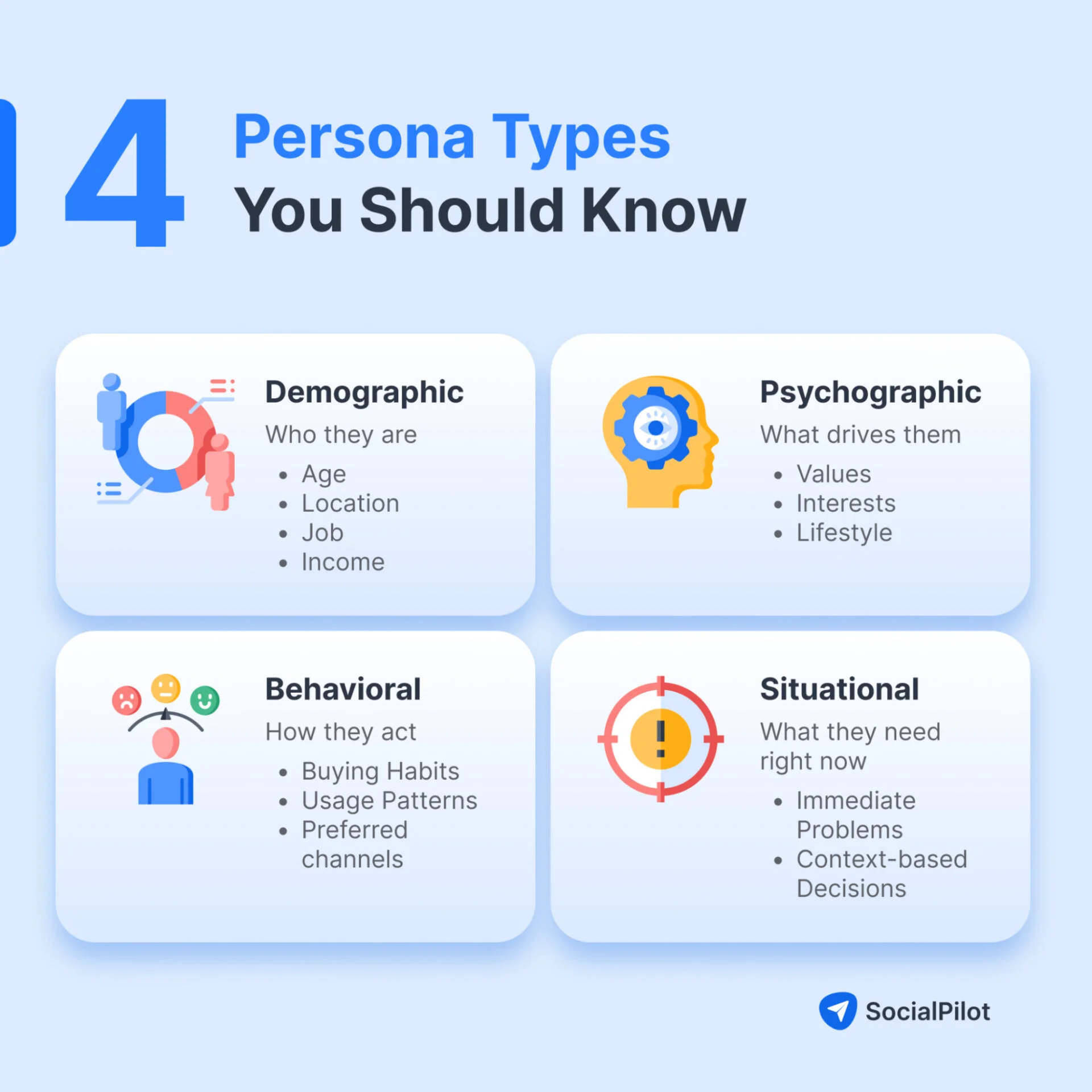
This image recaps the core data categories—Demographic, Psychographic, and Behavioral—that form the foundation of a persona. A strong persona integrates all three.
A complete persona typically includes the following components:
- Demographics: The basic facts about your person. This includes their age, location, job title, and income. It answers the question, "Who are they?"
- Psychographics: The internal landscape of your person. This covers their values, interests, lifestyle, and attitudes. It answers the question, "What drives them?"
- Goals & Pain Points: What are they trying to achieve, both personally and professionally? What obstacles, frustrations, or "pains" are standing in their way? Your product or service should ideally help them achieve a goal or solve a pain point.
- Behavioral Traits: Their observable actions. This includes their buying habits, the social media channels they use, and how they interact with brands online. It answers the question, "How do they act?"
Since your goal is to specialize in social media marketing, it's useful to think about a social media persona. This is a specific type of buyer persona that focuses intensely on a person's life and behavior on social platforms.
Social Media Persona: What is It and How to Create - M1 Project
This article from M1 Project provides an excellent overview of the social media persona. It explains how it differs from a general buyer persona by focusing specifically on digital habits.
Read the first two sections, starting from the beginning down to the end of the section titled "How Social Media Persona Differs from ICP and Buyer persona". Pay close attention to the key aspects it lists, as these are crucial for social media strategy.
By combining these elements, you can create a detailed and actionable profile. Here is an excellent example of what a finished persona looks like. Notice how it blends demographic data with goals, pain points, and even specific messaging ideas.
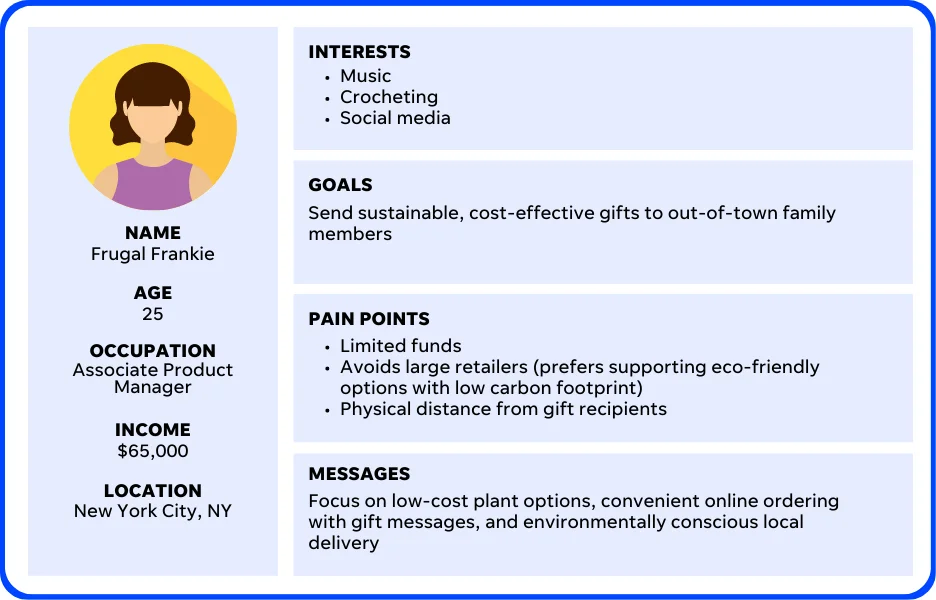
This example of a buyer persona for 'Frugal Frankie' effectively combines demographic data (age, occupation, income) with psychographic insights (interests, goals, pain points) to create a clear picture of a target customer.
How to Create Your Buyer Persona: A Step-by-Step Guide
Now for the practical part: building your own persona. This process involves research, analysis, and documentation. The following video offers a comprehensive, step-by-step walkthrough of the entire process, from data collection to integrating the persona into your marketing efforts.
The 11 Steps to Buyer Persona Development
This video, "The 11 Steps to Buyer Persona Development" from Neighbourhood Co., is a detailed and practical guide.
Watch the following segments to understand the core process: Gathering Information This section outlines various methods for collecting data, such as interviews, surveys, and using analytics—all practical research methods you can use. Naming & Demographics This part explains how to start structuring your persona with a name and core demographic details. Motivations, Goals & Challenges This is a crucial step. It shows how to add depth by uncovering the psychographics—what drives your persona. Integration & Distribution This concluding part explains how to use your finished persona to make real marketing decisions, like choosing content topics and social media channels.
To summarize and structure that process, let's break it down into three key phases.
Phase 1: Research and Data Collection
This is the most critical phase. A persona without real data is just a stereotype. You need to gather information from a variety of sources.
The Essential Guide to Creating Your Buyer Persona | PXP
This article from PXP provides a concise list of data collection methods.
Focus on the section under the heading "Research and Data Collection." Read the five key methods listed, from surveys to customer feedback.
In your work, you'll find that social media analytics (like Meta Business Suite) and website analytics (like Google Analytics) are invaluable quantitative sources. However, don't underestimate qualitative sources like customer interviews or even just reading comments on your social posts. These often provide the most powerful insights into your audience's pain points and goals.
Phase 2: Analysis and Synthesis
Once you've collected your data, look for patterns.
- Do many of your customers share a similar job title?
- Are there recurring challenges or frustrations mentioned in surveys and interviews?
- Which social media platforms appear most frequently in your analytics?
Group these common traits together to form the skeleton of your persona. Give them a name (alliteration, like "Frugal Frankie" or "Marketing Manager Matt," helps make them memorable), a photo, and a short bio. Then, fill in the details: their goals, their challenges, and some direct quotes from your research that capture their voice.
Phase 3: Documentation and Application
The final step is to create a clean, one-page document that summarizes your persona. The "Frugal Frankie" example above is a perfect model. This document should be shared with everyone involved in marketing, from copywriters to ad specialists.
It becomes the guide for all your creative decisions. When writing an Instagram caption, you'll ask, "Would Frankie find this interesting?" When choosing an image for a Meta Ad, you'll consider, "Would this visual grab Frankie's attention as she scrolls?" This is how a persona transforms from a document into a powerful strategic asset.
One final word of caution: avoid creating personas based on assumptions or stereotypes, and remember that they are not static. People and markets change, so it's good practice to revisit and update your personas at least once a year.
Conclusion
In this lesson, we've bridged the gap between raw data and real people. You now understand that a buyer persona is a practical, actionable representation of your ideal customer, built from a foundation of solid research. This tool is what enables you to create marketing that feels personal, relevant, and effective.
Key Takeaways:
- A buyer persona is a semi-fictional, detailed profile of an ideal customer based on real data.
- It humanizes your target audience, making it easier to craft resonant marketing messages.
- Personas are built using demographic, psychographic, and behavioral data. A social media persona adds a specific focus on online habits.
- The creation process involves three phases: research, analysis, and documentation.
- The final persona serves as a guide for all strategic and creative marketing decisions, from content topics to ad targeting.
You now know how to define who you're talking to and how to create a detailed profile of that person. In the next lesson, we'll shift our focus from the customer to the creators, and explore the typical roles and structure of a modern digital marketing team.