Hello! Welcome back to our module on Corporate Formation and Capitalization.
In our last lesson, we explored equity financing by comparing common and preferred stock, focusing on how a company raises capital by selling ownership. But what if a company needs funds without diluting its owners? This brings us to the other primary method of financing: debt.
Today's lesson will help you analyze the legal characteristics of debt financing, including bonds and credit agreements. For a future corporate lawyer, understanding the contracts and legal frameworks that govern debt is just as crucial as understanding equity. These instruments define the rights, obligations, and risks for both the borrowing company and its lenders, forming the backbone of corporate finance transactions.
1. An Overview of Corporate Debt: Bonds vs. Loans
Before diving into the legal minutiae, it's important to grasp the fundamental distinction between the two main categories of corporate debt: bonds and loans (which are governed by credit agreements). While both involve borrowing money that must be repaid with interest, they function differently in the market and are governed by distinct legal structures.
To get a clear overview, let's start with a video that introduces the corporate debt market and provides a high-level comparison.
What Are Corporate Bonds and Loans? | The Big Explainer | Refinitiv
The video 'What Are Corporate Bonds and Loans?' from Refinitiv offers an excellent introduction to why companies use debt and highlights the key differences between these two financing tools.
Please watch from the beginning up to the 05:22 mark. As you watch, focus on: The role debt plays in corporate growth (00:00 - 02:12). The core differences in duration and lender type (02:12 - 02:38). The description of bonds as instruments sold to investors (02:38 - 03:07). The explanation of loans, especially the analogies of a credit card for a 'revolver' and a mortgage for a 'term loan' (03:07 - 05:22).
The video introduces several key distinguishing features. The table below, which compares "Bank Debt" (loans governed by credit agreements) and "Bonds," summarizes these differences and will serve as a useful reference as we go deeper.

Now, let's analyze the specific legal characteristics of each, starting with bonds.
2. The Legal Architecture of Corporate Bonds
As you saw, a bond is essentially a loan that a company takes from a wide pool of investors. Each bond is a small piece of a larger debt offering. The entire relationship between the issuing company and the bondholders is governed by a master legal document.
The Bond Indenture
The core legal document for a bond is the bond indenture. This is a comprehensive contract between the bond issuer (the company) and a trustee (usually a bank) who represents the interests of all the bondholders. As a lawyer, you would be involved in drafting or reviewing this document.
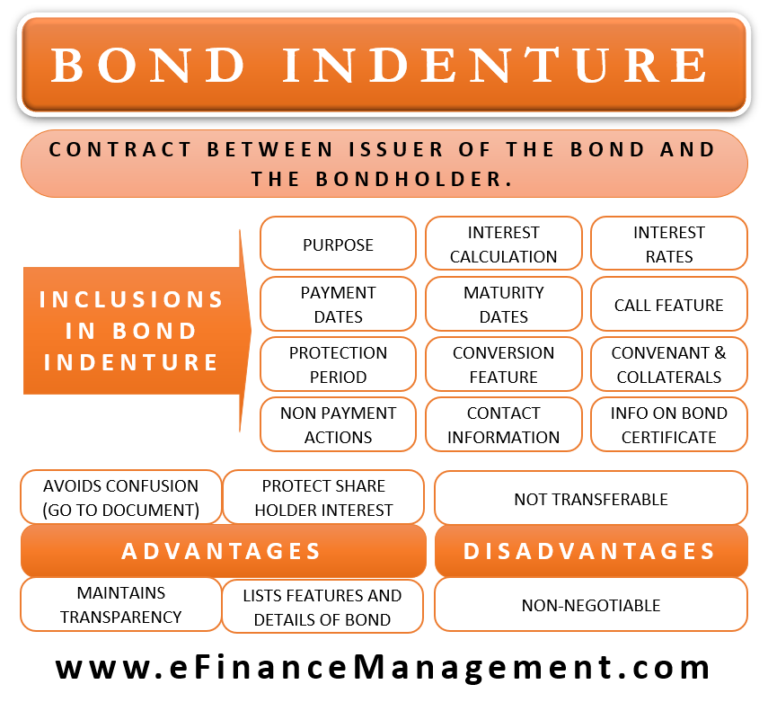
The indenture specifies all the legal terms of the bond. Let's break down the most critical ones.
To understand these terms in more detail, we'll consult an official guide from the U.S. Securities and Exchange Commission (SEC).
Please read the following sections from this SEC bulletin: 'What is a corporate bond?' 'What happens if a company goes into bankruptcy?' The portion on 'Credit or default risk' under 'What are some of the risks of corporate bonds?'. Focus on the legal status of bondholders, their priority in bankruptcy, and the role of covenants.
Synthesizing the video and the SEC document, we can identify the key legal characteristics defined in the indenture:
- Economic Terms: These include the face value (or par value, typically $1,000 per bond), which is the principal amount to be repaid at the end; the coupon rate, which is the fixed interest rate paid to the bondholder; and the maturity date, the date on which the company must repay the principal.
- Security: This is a crucial legal feature that determines a bondholder's claim on the company's assets in a worst-case scenario.
- Secured Bonds: These are backed by specific collateral (e.g., a factory, inventory). If the company defaults, holders of secured bonds have a legal right to that collateral to satisfy their claim.
- Unsecured Bonds (Debentures): These are backed only by the company's general creditworthiness and reputation. They are riskier because they lack a claim on specific assets.
- Seniority: In a bankruptcy, creditors are paid in a specific order of priority. The indenture establishes a bond's place in this "waterfall."
- Creditors (including bondholders) are always paid before equity holders (shareholders).
- Among unsecured bonds, there can be senior debentures and junior (or subordinated) debentures. Senior bondholders must be paid in full before subordinated bondholders receive anything. This hierarchy of claims is a fundamental concept in bankruptcy law.
- Covenants: These are legally binding promises made by the issuing company in the indenture to protect bondholders. They are restrictions on the company's behavior. For example, a covenant might limit the company's ability to issue more debt, sell major assets, or pay large dividends to shareholders. A violation of a covenant can trigger a default.
3. Deconstructing the Credit Agreement
While bonds are sold to the public, loans are private transactions between a company and one or more financial institutions (banks). These are governed by a credit agreement, a heavily negotiated contract that gives lenders significant control and oversight.
Because credit agreements are private and tailored, they often contain more restrictive terms than bond indentures. For a corporate lawyer, drafting and negotiating these agreements is a core activity.
Credit Agreements 101: Key Provisions and Considerations
The article 'Credit Agreements 101' provides an excellent, lawyer-focused breakdown of the key provisions you'll find in a typical credit agreement.
Please read the following sections of the article: 'Types of Credit Agreements' and 'Typical Structure' 'Conditions Precedent' 'Representations and Warranties' 'Affirmative Covenants' 'Negative Covenants' 'Events of Default and Remedies' Pay close attention to the purpose of each section and how it protects the lender.
Let's review the key legal architecture of a credit agreement, which differs significantly from a bond indenture in its level of detail and control.
-
Representations and Warranties ("Reps & Warranties"): These are statements of fact made by the borrower about its business at the time the loan is made (e.g., "The company is in good legal standing," "The financial statements are accurate"). If a representation proves to be false, it can trigger a default.
-
Covenants: Just like in bond indentures, these are promises that govern the borrower's behavior. However, they are typically much more extensive and restrictive in credit agreements. They fall into three main categories:
- Affirmative Covenants: Things the borrower must do. Examples include providing regular financial reports to the lender, paying taxes, and maintaining corporate insurance.
- Negative Covenants: Things the borrower cannot do without the lender's permission. These create a "fence" around the borrower's assets and business. Common examples include restrictions on selling assets, taking on more debt, or merging with another company.
- Financial Covenants: Specific financial metrics the borrower must maintain, tested quarterly. Examples include maintaining a certain leverage ratio (Debt-to-EBITDA) or an interest coverage ratio. A breach gives the lender an early warning sign that the business may be in trouble.
-
Conditions Precedent: A list of all the documents and actions that must be completed before the lender is obligated to fund the loan. This includes signing all loan documents, providing legal opinions, and paying fees.
-
Events of Default (EODs): These are the triggers that allow the lender to take action, such as demanding immediate repayment of the entire loan (a process called acceleration). An EOD can be a payment default (failing to pay interest or principal), a breach of covenant, or a misrepresentation in the "Reps & Warranties."
The key takeaway is that credit agreements provide for continuous monitoring and control by the lender, whereas bondholders, represented by a trustee, have a more passive role unless a covenant is clearly breached.
Test your understanding!
A technology company has a large credit agreement with a bank. The company's management team wants to sell one of its non-core software divisions to a competitor to raise cash and focus on its main product.
As the bank's lawyer, which specific section of the credit agreement would you immediately check to determine if this action is permissible? What would you be looking for in that section?
Show answer
You would immediately check the Negative Covenants section of the credit agreement.
Specifically, you would look for a covenant related to "Asset Dispositions" or "Fundamental Changes." This covenant is designed to prevent the borrower from selling significant assets without the lender's consent. It might prohibit asset sales altogether, or it might permit them only up to a certain dollar value or only if the proceeds are used to pay down the loan. This protects the bank by ensuring the company doesn't sell off the very assets that generate the income needed to repay the debt.
Conclusion
Today, we've analyzed the legal framework of corporate debt. You now understand that while both bonds and loans are forms of borrowing, they are governed by very different legal instruments that create distinct rights and obligations.
Key Takeaways:
- Debt financing allows a company to raise capital without giving up ownership. The two main forms are bonds and loans (governed by credit agreements).
- Bonds are debt securities sold to many investors, governed by a bond indenture. Their key legal characteristics are defined by their security (or lack thereof), seniority in bankruptcy, and covenants.
- Credit Agreements are private contracts with lenders (like banks) that provide for extensive monitoring and control. Their legal architecture is built on representations and warranties, affirmative and negative covenants, financial covenants, and clearly defined events of default.
- From a legal perspective, credit agreements typically give lenders more direct control and more stringent protections than bond indentures give to bondholders.
In this module, we have now covered both equity and debt financing. But how does a company choose between them? In our next lesson, we will evaluate the trade-offs between equity and debt financing, bringing together the concepts of ownership, risk, control, and cost to understand how companies build their ideal capital structure.