Hello! Welcome back to our module on "Choosing the Right Business Structure."
In our last lesson, we surveyed the landscape of the four main business entities, comparing them on liability, taxation, and governance. You learned that a general partnership is the default structure for two or more people who go into business for profit without taking formal steps to create another entity.
Today, we will take a deep dive into that default structure. Our goal is to analyze the legal characteristics and formation requirements of a general partnership. Understanding the risks inherent in this default option is fundamental to corporate law, as it explains precisely why lawyers so often advise founders to form entities like LLCs or corporations. We'll explore how partnerships can be formed—sometimes unintentionally—and the profound legal consequences that follow, especially regarding personal liability.
1. What Is a General Partnership? The Three-Part Test
A partnership is defined by the Revised Uniform Partnership Act (RUPA) § 202(a) as "the association of two or more persons to carry on as co-owners a business for profit."
This definition can be broken down into three essential elements that courts look for to determine if a partnership exists, even if the individuals involved never intended to create one.
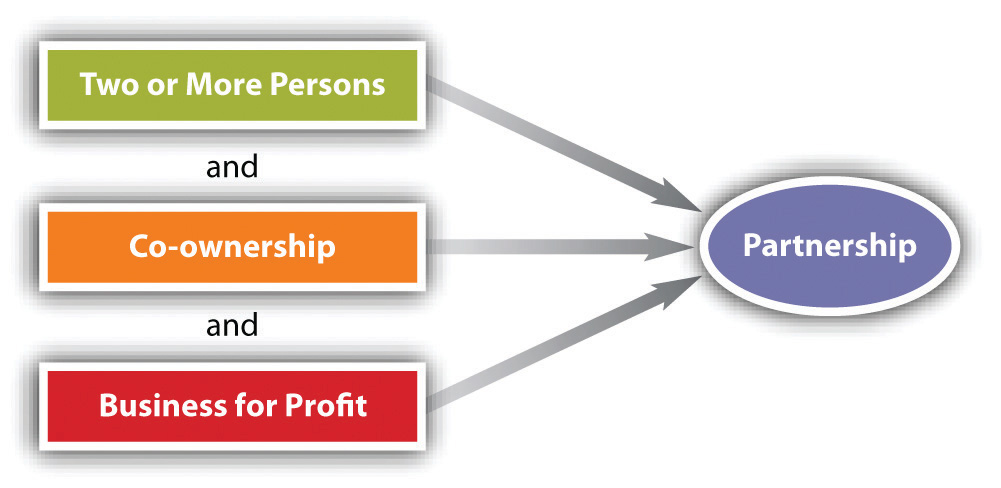
To understand how these elements are applied in practice, let's explore them in more detail by reading a section from a business law text.
Partnerships: General Characteristics and Formation
The following reading, 'Partnerships: General Characteristics and Formation,' will provide the formal legal tests for partnership existence. It explains how courts distinguish a true business partnership from other forms of co-ownership or profit sharing.
Please read the section titled 'Tests of Partnership Existence.' It starts just after the heading 'Creation of Implied Partnership.' Focus on understanding the three key elements: Association of Persons Co-owners of a Business (note the distinction from simply co-owning property) Sharing of Profits (note the exceptions where profit sharing does not create a partnership, such as for repayment of a debt or as wages)
As the reading makes clear, simply sharing profits isn't enough. The context matters. A landlord receiving a share of a tenant's business revenue as rent, or an employee receiving a bonus based on company profits, are not automatically partners. The court looks at the totality of the circumstances to see if there is true co-ownership of a business.
Case Study: When Is a "Partner" Just an Employee?
To see how courts apply these tests, the same resource provides a summary of a classic case, Chaiken v. Employment Security Commission. A barbershop owner tried to reclassify his barbers as "partners" to avoid paying unemployment taxes.
Partnerships: General Characteristics and Formation
This case study shows a court meticulously applying the partnership tests to a real-world scenario. Notice how the judge weighs factors like decision-making power, contribution of capital, and the true nature of the 'profit' sharing.
Please read the case summary for 'Chaiken v. Employment Security Commission' at the end of the text. As you read, consider which factors the court found most convincing in deciding that no true partnership existed.
The Chaiken case demonstrates that legal substance prevails over form. Simply calling something a "partnership" in an agreement does not make it so if the core elements of co-ownership, like shared control and shared risk of loss, are missing.
2. Formation: Simple, Informal, and Often Accidental
One of the most defining—and dangerous—characteristics of a general partnership is the ease of its formation.
Unlike corporations or LLCs, a general partnership requires no formal paperwork or filing with the state. It is created automatically the moment two or more people begin acting like partners by satisfying the three-part test we just discussed.
The following video, taken from a bar exam preparation course, explains this concept of the "default" partnership and the irrelevance of the parties' intentions if they fail to properly form another entity.
Business Associations Bar Review (Partnership): Most Tested Areas of Law on the Bar Exam [PREVIEW]
This video from Studicata, designed for law students preparing for the bar exam, powerfully illustrates why understanding the general partnership as the 'default' entity is so critical.
Watch from 00:57 to 04:32. Pay close attention to the instructor's example of two people who intend to form a Limited Liability Partnership (LLP) but fail to file the required paperwork. Notice what entity they create by default.
The Partnership Agreement
While not required for formation, a well-drafted partnership agreement is a critical document that every partnership should have. This is a contract between the partners that sets the rules for their relationship, overriding many of the default rules provided by state partnership law.
How General and Limited Partnerships Work | Introduction to Legal Structures
This clip from Alanis Business Academy explains the purpose of a partnership agreement and the common issues it addresses.
Watch from 01:32 to 03:11. Focus on the types of questions a partnership agreement should answer, such as how profits are split and what happens if a partner leaves or dies.
As a future lawyer, one of your key roles would be to help founders anticipate and resolve potential disputes before they happen by drafting a comprehensive partnership agreement.
3. The Gravest Risk: Unlimited Personal Liability
We now arrive at the single most important legal characteristic of a general partnership: unlimited personal liability.
As we touched on in the last lesson, there is no legal distinction between the partners and the business. The partners are the business. This means their personal assets (homes, cars, savings) are at risk to satisfy the business's debts and legal obligations.
Worse, this liability is joint and several. This legal term means that a creditor can choose to pursue any single partner for the entire debt of the partnership, regardless of which partner was responsible for creating that debt.
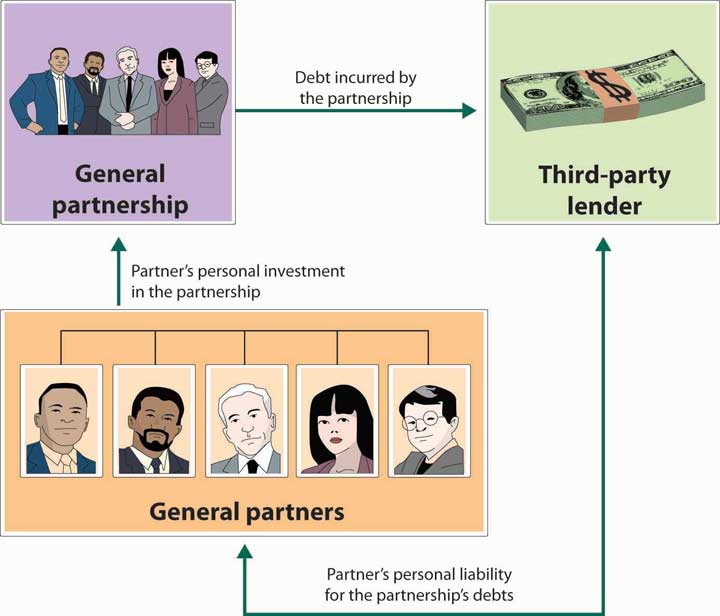
The following extended example from the Studicata bar review video vividly illustrates the catastrophic consequences of joint and several liability. It integrates concepts of agency law (where a partner acts as an agent for the partnership) and demonstrates why this liability model makes the general partnership such a risky structure.
Business Associations Bar Review (Partnership): Most Tested Areas of Law on the Bar Exam [PREVIEW]
This detailed hypothetical scenario is a powerful illustration of why understanding partnership liability is non-negotiable for a business lawyer. It will show you how an innocent partner can lose everything due to the actions of another.
Watch the detailed example from 08:23 to 21:43. Follow the story of Michael and Bubby's restaurant venture. Specifically, focus on: Why the partnership is liable for the $100,000 loan, even though Michael told Bubby not to take it (the concept of 'apparent authority'). Why the wrongdoing partner, Bubby, is personally liable. Why the innocent partner, Michael, is also fully liable for the entire $100,000 debt, putting his personal savings at risk.
This example highlights the immense trust required in a general partnership. You are not only betting on your own business acumen but also on the judgment and integrity of your partners.
Test your understanding!
Imagine you and a friend co-author a popular blog about legal technology. You share the income from advertising equally. You have no formal agreement. Your friend, without telling you, signs a $10,000 contract with a marketing firm to promote the blog. The promotion is a failure, and the bill is now due. The marketing firm can't get the money from your friend and is now suing you for the full $10,000.
Based on what you've learned, what is the likely legal basis for their claim against you personally, and why might you be liable for the full amount?
Show answer
The marketing firm's claim is based on the principles of partnership law.
- Existence of a Partnership: You and your friend are likely operating as a general partnership. You are two people carrying on a business (the blog) as co-owners for profit (sharing ad revenue). You formed this partnership implicitly, without needing a formal agreement.
- Agency: Your friend, as your partner, was acting as an agent of the partnership. Signing a marketing contract is likely within the "ordinary course of business" for a blog, giving your friend apparent authority to bind the partnership to the contract.
- Joint and Several Liability: Because the partnership is liable for the $10,000 debt, you, as a general partner, have unlimited, joint and several personal liability. This means the creditor can legally pursue you for the entire $10,000, even though you knew nothing about the contract. Your personal assets are at risk.
Conclusion
Today, we've dissected the general partnership, moving from its simple, often accidental formation to its most severe legal consequence. Understanding this default entity is the starting point for all business formation advice.
Key Takeaways:
- A general partnership is the default entity for two or more people in a for-profit business, defined by the three-part test of association, co-ownership, and business for profit.
- Formation is informal and automatic; no state filing is required. A written partnership agreement is not necessary to form the partnership but is essential for governing it.
- The defining legal characteristic is unlimited, joint and several personal liability. Each partner can be held personally responsible for all business debts, even those created by other partners.
- Partnerships feature pass-through taxation, meaning profits and losses are passed to the partners' personal tax returns.
In our next lesson, we will explore the limited partnership. This structure was created to solve the unlimited liability problem by creating different classes of partners, some of whom can receive liability protection similar to that of a corporate shareholder.