Welcome to Module 2 of your phone setting course. In our previous lesson, we concluded our foundational work by building a robust call-tracking system in Notion. That system is now ready to capture the outcomes of your calls. Today, we begin to script the content of those calls, starting with the most crucial first 30 seconds.
This lesson focuses on mastering the call opening. Your goal is to learn how to formulate an opening that smoothly references your prior DM interactions to establish immediate context and build rapport. This is the critical bridge between the low-pressure, asynchronous world of direct messages, where you already have experience, and the real-time, live environment of a phone call. Get this right, and the rest of the conversation flows naturally.
From DM to Live Call: The Psychological Bridge
Your work as a DM setter has given you a significant advantage: you're not calling cold. You're calling prospects who have already engaged, expressed interest, and in many cases, even agreed to a call.
Consider this typical scenario:
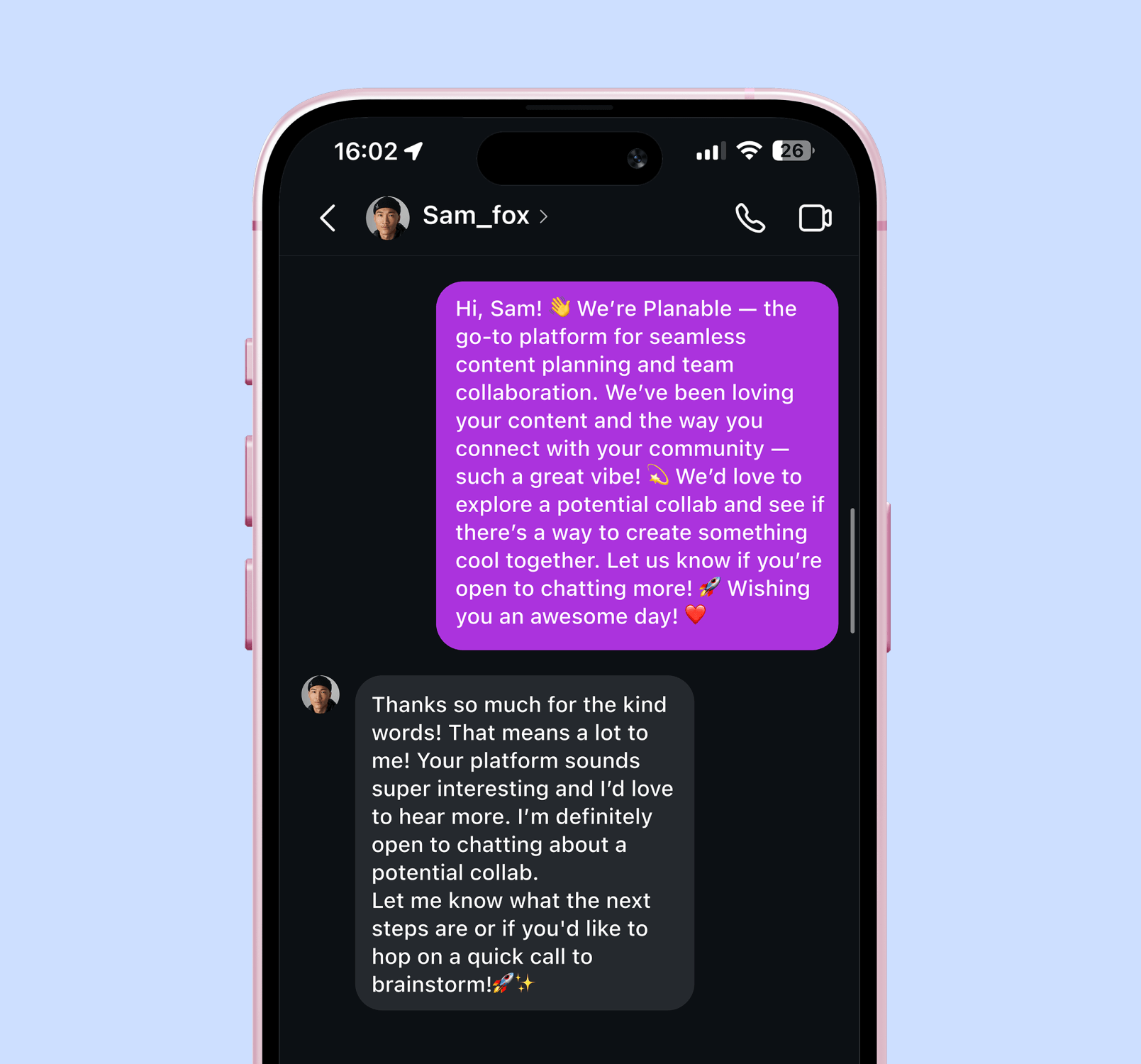
When you make the call to "Sam_fox," he knows who you are, but the context switch from text to voice can still be jarring. In a DM, he had time to craft his response. On the phone, he's put on the spot. Your first words must instantly close that gap, make him feel comfortable, and remind him why you're calling.
Failing to do this immediately turns your warm call into an awkward cold call. The prospect feels confused, you feel defensive, and the rapport you built is lost.
The Complete 2026 Guide to Warm Sales Calls That Convert
This guide from Scrap.io provides a clear, actionable framework for structuring the opening of a warm call.
First, read the section Step 1: Personal Introduction. Pay close attention to the recommended structure: name, company, and the specific reason for your call. Next, jump to the end of the article and read Mistake #1. This powerfully reinforces why referencing your DM conversation isn't just a good idea—it's the entire foundation of a warm call.
The Anatomy of a Failed Opening
Before we build the right script, let's dissect a common but ineffective one. Many sales scripts teach an approach that inadvertently creates resistance and pressure, leading to the prospect asking to be called back later, only to ghost you.
Warm Leads and Sales Prospecting | Sales Tips with Jeremy Miner
Sales trainer Jeremy Miner demonstrates a typical, and flawed, approach to calling a warm lead. Observing this will help you understand what to avoid.
Watch the segment from the demonstration of a traditional script. Notice how the salesperson's generic questions and pushy attitude immediately put the prospect on the defensive. This is the kind of interaction your new opening will be designed to prevent.
The key mistakes in that example are being overly generic ("responded to an ad"), asking weak questions ("how are you doing today?"), and pushing for a time slot without re-establishing value. This triggers the prospect's "salesperson alert" and shuts down the conversation.
Crafting a High-Rapport Opening
A successful opening isn't just about the words you use; it's about the tonality and the psychological frame you create. Your goal is to sound less like a telemarketer and more like a helpful person following up on a conversation that's already in progress.
This next video provides a masterclass in how to achieve this.
How To Call Leads THE RIGHT WAY (Prospecting & Warm Leads)
Here, Jeremy Miner breaks down a much more sophisticated and effective opening that leverages tonality and reframing.
First, watch the section explaining the 'familiar tone' and verbal pauses. This technique is crucial for disarming the prospect and triggering curiosity instead of resistance. Then, pay close attention to how he structures the opening script. He reframes the call as something the prospect asked for and immediately ties it to the end result they want, not the product being sold.
Let's break down the core components from that video into a repeatable formula:
-
Use a Familiar, Relaxed Tone: Start with verbal pauses. Instead of rushing, speak calmly.
- Bad: "Hi, this is [Your Name] from [Company]." (Sounds like a telemarketer)
- Good: "Hey [Prospect's Name]... it's [Your Name]..." (Pause) "...from [Coach's Company]."
-
Reference the Specific Context: Remind them exactly where you last spoke. The key here is to frame it as their initiative.
- Bad: "I'm calling because you filled out a form."
- Good: "We were just chatting on Instagram a little while ago..." or "You'd asked us to give you a call after you commented on our post..."
-
Connect to Their Goal (The End Result): Immediately pivot to the outcome they are interested in, which you should have uncovered in your DM conversation.
- "...about potentially getting some help with [the problem they mentioned, e.g., 'scaling your client acquisition']."
-
Ask for Permission (The Soft Ask): End your opening by respectfully checking if it's a good time. This gives them an out, which ironically makes them more likely to stay on the line. The phrasing here is important.
- Weak: "Is this a good time to talk?" (Invites a "no")
- Stronger: "Did I catch you at a bad time?" or "Is now an okay time to chat for a couple of minutes?"
Your Opening Scripts
Here are three templates you can adapt for your calls, based on different DM scenarios.
Scenario 1: Following up on a direct DM conversation (like the image example)
"Hey Sam... it's [Your Name] from [Coach's Company]. We were just chatting on Instagram a little while ago, and I was just following up like you suggested. Did I happen to catch you at a bad time?"
Scenario 2: Following up on a post interaction (like/comment)
"Hey [Name]... it's [Your Name] calling... from [Coach's Company]. You and I were messaging briefly on Instagram earlier. You'd commented on our post about [Topic of the post], and I was just calling to follow up on that. Is now an okay time to chat for a minute?"
Scenario 3: Following up after they booked a call in your calendar
"Hey [Name]... it's [Your Name] calling from [Coach's Company]. It looks like we had some time scheduled to connect... you'd reached out about getting some help with [their stated goal]. Is now still a good time for that?"
Practice saying these out loud. The goal is to make them sound natural and conversational, not like you're reading from a script. Your relaxed tonality is just as important as the words.
Conclusion
You now have a clear framework and effective scripts for the first 30 seconds of any warm call. By mastering this opening, you successfully transfer the rapport you built over DMs into a live conversation, setting the stage for a productive call.
Key Takeaways:
- The opening's primary job is to establish immediate context by referencing your specific prior interaction.
- Use a relaxed, familiar tonality with verbal pauses to sound like a helpful contact, not a generic salesperson.
- Frame the call as a follow-up to the prospect's request, putting them in control.
- Always ask for permission to continue with a soft question like, "Did I catch you at a bad time?"
In our next lesson, we will build directly on this opening. Once you've earned their attention and gotten their permission to talk, you need to smoothly guide the conversation toward its real purpose. We will focus on how to execute a seamless transition from these opening pleasantries into the qualification process.