In our previous lessons exploring high-intensity breathwork, we've journeyed through the activating protocols of the Wim Hof Method, the thermogenic practice of Tummo, and the deep psychological exploration of Holotropic Breathwork. We've seen that their shared foundation—deliberate, sustained hyperventilation—is a powerful catalyst for profound physiological and psychological change. However, any tool this potent requires a thorough understanding of its operational limits and safety parameters.
This lesson serves as that essential safety briefing. Our objective is to systematically identify and explain the risks and contraindications associated with hyperventilation-based techniques. For your goal of designing personalized protocols, this knowledge is not just supplementary; it is foundational. Understanding the "red lines" of these practices is the most critical step in learning how to navigate them safely and effectively.
The Double-Edged Sword of Hyperventilation
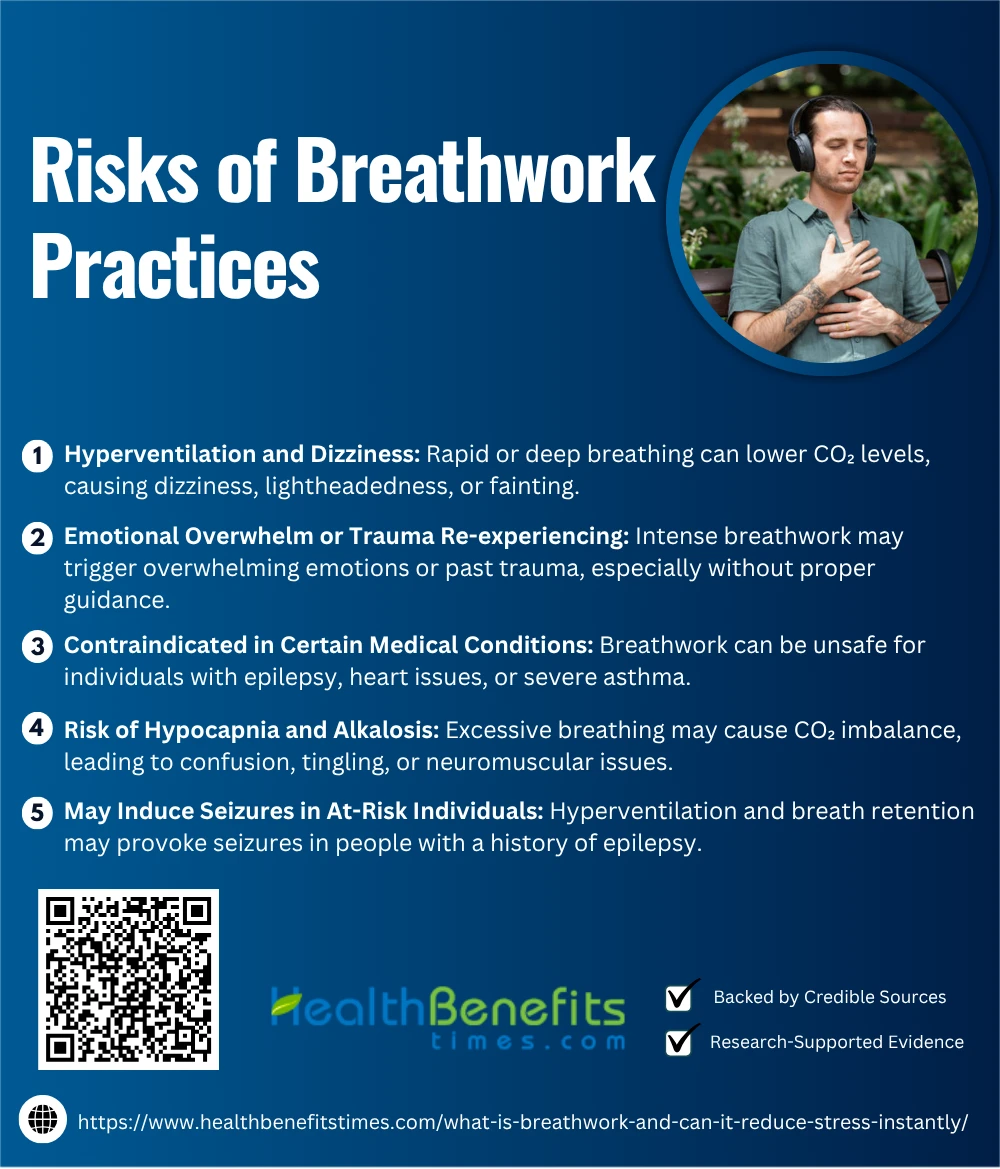
As we've established, practices like the Wim Hof Method and Holotropic Breathwork intentionally induce a state of hypocapnia (lowered CO₂ levels in the blood), which leads to respiratory alkalosis (an increase in blood pH). This cascade is the engine of their effects, but it's also the source of their primary risks.
To frame this, let's consider an analogy from your field. In statistical modeling, an assumption like the independence of observations is often a prerequisite for a model's validity. When the assumption holds, the model yields powerful insights. When it is violated, the inferences can be dangerously misleading. Similarly, the "assumption" for safely practicing high-ventilation breathwork is that the practitioner has a robust and healthy physiological system. For those who meet the criteria, the practice can be transformative. For those who don't, the physiological shifts can pose significant risks.
The video below offers a helpful perspective, comparing breathwork to exercise to illustrate how something beneficial can become dangerous if approached without proper knowledge and form.
This video from The Breathwork Channel provides an excellent introduction to the concept of risk in breathwork.
Watch the first three minutes of the video, paying attention to two key points: The analogy between breathwork and exercise, which emphasizes that even beneficial activities have risks. The discussion on how practicing with improper form can lead to dysfunctional breathing patterns, reinforcing the idea that "practice makes permanent," not necessarily perfect.
Common Side Effects and Tolerability
Before we discuss absolute contraindications, it's important to distinguish them from common, transient side effects. These are not necessarily signs of danger but are direct physiological consequences of hypocapnia and are to be expected, especially for beginners.
A recent randomized controlled trial on High Ventilation Breathwork with Retention (HVBR) provides valuable data on the tolerability of these practices in a healthy population. While the study's primary outcome for stress reduction was not significant compared to a placebo, its data on side effects is highly informative.
Effects of brief remote high ventilation breathwork with retention on ...
This 2024 paper published in Scientific Reports offers a detailed look at the tolerability of a remote HVBR protocol.
Please review the following sections on tolerability: Read the section on short-term effects. Notice the types of experiences reported, such as light-headedness, dizziness, and tetany (muscle cramping, often in the hands). Briefly look at the section on long-term effects, which found no lasting adverse effects in this healthy sample. Finally, read the discussion on tolerability data and safety. It reinforces the message about practicing only in safe environments and for individuals without contraindications.
The key takeaway is that even in a well-controlled study with healthy participants, a small percentage (around 9% in this case) reported unpleasant short-term effects. These included:
- Dizziness and light-headedness: Caused by hypocapnia-induced cerebral vasoconstriction (a temporary narrowing of blood vessels in the brain).
- Paresthesia: Tingling sensations, often in the hands, feet, and face, due to changes in nerve excitability from the shift in blood pH.
- Tetany: Involuntary muscle cramping or "claw hand," resulting from a decrease in ionized calcium in the blood, which affects muscle function.
- Emotional release: As we saw with Holotropic Breathwork, suppressed emotions like sadness can surface.
While generally benign in a safe setting, these effects underscore the importance of the non-negotiable safety rule for all high-intensity breathwork: never practice in or near water, while driving, or in any situation where fainting or loss of motor control could lead to injury or death.
Contraindications: A Systematic Review
Contraindications are specific health conditions that make a practice unsafe. They can be categorized as absolute (the practice should be avoided entirely) or relative (the practice may be possible with caution and modifications, ideally under expert guidance).
The following document provides the most comprehensive, evidence-based list of contraindications for high-ventilation breathwork currently available. It details not only the conditions but also the scientific rationale for why each one poses a risk—precisely the level of detail relevant to your goal.
[PDF] Contraindications To High Ventilation Breathwork
This document from the School of Breath Science is an essential safety guide, outlining the scientific reasoning behind each contraindication.
Please read this document carefully, focusing on the following sections: Start with the Introduction to understand the definitions of absolute and relative contraindications. Thoroughly review the entire section on Absolute Contraindications. For each condition, pay close attention to the "Reason" provided, as it links the condition directly back to the physiological effects of hypocapnia. Finally, review the section on Relative Contraindications and the recommended protocols for cautious participation.
Let's synthesize the key contraindications from this resource, which are strongly corroborated by the exclusion criteria used in clinical trials like the HVBR study (LINK).
Absolute Contraindications (Do Not Practice)
These conditions present a high risk of serious adverse events when combined with the physiological stress of hyperventilation.
- Cardiovascular Conditions: Includes history of heart attack, stroke, angina, and heart failure.
- Reason: Hypocapnic vasoconstriction can reduce blood flow to an already compromised heart muscle. The practice also increases cardiac workload and can trigger arrhythmias.
- Diagnosed Aneurysm:
- Reason: Fluctuations in blood pressure and vascular stress from hyperventilation can increase the risk of aneurysm rupture, which is a life-threatening emergency.
- Uncontrolled Hypertension/Hypotension:
- Reason: The practice causes significant swings in blood pressure, which can be dangerous if baseline blood pressure is not medically managed. For those with a history of fainting from low blood pressure, the risk of syncope is heightened.
- Epilepsy/History of Seizures:
- Reason: Respiratory alkalosis is known to lower the seizure threshold by increasing neuronal excitability. Hyperventilation is sometimes used clinically specifically to provoke seizure activity for diagnostic purposes.
- Severe Psychiatric Conditions: Includes bipolar disorder, schizophrenia, or a history of psychosis, especially following recent hospitalization.
- Reason: The intense physiological and emotional effects can act as a major stressor, potentially destabilizing mood or triggering a psychotic episode in vulnerable individuals. This is distinct from the therapeutic processing intended in settings like Holotropic Breathwork, which requires a baseline of psychological stability.
- Pregnancy:
- Reason: The primary concern is reduced blood flow to the placenta due to vasoconstriction, which could compromise fetal oxygen supply.
- Detached Retina or Glaucoma:
- Reason: Breathwork can cause unpredictable changes in intraocular pressure, which could worsen these conditions.
Relative Contraindications (Proceed with Extreme Caution)
These conditions require careful consideration and may necessitate modification of the practice or avoidance altogether.
- Asthma:
- Reason: For some individuals, the rapid air movement and hypocapnia can trigger bronchoconstriction.
- Protocol: If attempting, the person should be stable, have their rescue inhaler immediately available, and be closely monitored. Note that other techniques, like the Buteyko method we will cover later, are specifically designed for asthma management, but they use the opposite approach (reducing ventilation).
- Recent Surgery or Acute Illness:
- Reason: The body's resources are focused on healing. The intense physical demands of hyperventilation can impair the healing process or exacerbate symptoms of illness.
Conclusion
The power of high-intensity breathwork is inextricably linked to its potential for risk. The physiological state they induce—respiratory alkalosis—is a significant stressor that can either be a catalyst for positive adaptation (hormesis) in a healthy system or a trigger for adverse events in a compromised one.
Key Takeaways:
- Mechanism of Risk: The primary risks of hyperventilation-based techniques stem from hypocapnia-induced vasoconstriction, electrolyte shifts, and increased neuronal excitability.
- Common Side Effects vs. Risks: It is crucial to distinguish between expected (though sometimes uncomfortable) side effects like tingling and dizziness, and the genuine risks posed by practicing with a contraindicated condition.
- Absolute Contraindications are Non-Negotiable: Conditions related to cardiovascular, cerebrovascular, and neurological instability (e.g., heart disease, aneurysm, epilepsy) are absolute contraindications.
- Safety is Paramount: All high-intensity practices must be performed in a physically safe environment (away from water, etc.) to mitigate the risk of fainting or loss of motor control. A thorough self-screening for contraindications is the essential first step for any practitioner.
In this module, we have explored the upper limits of voluntary respiratory control. We will now pivot to another domain of extreme physiological adaptation in the next module: Freediving Training for Gas Tolerance. This will introduce us to the methodologies of CO₂ and O₂ tables, which share the theme of pushing physiological boundaries but employ entirely different techniques and safety protocols to manage hypercapnic and hypoxic states.