This module moves from identifying pores and comedones to weighing treatments and the risks of trying to remove a blockage by force. The distinction matters because a dark dot may be a blackhead, a normal sebaceous filament, or something else entirely. Today’s focus is what pressure does to skin, why an apparently successful extraction can still cause harm, and why a cleaned tool does not turn a home attempt into professional care.
A pore is not a tube that simply needs emptying
A blackhead is an open comedone: a buildup of sebum and retained skin cells within a hair follicle. “Open” describes the follicle’s opening at the skin surface. It does not mean the surrounding skin is an open wound, nor does it mean the material inside will come out cleanly when pressed. A sebaceous filament is different: it is a normal feature associated with oil moving through a follicle, not a blockage that needs removing.
Squeezing from the sides or pressing with an extraction tool applies force to the follicle and nearby skin. Sometimes visible material comes out. Sometimes little or nothing does. In either case, pressure can injure tissue or push some contents deeper, increasing inflammation rather than resolving the spot. An attempt to get “the rest” out by pressing again adds further injury. The sight of material emerging is therefore a poor measure of whether the skin has benefited.
Read the American Academy of Dermatology’s explanation of why home popping can backfire before considering the consequences in more detail.
Pimple popping: Why only a dermatologist should do it
Read the American Academy of Dermatology’s account of how squeezing can make an acne lesion more inflamed and introduce infection.
In “Do-it-yourself pimple popping can backfire,” read from the paragraph beginning “Squeezing pimples and other acne blemishes may seem so simple” through the paragraph ending with bacteria on your hands: home-popping risks. Focus on the difference between material leaving the surface and material being pushed deeper.
This risk applies even if the spot was correctly identified as acne. Uncertainty adds another problem: if a normal sebaceous filament is repeatedly emptied, it will become visible again because oil production continues. Pressure has not corrected a disease; it has disturbed a normal structure. If the dot is neither a filament nor a comedone, trying harder to extract it may injure skin without addressing what it is.
The following brief video segment makes that distinction concrete. It is about the limits of extraction, not a demonstration to copy.
Blackheads on the Nose? Here’s What They Really Are | Derm Explains
Watch “Blackheads on the Nose? Here’s What They Really Are” from dermatologist Dr Dray for its explanation of why material coming out does not establish lasting benefit.
Watch extraction limits. Notice the two separate cautions: some apparent blackheads are not suitable for extraction, and a normal sebaceous filament can return after its visible material is removed.
How a brief action can leave a lasting mark
The immediate effects of excessive pressure may be soreness, swelling, broken skin, or a more noticeable inflamed spot. If the skin barrier is broken, bacteria from hands or the surrounding skin have another opportunity to enter. Infection is a risk, not an inevitable result of touching a blemish; the important point is that a home attempt can create an avoidable route for it.
Inflammation can also outlast the original blockage. One possible result is post-inflammatory hyperpigmentation (PIH): a flat area of darker color left after inflammation. Another is a scar, in which healing leaves a lasting change in skin texture, such as a depression or raised area. A flat dark mark and an indented scar may occur together, but they are not the same thing. Color can fade while a textural scar remains. Visible pigment changes can be especially persistent or prominent in some skin tones, though irritation and scarring are concerns across skin tones.
Read the Academy’s discussion of picking and its distinction between discoloration and scars.
Read the American Academy of Dermatology’s explanation of why manipulating acne raises scarring risk and how a flat mark differs from a textural scar.
Under “Can you prevent acne scars?”, find the bullet beginning “Never pick, pop, scratch, or squeeze breakouts.” Read the risk explanation. Then, under “How long does it take for acne scars to fade?”, read the scar distinction and the following paragraph from “If you see a flat spot of color” to the flat-mark distinction.
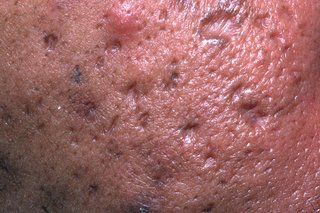
The image shows why the word mark can be imprecise. A darker-looking area might represent flat discoloration, a shadow within a depression, or another skin change. It cannot tell us whether a particular feature resulted from acne itself, squeezing, or something else. Nor does the possibility of scarring mean that every squeezed blackhead will scar. It means that avoidable inflammation and injury add risk to a process that can already leave marks.
Why cleaning a tool is not professional extraction
Cleaning a metal loop may remove visible residue, but it does not settle the central questions: What is the spot? Is physical removal appropriate? Can it be done without unnecessary tissue injury? Even a sterile instrument can cause harm if applied to the wrong lesion or used with damaging pressure. Cleaning also does not remove bacteria from fingers or prevent injury to the skin barrier.
Professional care differs in more than equipment. A dermatologist can assess whether a spot is a comedone and whether extraction is worthwhile at all. When extraction is appropriate, they use sterilized instruments and clinical technique. The Academy notes that extraction is rarely a first choice; it may be considered when other acne treatment has not cleared blackheads or whiteheads. Professional extraction is not a promise of zero risk, and removing a blockage does not prevent new ones from forming.
Return to the same article for its description of professional extraction. There is no need to study the other procedures on the page for this lesson.
Pimple popping: Why only a dermatologist should do it
Read the article’s comparison point: what a dermatologist assesses and uses when extraction is chosen.
Under “Dermatologists know how to remove acne safely,” read from “Dermatologists use a few different techniques” through the sentence describing extraction of blackheads and whiteheads: professional extraction. Pay particular attention to the statement that it is rarely a first choice.
There is a useful difference between removing visible material now and managing the tendency to form comedones over time. Extraction addresses a selected existing blockage; it does not replace ongoing acne care. For a normal sebaceous filament, removing visible material may provide an even shorter-lived change because the filament is part of the follicle’s usual function.
If you have already squeezed a spot, further pressing is not a way to undo the injury. Leave it alone and treat broken skin gently rather than trying to extract more. Increasing pain, spreading warmth or redness, marked swelling, or fever warrants medical assessment. A repeatedly troublesome lesion, a spot whose identity is uncertain, or acne leaving scars is also a reason to seek professional advice rather than intensify home extraction.
Key takeaways
Pressure can push contents deeper, injure a follicle, break the skin barrier, and increase inflammation. Those effects can make acne more painful or noticeable and raise the risks of infection, persistent discoloration, and scarring. Material coming out does not prove an attempt was helpful, particularly when the target is a normal sebaceous filament.
A cleaned tool addresses only one small part of the risk. Professional care includes identifying the lesion, deciding whether extraction is appropriate, using sterile equipment, and limiting injury. The next lesson turns to noninvasive acne treatments and examines what the evidence supports for comedones—without treating normal visible pores as a problem that must be eliminated.