Welcome back. The previous lesson showed why forcing material out of a pore can injure skin without preventing another blockage. This lesson considers a different approach: topical treatments that act on the processes behind acne. The key distinction throughout is between treating comedones, which are acne lesions, and changing the appearance of sebaceous filaments, which are normal skin structures.
By the end, you should be able to compare four common ingredients by what they do, how strongly acne guidelines support them, and what that evidence does—and does not—say about visible pores.
What does “supported by evidence” mean here?
A topical treatment is useful if it changes an outcome that matters: for example, fewer new comedones, fewer inflamed lesions, or better control of acne over time. A product making a pore look emptier immediately is a different outcome. That distinction matters because sebaceous filaments can remain visible even when acne is well controlled.
The American Academy of Dermatology’s updated acne guidance places topical retinoids and benzoyl peroxide among its strong recommendations. It gives salicylic acid and azelaic acid conditional recommendations. “Conditional” does not mean “ineffective”; it means the guideline is less confident that the balance of evidence and benefits favors that treatment as broadly as it does a strongly recommended one. Nor does a strong recommendation guarantee that an ingredient will be the best choice for every person or every kind of lesion.
American Academy of Dermatology issues updated guidelines for the management of acne
Read this American Academy of Dermatology summary to establish the evidence comparison before looking at individual ingredients.
In the article's treatment recommendations, find the sentence “Strong recommendations were made for the use of the following.” Read the strong list, focusing on benzoyl peroxide and topical retinoids. Then find the later list that begins with topical clascoterone. Read the two bullets on salicylic acid and azelaic acid. You can skip the other medicines and procedures for now.
These recommendations address acne, not the elimination of all visible dots in pores. They also are not a head-to-head ranking of the four ingredients for blackheads alone. To make a useful comparison, we need to pair the guideline’s evidence categories with each ingredient’s role.
Four ingredients, four overlapping roles
Recall how a comedone begins: retained skin cells and sebum accumulate inside a follicle. A microcomedone is an early, not-yet-visible stage of that process. Inflammation and acne-associated bacteria also contribute to acne, especially when breakouts include tender bumps rather than only blackheads and whiteheads. Different ingredients act on different parts of this picture.
Watch the selected portions of dermatologist Dr. Sam Ellis’s video for the mechanisms, rather than for the brand recommendations elsewhere in it. Treat the video as an explanation of how the ingredients are used; the guideline above is our reference for the strength of the recommendations.
Dermatologists Best Skincare Ingredients for Acne (Salicylic Acid, Sulfur, Benzoyl Peroxide, & More)
Watch selected portions of Dr. Sam Ellis’s “Dermatologists Best Skincare Ingredients for Acne” to connect each ingredient with its main treatment role.
Start with benzoyl peroxide and its action on acne-associated bacteria. Skip ahead to salicylic acid and its relevance to material within a pore, then azelaic acid and its several uses. For retinoids, watch early comedones and tolerance and time. Notice that preventing new lesions is not the same as instantly emptying an existing pore. Product endorsements in the intervening segments are not needed.
Topical retinoids—such as adapalene or prescription tretinoin—help normalize the shedding of cells within follicles. That makes them particularly relevant to open and closed comedones and to preventing early blockages from developing into visible lesions. They also have anti-inflammatory effects. This combination helps explain their strong guideline recommendation for acne. Their drawback is that early dryness, peeling, or irritation can make treatment difficult to tolerate; benefits develop over weeks rather than at the pace of an extraction video.
Salicylic acid helps loosen and shed retained skin cells and can reduce comedonal as well as inflammatory acne. Its action makes it a plausible option when blackheads and whiteheads are prominent. It has a conditional guideline recommendation, however, so a convincing mechanism should not be mistaken for evidence as strong as the recommendation for retinoids. More exfoliation is not automatically more treatment: irritation can become the dominant effect.
Azelaic acid has effects relevant to clogged follicles, bacteria, and inflammation. It may also help with the flat dark marks that can remain after an acne lesion resolves. This gives it a role when acne and post-inflammatory discoloration occur together, though a dark mark is not itself a comedone or a textural scar. Its acne recommendation is conditional, and it can cause stinging or irritation.
Benzoyl peroxide has a strong acne recommendation. Its clearest role is reducing acne-associated bacteria; it is also useful in treatment plans that include inflamed lesions. It is not primarily a treatment for the retained-cell blockage in the way a retinoid is. That does not mean it can never feature in care for someone who also has comedones, especially when their acne is mixed. It means that “strongly recommended for acne” should not be translated into “best at clearing blackheads specifically.” Benzoyl peroxide can irritate or dry skin and can bleach fabric.
| Ingredient | Guideline recommendation for acne | Most relevant expectation when comedones are the concern |
|---|---|---|
| Topical retinoid | Strong | Helps treat and prevent follicular blockages, including blackheads and whiteheads |
| Salicylic acid | Conditional | Can help reduce retained cells and comedonal acne |
| Azelaic acid | Conditional | An acne option that may also help lingering dark marks |
| Benzoyl peroxide | Strong | Well-supported for acne overall, especially relevant when inflammation is part of the picture; less directly targeted at comedone formation |
The categories describe the guideline’s recommendation for acne overall, not a promise about which product will clear a particular spot. Combining ingredients may be appropriate in acne care, but piling several irritating products onto skin is not a shortcut to faster results. The later lesson on introducing a treatment will address tolerability and product labels. If pregnancy or trying to conceive is relevant, seek professional advice before choosing an acne medication, particularly a retinoid, rather than relying on a general ingredient comparison.
Why the same claims do not transfer to sebaceous filaments
A blackhead contains a plug; a sebaceous filament is part of a follicle through which sebum normally reaches the skin surface. That difference changes what “success” could mean. A treatment might make filaments less noticeable by affecting oiliness or the surrounding buildup, but it cannot permanently remove a normal structure while leaving the follicle functioning as usual.
Cleveland Clinic describes both the distinction and the more limited cosmetic expectation for filaments. Read its discussion as an explanation of normal skin anatomy, not as evidence that every acne treatment has been proved to treat filaments in clinical trials.
Sebaceous Filaments: Difference From Blackheads & Treatment
Read Cleveland Clinic’s overview to separate a plugged follicle from a normal filament, then examine how carefully to interpret suggestions for making filaments less visible.
In “Overview,” under “Are sebaceous filaments bad?” and “What’s the difference between sebaceous filaments and blackheads?”, read the comparison. Then go to “Management and Treatment,” under “Can you get rid of sebaceous filaments?” After the first bullet on scrubs, read the salicylic acid and retinoid discussion. Focus on the difference between reducing a clogged pore and making a normal feature less visible; you do not need to adopt the page’s scrub suggestion.
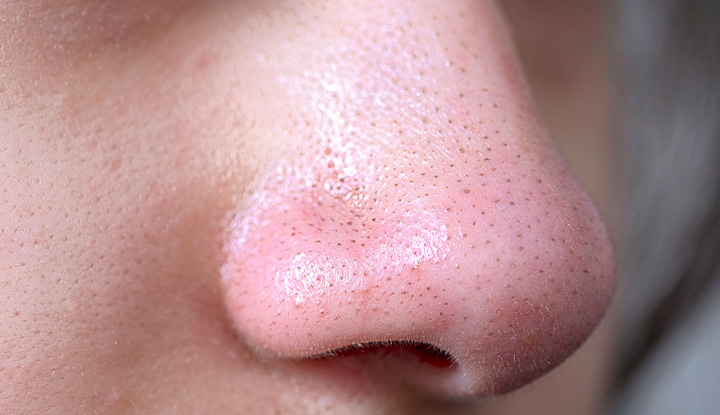
The important evidence boundary is this: the acne studies and guideline recommendations concern acne lesions. They should not be cited as proof that an ingredient permanently removes sebaceous filaments, “shrinks pores,” or makes a nose uniformly smooth. The Cleveland Clinic page suggests that salicylic acid or retinoids may help make filaments less conspicuous, but that is a more modest claim than treating a comedone. Filaments may remain visible or become visible again because sebum continues to move through follicles.
This also explains why an apparently dramatic before-and-after image can mislead. A close-up taken immediately after removing surface material cannot show whether comedones form less often weeks later. And if the original dots were mostly filaments, their return is not evidence that the skin has “failed” treatment. It is consistent with normal skin function.
Key takeaways
Topical retinoids have strong guideline support for acne and a particularly direct role in preventing and treating comedones. Salicylic acid is also relevant to comedones, with a conditional recommendation. Azelaic acid is a conditional acne option with an additional role in lingering dark marks. Benzoyl peroxide has strong support for acne overall, but its principal action on acne-associated bacteria makes it a less direct answer to an isolated follicular plug.
None of those acne recommendations establishes that normal sebaceous filaments must—or can—be permanently eliminated. The next lesson will use that distinction to assess the claims made by extraction videos, pore strips, vacuums, scrubs, and steam treatments: what changes briefly on camera, and what has evidence of lasting benefit.