Introduction
In our last session, we established a strategic framework for making infrastructure decisions, moving beyond purely technical metrics to incorporate organizational capabilities and business objectives. We learned how to use tools like Architecture Decision Records (ADRs) and Gregor Hohpe's business alignment models to justify a recommendation.
Today, we will transition from making the decision to communicating it. Our goal is to construct a trade-off analysis document suitable for a CTO-level audience. This is a crucial skill. A brilliant technical decision is useless if it cannot be articulated in a way that resonates with executive leadership. For a CTO, a technology choice is an investment decision. It must be evaluated in terms of cost, risk, and strategic return. This lesson will equip you with the tools and mindset to frame your architectural analysis in those terms, ensuring your recommendations are not just heard, but valued.
Part 1: Adopting the CTO's Perspective
To create a document for a CTO, you must first understand their mindset. A CTO is responsible for the intersection of technology, business, and people. While they have a deep technical background, their primary concerns are strategic. They need to understand how a decision impacts the company's financial health, its competitive position, and its ability to execute.
Gregor Hohpe’s talk, "Thinking Like an Architect," offers profound insights into this way of thinking. An architect's value, he argues, comes from connecting the "engine room" (technical implementation) with the "penthouse" (business strategy).
Thinking Like an Architect - Gregor Hohpe - NDC London 2025
We'll watch three key clips from this NDC London talk by Gregor Hohpe. It will help us frame our communication style for a senior executive audience.
First, watch the section on connecting levels. Focus on the "architect elevator" metaphor and the danger of a disconnect between development teams and upper management. Your document is a key mechanism for this elevator. Next, see how metaphors can be used to translate complex technical constraints into understandable business concepts. Watch the segment on using metaphors, particularly the discussion of "guard rails" vs. "lane assist." Finally, absorb the critical advice in the section on communication failure modes. The key takeaway here is to understand your audience's underlying incentives and beliefs, rather than assuming they "don't get it." A CTO is optimizing for different variables than an engineer.
Hohpe's points highlight that your document must translate technical trade-offs into business impacts. One of the most important translations is cost. A CTO doesn't just see the monthly cloud bill; they see the Total Cost of Ownership (TCO).
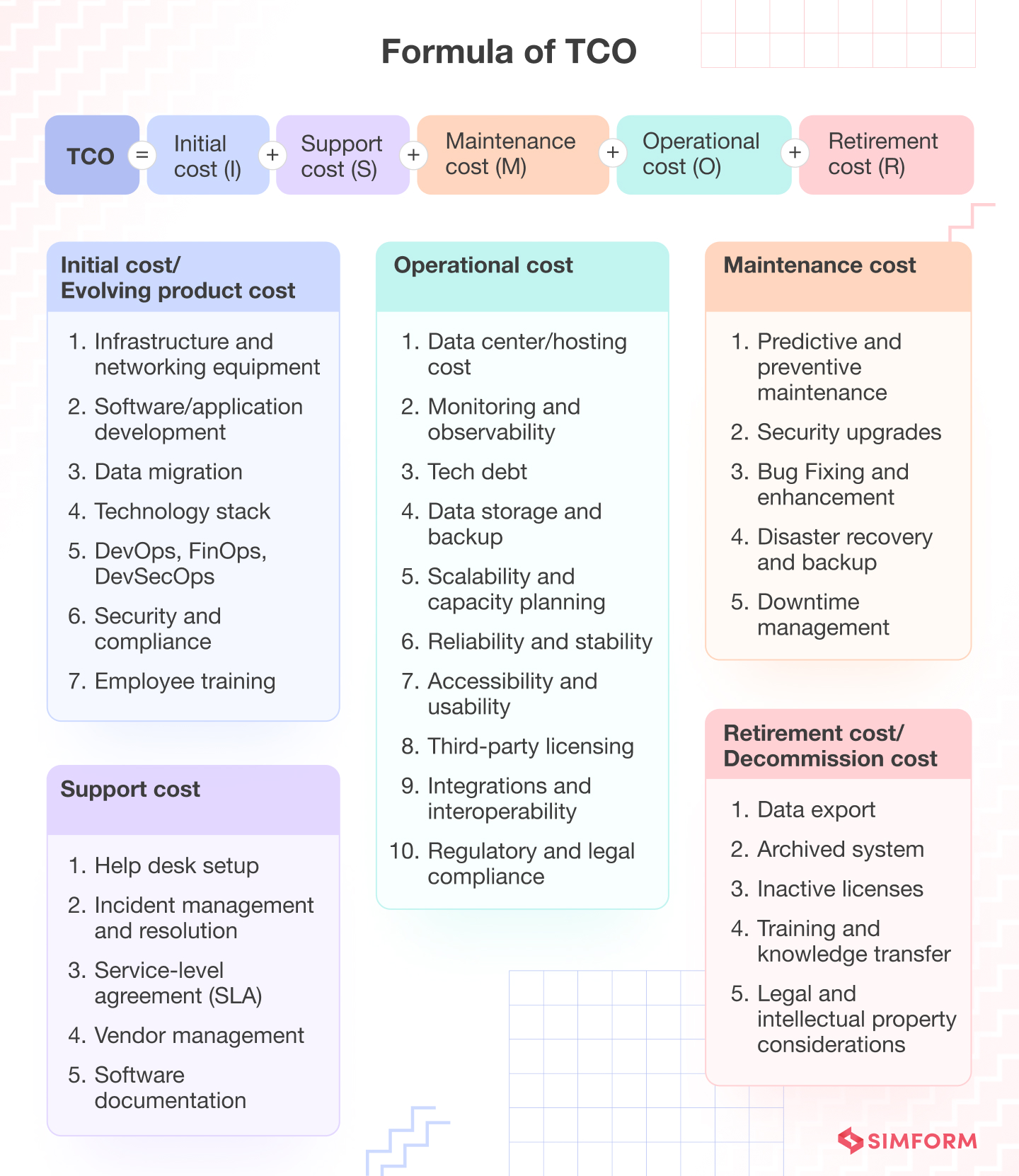
As the TCO formula illustrates, the initial infrastructure and development costs are just one piece of the puzzle. Operational costs, which include the salaries of the SREs and platform engineers needed to maintain a complex system like Kubernetes, are often the largest long-term expense. A well-crafted analysis for a CTO must account for all these factors.
Part 2: From Internal Dialogue to Persuasive Document
Before you can write a persuasive document, you must rigorously challenge your own assumptions. A fantastic technique for this is to simulate a "CTO Review" using a Socratic dialogue, where you force yourself to articulate the why behind every choice.
An article by Matthew Sinclair, "The CTO Review," details a practical method for this, using AI as a sparring partner but easily adaptable as a solo thinking exercise.
The CTO Review: Using Socratic Dialog with AI for Better Technical ...
This article introduces a powerful method for pressure-testing technical decisions before you commit them to paper. It's a way to anticipate the hard questions a CTO would ask.
Read from the beginning through to the end of the "Using AI as Your Partner" section. Pay close attention to the roles of the two personas: The CTO (Socrates), who asks strategic questions about cost, scale, and trade-offs. The Tech Lead (Plato), who provides the detailed technical answers. Also, review the example prompt comparing PostgreSQL and DynamoDB. This process of structured questioning is how you generate the raw material for a high-quality trade-off analysis.
This Socratic dialogue is the exploratory phase. The output of this exploration needs to be formalized into a concise, permanent artifact. This is where the Architecture Decision Record (ADR) comes in. It's the perfect format for a CTO-level document because it forces clarity and focuses on the why and the consequences—exactly what a leader needs to know.
The AWS Prescriptive Guidance on ADRs provides an excellent, professional standard to follow.
architectural-decision-records.pdf
This document from AWS provides a formal definition and best practices for using ADRs. We'll focus on the essential components and a concrete example.
Please read the following sections of this PDF: Start with the section titled "ADR contents" on page 3. Focus on the minimum required content: the context, decision, and consequences. Note the emphasis on the reason for the decision. Jump to the FAQ on page 10 and read the answer to "What information should an ADR contain?". This reinforces the key components and stresses the importance of using imperative language for the decision. Finally, study the full example ADR on pages 12-13. This provides a clear, practical template for how to structure your final document.
Part 3: Analyzing the Key Trade-off Dimensions
With the perspective and structure in place, let's dive into the core content: the analysis itself. When comparing major infrastructure options like Kubernetes and Serverless, a CTO will expect an analysis across several key dimensions.
The following video provides a wealth of technical detail comparing AWS Lambda and Kubernetes. We will use it as a source of data to populate our analysis, always remembering to frame the findings in terms of business impact.
Kubernetes Vs Lambda Detailed Comparison | Containers Vs Serverless
This video by "Cloud With Raj" offers a detailed, factor-by-factor comparison of Lambda and Kubernetes/ECS on AWS. We'll use specific segments to inform our trade-off analysis across key business-relevant dimensions.
As we discuss each dimension below, refer to the corresponding video segment for the technical details. You don't need to watch it all at once; use it as a reference.
Let's break down the analysis by the dimensions a CTO cares about:
A. Total Cost of Ownership (TCO) & Cost Model
This is more than just a pricing calculator. It's about the entire financial picture.
- Serverless (Lambda): Offers a pure pay-per-use (OpEx) model. Costs scale to zero, which is ideal for new products or unpredictable workloads. The TCO is lower on the "people" side due to the lack of infrastructure management.
- Containers (Kubernetes/EKS): Involves both fixed costs (control plane, provisioned nodes) and variable costs. The TCO must include the salaries of a platform team to manage the cluster's complexity (updates, security, tooling). However, for high-volume, predictable workloads, the per-unit compute cost can be lower than Lambda.
- Video Reference: The segment on
cost comparison provides an excellent worked example of Fargate vs. EC2 costs, illustrating the "always-on" nature of even a serverless container platform and how that impacts cost calculations.
B. Operational Burden & Team Capabilities
This is the "people cost" of TCO made explicit. It answers the question: "Can my team actually run this thing?"
- Serverless: Inherently highly available and integrates with logging/monitoring out of the box. The operational burden on the development team is minimal.
- Containers: High availability, logging, and monitoring are all things you must build and configure yourself. This requires specialized expertise in tools like Prometheus, Grafana, Fluentd, and understanding concepts like pod topology spreads. This implies headcount and training costs.
- Video Reference: Watch the segments on
High Availability andLogging and Monitoring to see the contrast between out-of-the-box functionality and required configuration.
C. Flexibility & Control vs. Speed & Simplicity
This is the fundamental trade-off at the heart of the decision.
- Serverless: Optimized for developer velocity. The platform abstracts away infrastructure, allowing teams to focus on business logic. The trade-off is a loss of control over the underlying environment (e.g., you can't choose specific CPU types, OS versions, or fine-tune the network stack).
- Containers: Provides maximum control. You can configure every aspect of the runtime, OS, and networking. This is necessary for workloads with very specific performance or compliance requirements. The trade-off is immense complexity, which slows down development.
- Video Reference: The sections on
Service Integration andResource Configuration clearly illustrate this. Lambda integrates seamlessly, while containers require more components (ingress, load balancers). You can configure CPU/memory independently in containers, but not in Lambda.

D. Strategic Options & Risk (Vendor Lock-in)
A CTO thinks in terms of options. An architectural choice can create or foreclose future options for the business.
- Serverless: Often criticized for high vendor lock-in. Switching cloud providers is difficult when your logic is tied to services like Lambda, Step Functions, and DynamoDB.
- Containers: Kubernetes is an open-source standard, offering the option of portability between cloud providers or on-premise data centers.
However, as Gregor Hohpe explains in his "Thinking Like an Architect" talk, lock-in is not a simple evil to be avoided. It's the price you pay for utility. The key is to make a conscious trade. You might consciously accept AWS lock-in in exchange for a 6-month faster time-to-market that allows you to capture a new market segment. Your document must frame the decision this way: "We are 'selling' the option of easy cloud portability to 'buy' the option of immediate market entry."
Part 4: Assembling the Final Document
Now, let's synthesize these elements into a template for your CTO-level trade-off analysis, structured as an ADR.
ADR-001: Infrastructure Strategy for [Project Name]
- Status: Proposed
- Date: [Date]
1. Executive Summary
(1-2 paragraphs. The only part a very busy executive might read. Start with the recommendation and the primary business reason.)
We recommend adopting a [Serverless-First / Kubernetes-based] architecture for the [Project Name]. This approach optimizes for our primary business driver of [Time-to-Market / Operational Control / Long-term Scalability]. It represents a TCO estimate of [$$$] over two years, which is [X% lower/higher] than the alternative, but delivers [Key Business Benefit]. The key accepted risk is [e.g., Vendor Lock-in], which we will mitigate by [e.g., using hexagonal architecture patterns].
2. Context
(The business problem and technical constraints.)
The goal of [Project Name] is to [Business Goal]. Key non-functional requirements include [e.g., p99 latency < 200ms, ability to handle 10x traffic spikes on Black Friday, FedRAMP compliance]. Our current team consists of [Number] engineers with strong expertise in [Language/Framework] but limited experience in [e.g., Kubernetes operations]. The primary business priority is [Speed / Cost / Control].
3. Options Considered
- Serverless on AWS: Utilizing AWS Lambda, API Gateway, and DynamoDB.
- Container Orchestration with EKS: Deploying containerized microservices on a managed Kubernetes cluster.
4. Trade-off Analysis
(The core of the document. Use a table for easy comparison.)
| Dimension | Option 1: Serverless (Lambda) | Option 2: Containers (EKS) | Analysis for Our Context |
|---|---|---|---|
| TCO (2-Year Estimate) | Low infrastructure cost, pay-per-use. Minimal "people cost" for operations. Est. $X. | Higher fixed infrastructure cost. Significant "people cost" for dedicated platform team. Est. $Y. | Option 1 is financially preferable given our desire to minimize fixed overhead. |
| Time-to-Market | High. Reduced operational overhead allows focus on business logic. | Low. Requires significant upfront investment in building and securing the platform. | Option 1 directly supports our primary goal of launching within 6 months. |
| Operational Burden | Low. HA, scaling, logging, and patching are managed by AWS. | High. Team is responsible for cluster upgrades, security, monitoring, and HA configuration. | Our current team structure is not equipped for the operational burden of Option 2 without new hires. |
| Flexibility & Control | Low. Limited control over runtime environment, networking, and instance types. | High. Full control over OS, kernel, networking, and resource allocation (CPU/GPU). | Our workload does not have requirements that justify the need for the level of control in Option 2. |
| Strategic Risk (Lock-in) | High. Tightly coupled to the AWS ecosystem. | Low. Kubernetes is portable across cloud providers. | We accept the risk of AWS lock-in as a deliberate trade-off for speed. We will mitigate this via clean architectural boundaries. |
5. Decision
We will adopt the Serverless on AWS strategy. All new services for [Project Name] will be built using AWS Lambda as the primary compute platform, fronted by API Gateway and backed by DynamoDB for persistence, unless a specific component's requirements strongly justify an alternative.
6. Consequences
- Positive:
- Enables rapid development and iteration, aligning with our innovation goals.
- Minimizes upfront investment and aligns operational costs directly with usage.
- Reduces operational load on the existing engineering team.
- Negative / Risks Accepted:
- Significant vendor lock-in to the AWS platform.
- Potential challenges with observability and debugging in a highly distributed system.
- Performance may be impacted by cold starts for latency-sensitive endpoints.
- Mitigation Plan:
- Lock-in: Business logic will be decoupled from Lambda handlers using hexagonal architecture principles to enable future portability if required.
- Observability: We will adopt AWS X-Ray and a structured logging standard from day one.
- Cold Starts: We will utilize provisioned concurrency for critical, user-facing API endpoints.
Conclusion
In this lesson, you have learned how to construct a comprehensive trade-off analysis document that speaks the language of executive leadership. We've seen that the most effective recommendations are not just technically sound, but are framed as strategic business decisions.
Key Takeaways:
- Think Like a CTO: Your analysis must address TCO, strategic alignment, risk, and team capabilities, not just technical features.
- Translate, Don't Just Report: Use metaphors and focus on business impact to make complex technical concepts understandable and relevant to a non-specialist audience.
- Challenge Your Assumptions: Use a Socratic dialogue or "CTO Review Mode" as a preparatory step to build a robust and well-reasoned argument.
- Document with Purpose: The ADR format provides a clear, concise, and powerful structure for communicating your recommendation, its context, and its consequences.
Preview of the Next Lesson
Having chosen our infrastructure platform, our next task is to ensure it can withstand failure. In the upcoming lesson, we will focus on how to articulate a resilience strategy by balancing pattern selection with business impact, cost, and operational complexity. We will move from the macro decision of the platform to the micro decisions about implementing patterns like retries, circuit breakers, and timeouts in a way that is pragmatic and cost-effective.