Welcome to our fifth lesson on the foundations of human cognition. In our previous session, we explored how attention acts as a selective gatekeeper, determining which tiny slice of the external world is even allowed in for processing. We established that our perception is not a comprehensive recording of reality, but a highly filtered and subjective experience. This naturally leads to the question: what happens to the information that makes it past the gatekeeper? Is it stored perfectly, like a file on a hard drive?
This lesson will demonstrate that the answer is a definitive no. We will explore how our minds handle information after it has been perceived, fulfilling the learning outcome: Explain how memory encoding, storage, and retrieval processes can distort our recollection of events. You will discover that memory is not a passive repository but an active, creative, and deeply flawed process of reconstruction. For anyone in a leadership or strategic role, understanding this fallibility—in both yourself and others—is fundamental to making sound judgments based on past events and information.
Memory is Reconstruction, Not Playback
Let's begin with the central idea for today's lesson, captured perfectly in this image.

Unlike a video camera, which captures a scene with high fidelity, your memory system edits, interprets, and even invents details. To understand how, we'll use a classic framework that breaks memory into three stages: encoding, storage, and retrieval. A failure or error at any of these stages can lead to distortion.
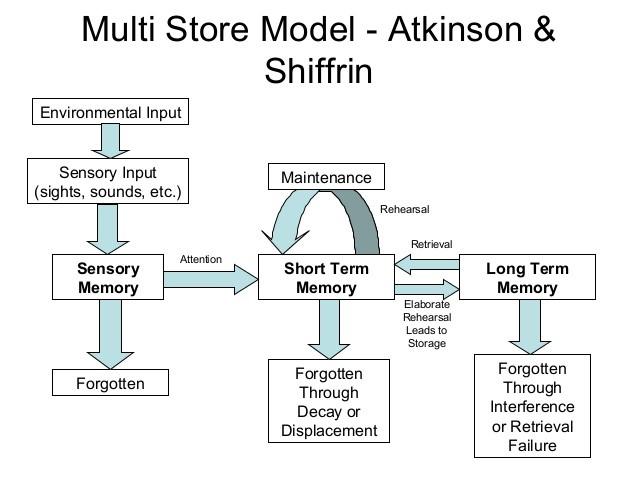
The video below from Crash Course offers a brisk and engaging overview of this model and the basic mechanics of memory. As you watch, focus on understanding the distinct roles of the three main stages.
How We Make Memories Crash Course Psychology #13
This video, "How We Make Memories," will provide the foundational vocabulary for our lesson.
Please watch the segments explaining the three-stage model of memory, from breaking it down, and the subsequent description of the different memory stores, from sensory memory to working memory. This will give you a clear map of the process before we begin dissecting its flaws.
Now that we have this basic framework of encoding (getting information in), storage (holding it), and retrieval (getting it out), we can investigate how distortions are introduced at each step.
Stage 1: Encoding – Garbage In, Garbage Out
Encoding is the process of converting sensory input into a form that can be processed and stored in the brain. As we saw in the last lesson, this process is highly selective due to attention. But beyond simple selection, encoding actively transforms information, a process that can be a prime source of errors.
The following text from the Noba Project provides an excellent breakdown of how these initial errors occur.
Memory (Encoding, Storage, Retrieval)
This reading delves into the specifics of encoding, highlighting how our minds are not passive recorders but active interpreters from the very start.
Please read the section titled "Encoding." Pay close attention to the concepts of recoding, where information is changed to make sense of it, and the two key examples of how this process creates false memories: the DRM effect (the word list experiment) and pragmatic inferences (the karate champion example).
As the reading shows, your mind doesn't just passively log data; it actively tries to make sense of it.
- Pragmatic Inferences: When you hear "The karate champion hit the cinder block," your mind infers the logical outcome—that the block broke—and may store that inference as the memory itself. You remember what you expected to happen, not necessarily what was stated.
- The DRM Effect: When you hear a list of related words (e.g., bed, rest, tired, dream), your brain activates the related, but unstated, concept—sleep. This association is so strong that you are highly likely to "remember" hearing the word sleep.
These errors occur because our memory system is designed for efficiency and meaning, not for literal accuracy. It prioritizes the "gist" of an experience over the verbatim details. This is explained by what psychologists call Fuzzy-Trace Theory, which posits that we store both a fuzzy, gist-like trace and a precise, verbatim trace. As the verbatim trace decays quickly, we are often left with only the gist, making us vulnerable to remembering things that are consistent with the gist but factually incorrect.
Stage 2: Storage – The Corruption of Time and Information
Once a memory is encoded, it must be stored. You might imagine this as placing a book on a shelf, where it sits unchanged until needed. The reality is more like leaving a document in a busy, collaborative workspace. It can be altered by new information that comes in, or it can simply degrade over time.
Two of the most significant sources of distortion during storage are interference and the misinformation effect. The next video provides clear and memorable examples of both.
Remembering and Forgetting: Crash Course Psychology #14
This video, "Remembering and Forgetting," moves on to explain how stored memories can be corrupted. It features the work of renowned psychologist Elizabeth Loftus, a pioneer in this field.
Watch the section that begins around "Sometimes these retrieval problems". It explains how proactive and retroactive interference clutter our memory and, most importantly, details the powerful misinformation effect using Loftus's classic car crash experiment.
The key takeaways from this are:
- Interference: Old information can disrupt the recall of new information (proactive), and new information can overwrite old information (retroactive). Think of trying to remember this year's password when last year's keeps popping into your head.
- The Misinformation Effect: This is one of the most critical concepts for you to grasp, especially given your interest in influence and negotiation. As Loftus's experiment showed, simply changing a single word—from "hit" to "smashed"—not only altered people's estimates of speed but also caused them to falsely remember seeing broken glass that wasn't there. Post-event information can be seamlessly woven into the fabric of the original memory, corrupting it permanently.
This has profound implications. In a business context, the way a past project's outcome is discussed in subsequent meetings can literally rewrite people's memories of that project. The narrative becomes the reality.
Stage 3: Retrieval – The Storyteller at Work
Finally, even if a memory has been encoded relatively well and stored without major interference, the act of retrieving it is another opportunity for distortion. Retrieval is not like opening a file; it is a creative act of reconstruction.
Memory (Encoding, Storage, Retrieval)
This final reading selection explains why the act of remembering is also an act of editing.
First, read the section on "Storage", focusing on the part that describes memory as a reconstructive process. Then, move to the section on "Retrieval." The most important part here is the final two paragraphs, which explain how retrieval changes memory. Pay special attention to Piaget's vivid, yet completely false, memory of his own kidnapping, found in the text starting from this point.
As the text highlights, every time you recall an event, you are not just accessing a static memory trace. You are re-assembling it, and in doing so, you can introduce new elements or strengthen inaccurate ones. The gaps in your memory are filled in with what seems plausible, what fits your current beliefs, or what you've heard from others. Piaget’s story is a striking example of how a repeatedly told family story can be so thoroughly integrated into one's own mind that it becomes an indistinguishable part of personal history, complete with sensory details.
This reconstructive process is also prone to source misattribution (or source amnesia), where you correctly remember a piece of information but incorrectly remember where you learned it. You might remember a "fact" about a competitor but forget that you heard it as a rumor from an unreliable source, instead attributing it to a formal report. This gives the information a false sense of credibility. The fallibility is so profound that even people with Highly Superior Autobiographical Memory (HSAM), who can recall details from almost every day of their lives, are still susceptible to forming false memories through these mechanisms.
Conclusion
Today, we have dismantled the common metaphor of memory as a recording device. Instead, we've seen that it is a dynamic and fundamentally reconstructive system, prone to distortion at every stage.
Here are the key takeaways from our lesson:
- Memory is Reconstructive: Your mind does not replay the past; it rebuilds it. This process prioritizes meaning and coherence over literal accuracy.
- Encoding is Flawed: From the moment information enters the mind, it is being recoded, interpreted, and simplified. This can lead to false memories based on logical inferences (pragmatic inferences) and semantic associations (the DRM effect).
- Storage is Unstable: Memories are not locked away safely. They can be overwritten by new information (retroactive interference) or corrupted by post-event suggestions (the misinformation effect).
- Retrieval is Creative: The act of remembering is an act of storytelling. Each retelling can alter the memory, solidifying inaccuracies and leading to errors like source misattribution, where we forget the origin of our knowledge.
In our first few lessons, we've established that our perception of the world is filtered by attention, and our recollection of the past is reconstructed by memory. These foundational cognitive processes are not perfect, and their inherent flaws give rise to predictable patterns of error in our thinking. These patterns are known as cognitive biases. In the next module, we will begin our deep dive into these biases, starting with why our minds rely on these flawed mental shortcuts in the first place.