Hello! In our last lesson, we focused on the musicality of your writing, using your ear to refine prose rhythm and flow by reading your work aloud. We polished the surface of your sentences to make them engaging and sonorous. Today, we move from the sound of your writing to its core sense, ensuring its foundation is solid and trustworthy.
This lesson covers the learning outcome: Check an article for internal factual and logical consistency. We'll explore the critical revision pass that safeguards your credibility as a journalist. For a piece to have professional polish, it must not only sound good but also be factually and logically airtight. This means ensuring your article doesn't contradict itself and that your arguments hold up to scrutiny—skills that are indispensable in entertainment journalism, where timelines, plot details, and critical judgments are paramount.
1. The Foundation of Credibility: The Consistency Check
Before an audience can be persuaded by your analysis or captivated by your storytelling, they must trust you. Internal inconsistencies—errors where the article contradicts itself—are one of the fastest ways to erode that trust. They signal carelessness and undermine your authority.
Professional newsrooms have entire teams of copy editors and fact-checkers dedicated to this. While you'll often be your own first line of defense, adopting their mindset is crucial.
Let's begin with a short video from NBCU Academy where copy editors discuss their role. Pay close attention to how they frame their work around ensuring accuracy and consistency.
How Copy Editors Help the Newsroom
In "How Copy Editors Help the Newsroom," professionals discuss their role as the guardians of journalistic standards.
Watch these two brief clips: Core responsibilities: The editors state their primary job is checking for "accuracy, fairness, grammar, style." Catching inconsistencies: Note the speaker's point that "we routinely catch sort of basic factual inconsistencies and errors before it ever goes online." This is the mindset you need to adopt for your own work.
As the video shows, this isn't an optional final polish; it's a fundamental step in producing credible journalism.
2. Internal Factual Consistency: Does Your Story Agree with Itself?
Internal factual consistency is about making sure the facts you present within a single article are coherent and don't contradict one another. It's a self-contained audit of your draft.

In entertainment journalism, this could involve checking for:
- Names and Titles: Is the main character's name spelled "Sarah" in one paragraph and "Sara" in another? Is the album title consistent throughout?
- Dates and Timelines: Does a film review mention a scene takes place in 1992, but later refer to a character using a smartphone from 2010 in that same scene?
- Attributes and Descriptions: In a profile, do you describe an actor as having "piercing blue eyes" in the introduction and "warm brown eyes" in a later paragraph?
- Plot Points: In a TV show recap, do you state that a character died, only to later discuss their plans for the next episode?
The "Truth in Journalism Fact-Checking Guide" provides a professional framework for this process. A key part of a fact-checker's job is to verify what they call "the internal logic of a story, including its chronology." One of the best ways to do this is to create a mini-timeline or a list of key facts as you edit.
Practice Exercise 1: Spot the Factual Errors
Read the following snippet from a hypothetical film review. Identify at least three internal factual inconsistencies.
Draft Snippet:
Midnight Echoes, the new thriller from director Anya Sharma, is a masterclass in tension. The film opens in a rain-slicked Chicago in 1985, where we meet grizzled detective Jack O'Connell. His investigation into a series of murders leads him to a mysterious singer named Helena, whose debut album, "City of Whispers," was released the previous year in 1986. Detective O'Connell, only 45, feels the weight of his 30 years on the force. Their cat-and-mouse game is the heart of the movie, culminating in a tense standoff where Helen pulls a gun on the detective.
Click to see the inconsistencies
- Timeline Error: The film is set in 1985, but the album was released "the previous year in 1986." This is a chronological contradiction. 1984 would have been the previous year.
- Logic Error: Detective O'Connell is 45 years old but has been on the force for 30 years. This would mean he started at age 15, which is highly improbable and breaks logical consistency.
- Name Inconsistency: The singer is introduced as "Helena" but is called "Helen" in the final sentence.
3. Logical Consistency: Does Your Argument Make Sense?
Beyond getting the simple facts right, your arguments and analyses must be logically sound. This is especially important in reviews and critical essays, where your goal is to present a convincing case for your opinion.
A common pitfall is presenting a subjective opinion as if it were an objective fact, or building an argument on a flawed logical foundation.
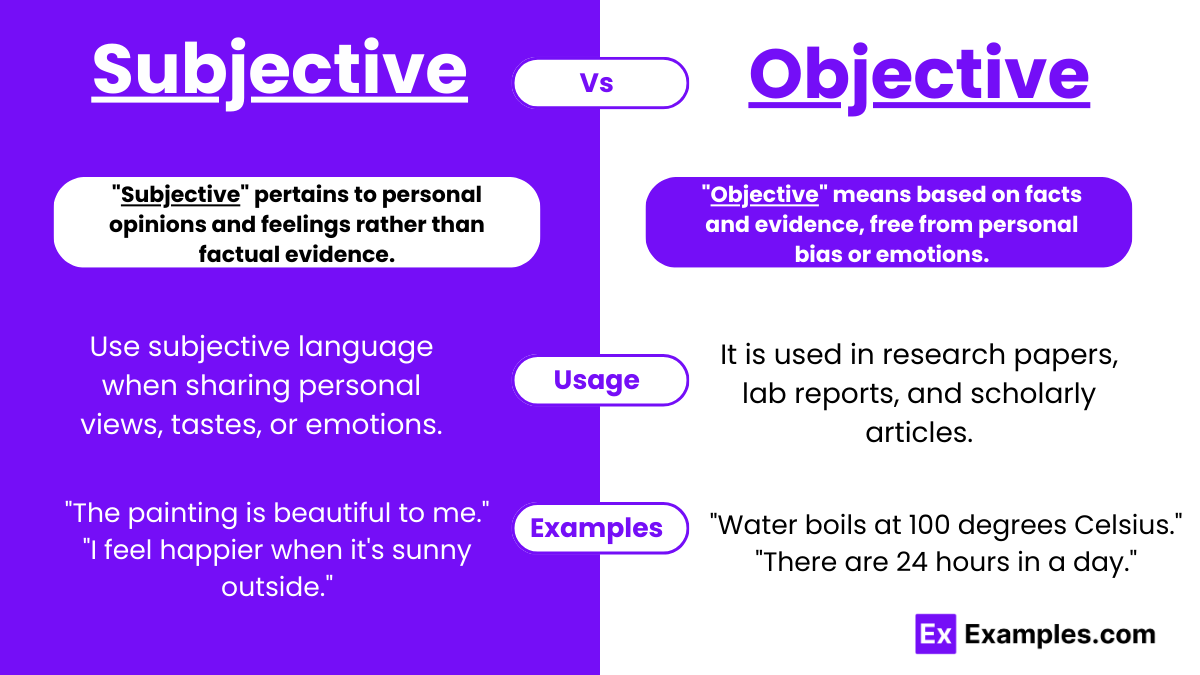
Logical inconsistency occurs when your reasoning is flawed. For example, you might praise one film for its "bold, unconventional structure" but criticize another for being "confusing and hard to follow," even if they use similar narrative techniques. This is inconsistent reasoning.
To build strong, consistent arguments, it helps to understand their basic structure.
The Rules of Logic Part 7: Using Consistent Reasoning to Compare ...
This article from The Logic of Science website offers a clear, practical guide to testing the consistency of an argument. It's not about being a formal logician; it's about making sure your reasoning doesn't fall apart under examination.
Read from the beginning down to the end of the section "Testing for consistent reasoning." As you read, focus on these key ideas: Argument Structure: Understand that an argument consists of premises (the evidence) and a conclusion. Consistent reasoning means the structure of your logic is sound. Removing the Topic: Pay close attention to the technique of removing the specific topic (like a movie title) to examine the underlying logic. The Indiana Jones example is particularly relevant to entertainment journalism. The Counter-Example Test: Grasp the core method: if you can find just one counter-example where the same logical structure leads to a conclusion you disagree with, the reasoning is flawed.
Practice Exercise 2: Spot the Logical Flaw
Read the following excerpt from a TV review. Identify the flaw in its logical reasoning, using the principles from the article.
Draft Snippet:
The primary weakness of Starship Odyssey is its reliance on the "found family" trope, where a group of misfits comes together to form a bond. We've seen this a dozen times before, and it feels tired and unoriginal. Any show that uses such a clichéd premise is demonstrating a fundamental lack of creativity. The writers should have tried something new. However, the season's standout episode is the fifth, "The Outcast's Return," which brilliantly executes a story where a lonely, isolated character finally finds her place and sense of belonging with the crew. It's a truly moving and effective piece of television.
Click to see the logical flaw
The argument's logical structure is: "The 'found family' trope is a cliché, and therefore any show using it lacks creativity."
The inconsistency is that the writer then praises an episode for "brilliantly executing" that very same trope. The argument falls apart. A more consistent argument would be to criticize the execution of the trope throughout the series, rather than condemn the trope itself. For example: "While the 'found family' trope can be powerful, as seen in the excellent fifth episode, Starship Odyssey generally handles it in a clichéd and uninspired way."
4. A Practical Workflow for Consistency Checking
Incorporating a consistency check into your revision process is straightforward. After you've done your substantive edit (for structure) and line edit (for prose), perform one final pass specifically for consistency.
- Read for Facts: Go through the article with the sole purpose of tracking key details. Keep a running list on a notepad or in a separate document. For a profile, this might be names, ages, and dates. For a review, it might be character names, plot points, and setting details.
- Create a Timeline: As suggested by the "Truth in Journalism Guide," if your piece involves a sequence of events, quickly sketch out a timeline. This is the easiest way to spot chronological errors like the one in our first practice exercise.
- Interrogate Your Argument: For a review or opinion piece, state your main thesis in one sentence. Then, list your supporting points. Do they all logically lead to that thesis? Do any of them contradict each other, as in our second exercise? Be your own toughest critic.
This dedicated pass forces you to switch from a "writer" brain to an "editor" brain, helping you see the gaps and contradictions your writer brain might have glossed over.
Conclusion
In this lesson, you've learned how to reinforce the foundational integrity of your writing. While the previous lesson taught you to make your prose sing, this one taught you to make sure your story holds true. By checking for both internal factual and logical consistency, you elevate your work from merely well-written to authoritative and trustworthy.
Key Takeaways:
- Credibility is paramount: Internal inconsistencies are a quick way to lose a reader's trust.
- Adopt a fact-checker's mindset: During a dedicated revision pass, actively hunt for contradictions in names, dates, timelines, and descriptions.
- An argument is a structure: A critical opinion is only as strong as the logic supporting it. Test your reasoning by checking if it applies consistently.
- Be your own toughest critic: Question your own facts and challenge your own arguments before your reader does.
In our next lesson, we will continue refining your draft. Now that your article is factually sound and logically coherent, we will focus on making it sharp and impactful by learning how to cut an article's word count by 15–20% without losing essential meaning or voice.