Welcome to the next stage of our revision process. In our last lesson, we focused on making your article factually and logically airtight, ensuring its foundation is solid and trustworthy. Now that we're confident in the substance of your writing, we can turn our attention to its form, making it as sharp, impactful, and professional as possible.
Today's lesson addresses the learning outcome: Cut an article's word count by 15–20% without losing essential meaning or voice. This is a vital skill in journalism, where word counts are often strict and reader attention is scarce. Learning to be economical with your words is not about diminishing your work; it's about amplifying its power.
We'll cover the crucial distinction between good and bad cutting, explore a tactical toolkit for identifying and eliminating wordiness, and practice a concrete method for tightening your prose.
1. The Mindset: Cutting to Reveal, Not to Weaken
Many writers fear that cutting words will flatten their style or "destroy their voice." This is a common misconception. More often, overwriting buries your unique voice under a layer of unnecessary words, redundant phrases, and weak modifiers. The goal of this lesson is to learn how to chisel away the excess material to reveal the stronger, more confident writing that lies beneath.
To get us into the right mindset, let's watch the introduction to a video from writing coach Patrick Walsh.
Why Most Writers Overwrite — And How to Fix It Without Losing Your Voice
This video, "Why Most Writers Overwrite," directly challenges the idea that cutting weakens your writing.
Watch the first part, from the beginning to the introduction. Pay close attention to the core argument: good editing doesn't make writing worse; it "reveals the great writing that was there all along."
As the video argues, your voice isn't the number of words you use; it's the specific choices you make. Our task is to make every word count.
2. "Voice-Safe" Editing: What to Cut and What to Keep
The key to successful cutting is knowing the difference between "clutter" and "personality." Clutter consists of generic, redundant, or empty words that add length but not meaning. Personality and voice are found in specific details, strong verbs, and unique observations.
To learn how to target the right words, we'll watch two more clips from the same video.
Why Most Writers Overwrite — And How to Fix It Without Losing Your Voice
These segments provide the foundational principles for cutting words while protecting—and even enhancing—your voice.
First, watch the section on Cutting vs. Weakening. This explains the difference between good cutting (removing generic words) and bad cutting (removing specific details). The core rule here is invaluable: cut adjectives and adverbs first; keep specific nouns and strong verbs. Next, jump to the section on Voice-Safe Editing. This part reinforces where your voice truly lives: in unusual comparisons and specific details (like "gargoyles where most homes had gutters"), not in a pile of generic adjectives ("beautiful," "magnificent").
Let's summarize the main principle:
- Keep: Specific, concrete nouns; strong, active verbs; unique details and surprising comparisons.
- Cut: Generic, weak adjectives and adverbs; redundant phrases; and words that state the obvious.
Your voice is in the detail you choose to show the reader, not the number of words you use to describe it.
3. A Tactical Hit List for Wordiness
Now that we have the right strategy, let's build a tactical toolkit. Wordiness often comes from a few common culprits. By learning to spot them, you can perform targeted strikes to tighten your prose.
Many of these points will refresh concepts from earlier in the course, but now we're applying them with the specific goal of concision. The following handout from Miami University's writing center provides an excellent checklist.
Editing for Clear Style | Miami University
This resource offers a concise, actionable list of common patterns of wordiness and how to fix them.
Read through the first six sections, from "1. Replace 'to be' Verbs" down to the end of "Simplify sentences." Focus on internalizing this "hit list" of targets for revision: Weak "to be" verbs (is, was, are) Overused prepositional phrases Empty phrases (in my opinion, due to the fact that) Vague modifiers (really, very, truly) Nominalizations (nouns ending in -ion that hide a verb) Expletives (there is, it is) Passive voice
This list gives you a concrete set of items to search for in your draft. Making these changes will often have a dramatic effect on your word count.
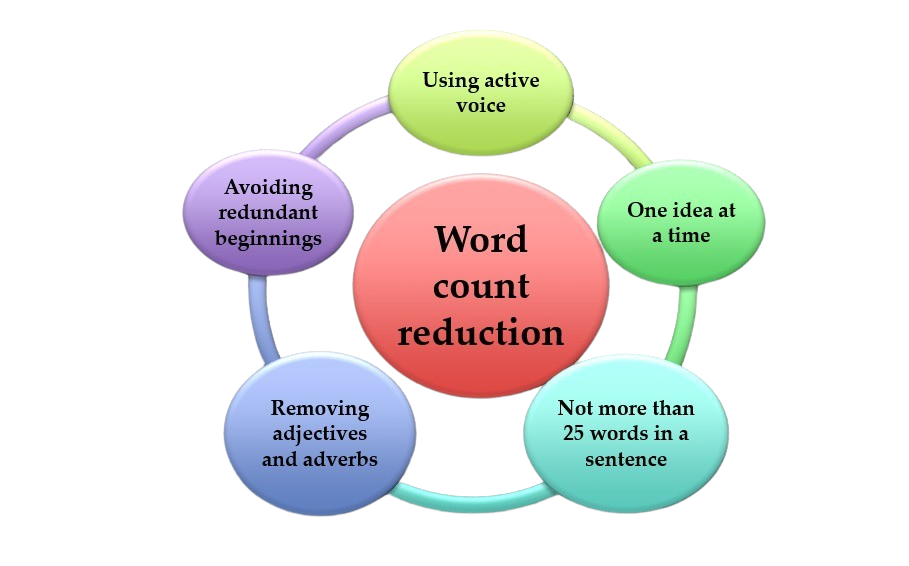
4. A Practical Method: The Three-Sentence Compression
Sometimes, the best way to cut is to force yourself to start over with a strict constraint. This method is brilliant for identifying the absolute essential core of a paragraph.
Why Most Writers Overwrite — And How to Fix It Without Losing Your Voice
We return to Patrick Walsh's video for a powerful, hands-on technique.
Watch the section on The Three-Sentence Compression Method. The process is simple: take a paragraph you feel is overwritten, and rewrite it using exactly three sentences. Then, compare the new version to the old.
This technique forces you to identify the core action, the key emotional detail, and the essential reaction, stripping away everything else. It’s an incredibly effective way to see how much you can say with fewer words.
5. Practice: Cut an Article Snippet
Let's put these techniques into practice. Your task is to edit the following paragraph from a hypothetical movie review. Your goal is to cut the word count by at least 20% without losing the essential meaning or the critical tone.
Original Draft (76 words):
In what is truly a stunning directorial debut, filmmaker Chloe Zhao’s new movie, The Drifter, is an absolutely masterful cinematic achievement. It is a film that tells the story of a lone musician who travels across the vast and empty landscapes of the American West. There are many scenes in the movie that are filled with a quiet sense of melancholy. The overall effect of this is that the audience is left with a profound feeling of both sadness and hope.
Your Task:
- Rewrite the paragraph to be more concise.
- Count the words in your new version.
- Calculate the percentage of words you cut. The formula, from the Miami University resource, is:
Take a few minutes to apply the techniques we've discussed. Look for weak verbs, expletives, empty modifiers, and redundancies.
Click to see a possible revision
Example Revision (39 words, ~49% reduction):
In her stunning directorial debut, The Drifter, Chloe Zhao has crafted a masterful cinematic achievement. The film follows a lone musician across the vast landscapes of the American West. Its quiet, melancholic scenes leave the audience with a profound sense of both sadness and hope.
Analysis of the Edits:
- "In what is truly..." was cut.
- "filmmaker Chloe Zhao's new movie" became "Chloe Zhao."
- "is an absolutely masterful..." became "has crafted a masterful..." (stronger verb).
- "It is a film that tells the story of" became "The film follows..." (active voice, stronger verb).
- "There are many scenes..." was eliminated.
- "The overall effect of this is that..." was eliminated.
This version is sharper, more direct, and has a more confident authorial voice, all while using nearly half the words.
Conclusion
Today, we've transformed the intimidating task of cutting an article into a strategic process of refinement. By shifting your mindset and arming yourself with a tactical toolkit, you can now trim 15-20% or more from your drafts, not only to meet word counts but to make your writing stronger, clearer, and more impactful.
Key Takeaways:
- Cutting Reveals Voice: Effective editing removes the clutter that buries your unique style.
- Distinguish Clutter from Detail: Target weak modifiers, redundancies, and empty phrases, while preserving specific, concrete details.
- Use a Tactical Hit List: Actively hunt for passive voice, "to be" verbs, expletives, and nominalizations.
- Practice with Constraints: Use methods like the three-sentence compression to force conciseness and discover the core of your message.
In our next and final lesson of this module, we will build directly on this skill. You'll learn how to identify recurring patterns in your own writing—both strengths and habits to break—through self-analysis. The ability to spot your own patterns of wordiness is a crucial step toward becoming a more disciplined and effective editor of your own work.