Welcome back. In our last lesson, we focused on the anecdotal lead, a powerful tool for drawing readers in by starting with a small, self-contained story. This narrative approach builds an immediate human connection, inviting the reader to discover the broader meaning behind a personal moment.
Today, we'll explore a different but equally compelling way to open an article. Instead of telling a story, you will learn to paint a picture. The goal for this lesson is to write a descriptive lead that sets a vivid scene using sensory detail. This technique is vital for entertainment journalism, where immersing your reader in the atmosphere of a film set, the energy of a concert, or the environment of a celebrity profile is key to crafting an engaging piece.
1. From Story to Scenery: Defining the Descriptive Lead
While an anecdotal lead tells the reader what happened to someone, a descriptive lead shows the reader where they are. It drops them directly into a time and place, using language to create a strong sense of atmosphere before any action or argument unfolds. This is often called a "scene-setting" lead.
Let's start with a clear definition and an example of this technique in action.
How to write a Feature: leads and story structure
This video from the "Ask Prof. Rachel" channel provides a concise explanation of the descriptive lead, also known as "setting the scene."
Please watch the segment from Setting the scene. Notice how the example about the "young Egyptian professional" uses specific visual and sensory details (crisp polo shirt, swathed in cologne, rain-slick streets) to create an immediate mental image for the reader.
As the video explains, the goal is to offer a "visual image in words." This approach delays the main point of the story (which will come in the nut graf) in favor of establishing a mood and building intrigue. It invites the reader inside your story's world.
To reinforce this, another journalism instructor explains the purpose behind this technique.
The Basics of Feature Writing (Journalism Lecture)
This clip from Brett Atwood's lecture on feature writing discusses the strategy behind using descriptive leads.
Watch the short segment from Writing the lead. The key idea here is that instead of putting the "news elements" first, the writer uses the opening paragraphs to "set the mood" and "arouse the readers' curiosity."
2. The Power of Sensory Language
The key to writing a great descriptive lead isn't just to state what a place looks like, but to evoke what it feels like to be there. This is achieved by appealing to the senses: sight, sound, smell, touch, and taste. This is the essence of the writing principle "show, don't tell."
For instance, instead of telling the reader "The backstage area was chaotic," you could show them: "The air backstage hung thick with the smell of hairspray and sweat, a frantic chorus of shouted cues and feedback squeals cutting through the darkness."
The NPR Training guide provides an excellent example of a scene-setting lead that uses sensory details effectively.
A good lead is everything — here's how to write one : NPR Training
This article from NPR Training breaks down different types of leads. We'll focus on one specific example.
Read the section titled "Scene-setting lead." Pay attention to how the writer, despite never having visited the location, uses details like "high ceilings" and "a distinctly bookish smell" to transport you into the Bavarian palace library.
To help you build this skill, let's look at a chart that breaks down how to translate the five senses into descriptive writing.
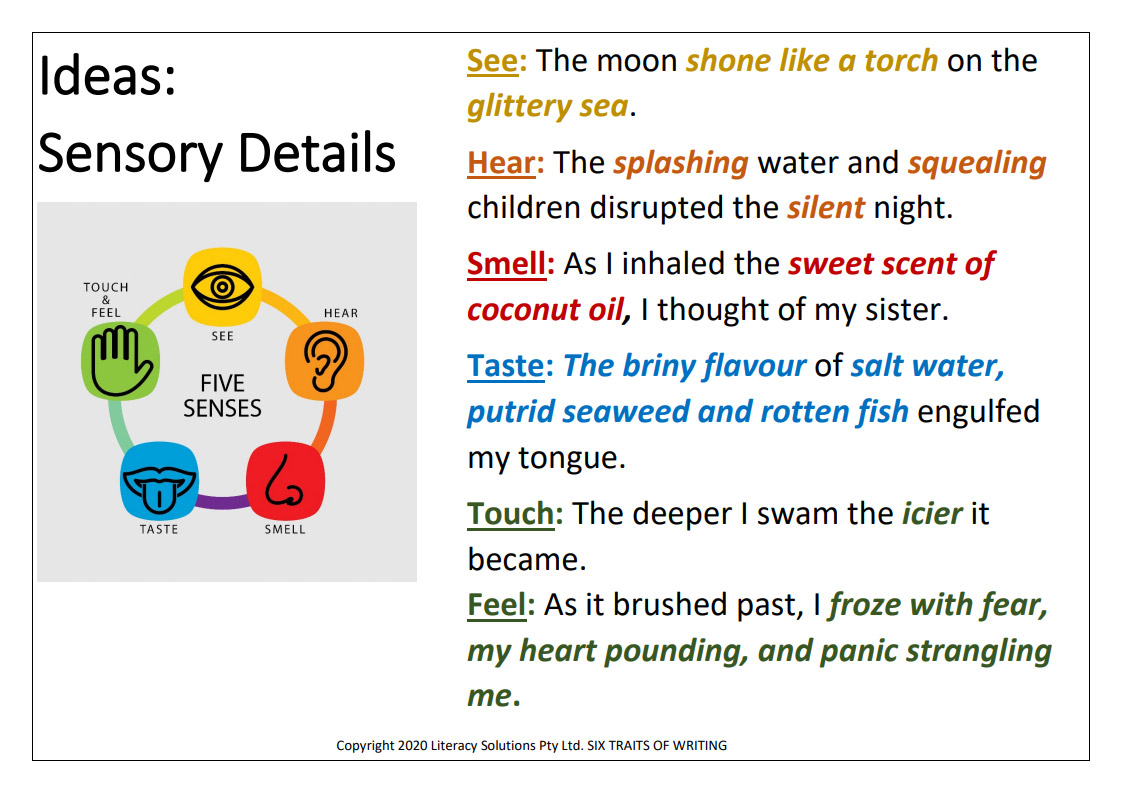
Study the examples for each sense. The goal is to collect specific, concrete details that make your scene feel real and immediate. An editor for Scientific American Mind describes this effect perfectly when praising a lead that uses dialogue to create an "instant scene."
Good Beginnings: How to Write a Lede Your Editor—and Your ...
This article from The Open Notebook features editors and writers discussing what makes a great lead.
Please read the section "Find Common Ground with the Reader." Focus on the editor's take from Karen Schrock Simring. She praises leads that are "instantly relatable," create an "instant scene," and "show rather than tell." This is exactly what a strong descriptive lead accomplishes.
3. Your Turn: Painting with Words
Now it's time to put this into practice. For each of the following entertainment journalism scenarios, rewrite the "straight news" lead into a descriptive lead. Focus on using sensory details to create a vivid, immersive opening.
Scenario 1: A Behind-the-Scenes Set Visit
- Straight News Lead: The new fantasy TV series, Chronicles of the Seventh Realm, is currently filming in a large studio outside Vancouver.
- Your Task: Rewrite this as a descriptive lead. Transport your reader onto the set. What do they see, hear, and smell?
See an example
A dragon’s head, the size of a small car and glistening with fake blood, lies silent on the concrete floor. The air tastes of manufactured fog and sawdust, and the only sound is the low hum of industrial fans until a voice from the darkness bellows, "And... action!" Suddenly, a dozen knights in mud-splattered armor charge past, their swords clanging in a symphony of rehearsed violence.
Scenario 2: A Concert Review
- Straight News Lead: Indie-rock band The Wandering Echoes played the final show of their tour last night at the historic Ryman Auditorium in Nashville.
- Your Task: Rewrite this as a descriptive lead. Put the reader in the audience. What is the atmosphere like just before the show starts?
See an example
The stained-glass windows of the Ryman Auditorium vibrate with the low, expectant rumble of the crowd. Every wooden pew is packed, and the air is warm and close, smelling of popcorn and spilled beer. A single blue spotlight cuts through the darkness, illuminating a row of guitars standing like soldiers on the empty stage, waiting for the signal to begin.
Scenario 3: A Celebrity Profile Interview
- Straight News Lead: I met with legendary actress Helen Vance to discuss her career at her secluded home in the English countryside.
- Your Task: Rewrite this as a descriptive lead. Set the scene in her home. What details reveal something about her character before she even speaks?
See an example
The first thing you notice in Helen Vance’s cottage isn't the shelf of acting awards or the framed movie posters. It's the mud. It's caked on a pair of rubber boots by the door, tracked across the stone floor by a happy, panting golden retriever, and smudged on the windowpane where someone has clearly been looking out over the rain-soaked garden. The glamour of Hollywood feels a world away.
Conclusion
Today we've added another essential opening strategy to your writing arsenal. Unlike the narrative pull of an anecdotal lead, the descriptive lead works by creating a powerful sense of place and mood, immersing the reader in your story's world from the very first sentence.
Key Takeaways:
- A descriptive lead's primary goal is to set a scene and establish a mood using vivid language.
- The most effective descriptive leads engage the reader's senses—sight, sound, smell, touch, and taste.
- This technique is an exercise in "showing, not telling," allowing readers to experience the environment for themselves.
- In entertainment journalism, a descriptive lead can powerfully establish the context for a review, profile, or feature story.
In our next lesson, we will examine a third type of creative opening: the provocative statement or question lead, which grabs attention by challenging the reader or sparking immediate curiosity with a bold claim.