Welcome back. Over the last several lessons, we've honed your authorial voice, exploring how to use tools like wit and humor while maintaining journalistic credibility. You now have a stronger sense of how to say things. In this new module, "Writing Critical Reviews," we'll shift focus to what you say.
The first step in writing a compelling review is to establish a core argument. Therefore, today's lesson will focus on a foundational skill: formulating a clear, arguable thesis statement for a piece of entertainment. A strong thesis is more than just an opinion; it's the central pillar that supports your entire review, giving it purpose and direction. By the end of this session, you'll understand how to move beyond simple preference to construct a powerful, debatable claim.
1. What Makes a Review? Opinion vs. Argument
In entertainment journalism, a review is not simply a thumbs-up or thumbs-down. It's an act of persuasion. Your job isn't just to tell the reader whether you liked a movie, album, or show, but to build a case for why your assessment is valid. A great critic guides the reader's thinking and deepens their understanding of the work.
To set the stage, let's hear from one of the most respected critics in the field, A.O. Scott, former chief film critic for The New York Times.
How to Write Movie Reviews with A.O. Scott
In this short video, A.O. Scott explains the fundamental difference between a simple opinion and true criticism. This distinction is the bedrock of a strong thesis statement.
Watch the following clips: Start with the introduction, where he defines what a review is not. Jump to his explanation of the reader's expectation and the importance of the word "why." Finally, watch his thoughts on processing your reaction. Pay attention to how he separates an initial emotional response from a more reasoned analysis.
Scott's key point is that criticism requires moving from the what (your feeling) to the why (the reasons for that feeling, grounded in the work itself). A thesis statement is the sentence that encapsulates that "why."
2. The Anatomy of a Thesis Statement
At its core, a thesis statement has two parts: a topic and an argument about that topic.
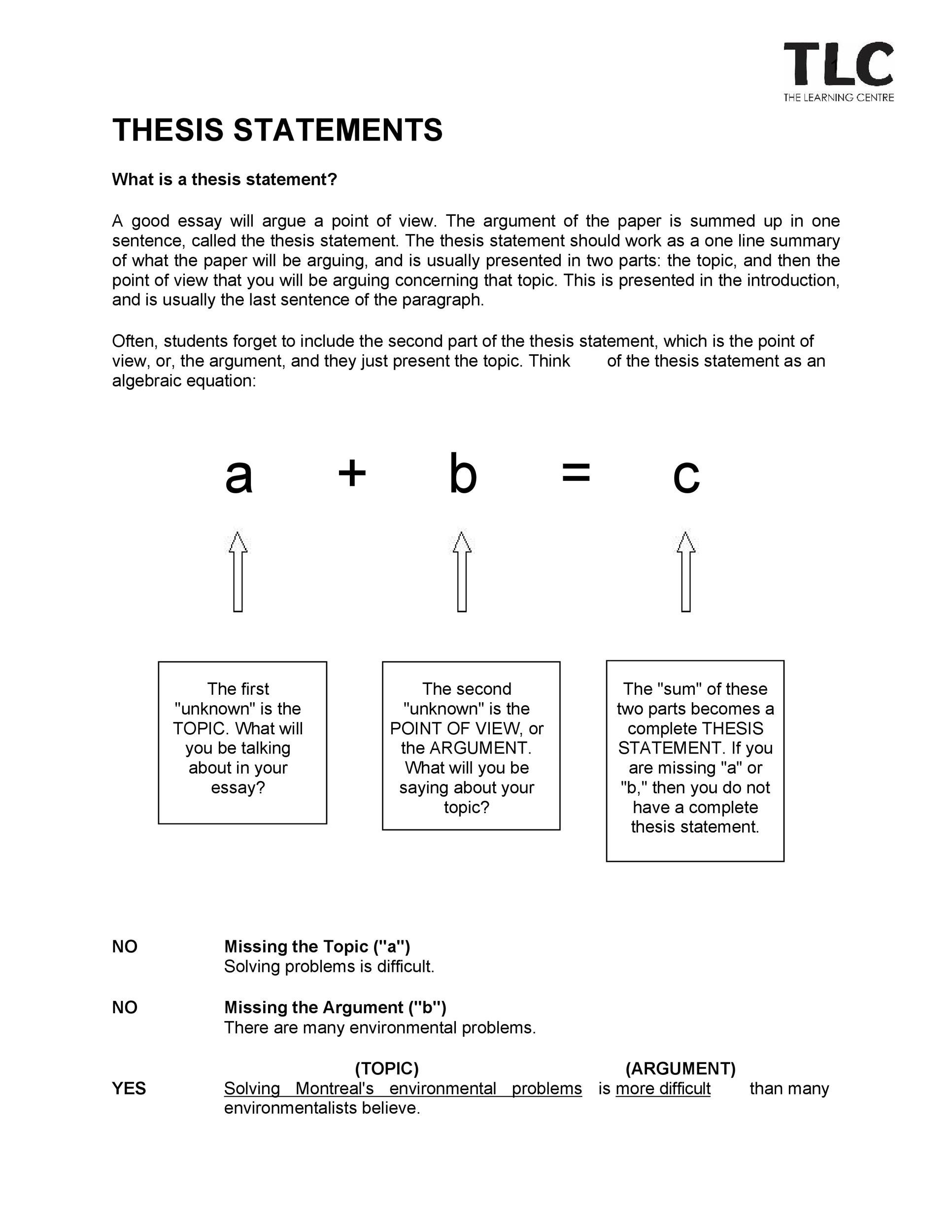
A vague opinion like "I thought the new season of The Crown was interesting" has a topic (The Crown) but lacks a specific, arguable point. It doesn't give you anything to prove.
To build a real thesis, we need a more structured approach. A common and effective method is the Topic -> Question -> Answer model.
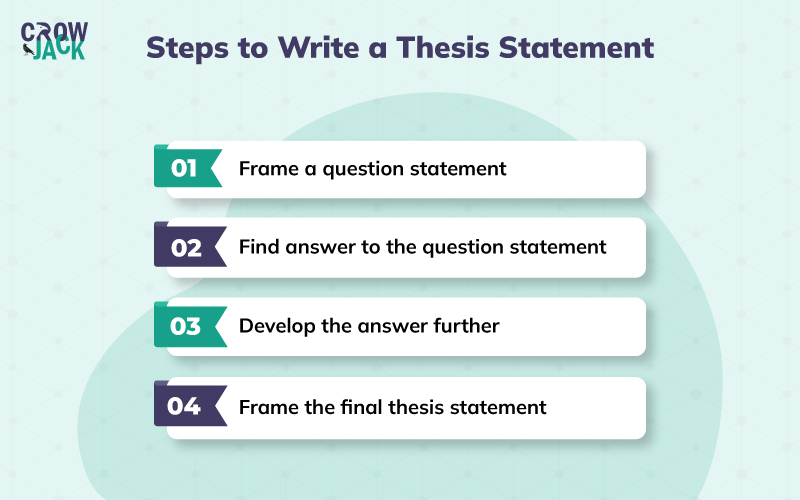
Let's see this process in action.
[PDF] Thesis Statements and Introductions
This document from Bucks County Community College provides a clear, step-by-step example of how to narrow a topic into a thesis, using the film Pulp Fiction.
Please read the section titled "Try this strategy to develop and narrow a thesis statement." It begins with "Step 1: Choose a topic..." and ends with "...Quentin Tarantino uses excessive violence to mock American social and cultural values." Notice how it moves from a broad topic to a specific, debatable claim.
This four-step process transforms a general subject into a sharp, focused argument:
- Topic: The film Pulp Fiction.
- Focused Topic: The excessive violence in Pulp Fiction.
- Question: Why does Quentin Tarantino use excessive violence in the film?
- Answer (Thesis): In Pulp Fiction, Quentin Tarantino uses excessive violence not just for shock value, but to satirize America's desensitization to brutality and its romanticization of criminal culture.
This statement is arguable. Someone else could claim the violence serves a different purpose, or no purpose at all. Your review would then be dedicated to proving your interpretation is the most compelling one, using specific scenes and directorial choices as evidence.
3. From Raw Reaction to Refined Argument
How do you find your question and answer? It starts with moving beyond a "review" (a judgment of entertainment value) and toward "analysis" (an examination of how the parts create the whole).
Resources - How to Write a Film Analysis | The Writing Place
This resource from Northwestern University clarifies the difference between a simple review and a more substantive analysis, which is the foundation of a strong critical take.
First, read the tip under the heading "Tips for Film Analysis" that begins "A film analysis is not the same of a film review." Then, complete the short "Exercise: Which Sentence Belongs in a Film Analysis?" This will help you distinguish between subjective praise and an objective, arguable observation—the kind of observation that leads to a great thesis.
The key is to ground your argument in formal elements—the specific, technical choices made by the creators. Instead of saying "the acting was bad," a strong thesis might focus on how the actor's choices failed to serve the character's arc.
For example:
- Weak: The new superhero movie was boring.
- Better: The film's over-reliance on CGI spectacle and underdeveloped villain drains the story of any genuine emotional stakes.
This second version gives you a clear roadmap for your review. You'll need to provide examples of the over-the-top CGI, analyze the villain's thin motivation, and connect both points back to your central claim about the lack of emotional stakes.
4. Practice and Refinement: Avoiding Common Pitfalls
Formulating a thesis is a process of drafting and refining. To help you sharpen your statements, it's useful to know what to avoid.
[PDF] Thesis Statements and Introductions
Let's return to the Bucks.edu document. It contains an excellent checklist of common mistakes made when writing a thesis.
Read the section "Nine Errors to Avoid When Composing a Thesis" (starts on page 8). Pay special attention to these common traps for reviewers: #5: Using phrases like "I think" or "in my opinion." #6: Using vague language. #9: Simply stating a fact.
Your Turn: Rate These Theses
Let's put this into practice. Imagine you're reviewing the recent film Dune: Part Two. Here are three potential thesis statements. Rank them from weakest to strongest and think about why.
- Dune: Part Two is a science-fiction epic that continues the story of Paul Atreides.
- In my opinion, Dune: Part Two is a masterpiece of filmmaking and better than the first movie.
- By contrasting breathtaking, immense landscapes with claustrophobic, brutalist interiors, Dune: Part Two visually reinforces its central theme of an individual being crushed by the weight of destiny.
Click for Analysis
- Weakest (1): This is a statement of fact, not an argument. It simply describes the film's premise and belongs in the introduction's summary, not as the thesis. (Error #9)
- Middle (2): This is a personal opinion. It tells the reader what you think but not why. The phrase "in my opinion" weakens it, and "masterpiece" is too vague to be effectively proven. (Errors #5 and #6)
- Strongest (3): This is a clear, specific, and arguable thesis. It identifies a specific technique (the contrast in cinematography/production design) and connects it to a specific interpretation of the film's theme. A review built on this thesis would analyze specific scenes to prove this visual-thematic link.
Conclusion
Today, we've broken down the most critical element of any review: the thesis statement. You've learned that a powerful thesis moves beyond personal taste to make a specific, debatable argument about how a work of entertainment functions.
Key Takeaways:
- A review is an argument, not just an opinion. The goal is to explain why you think what you think.
- A strong thesis is built by asking a specific "how" or "why" question about a formal element of the work.
- Your thesis must be arguable, specific, and stated with confidence (avoiding phrases like "I think").
- A good thesis provides a roadmap for your entire review, guiding both you and your reader.
Now that you know how to formulate your central argument, our next lesson will focus on building the structure to support it. We will cover how to outline a review by mapping specific supporting evidence to the central thesis, ensuring that every paragraph works to prove your claim.