Introduction
Hello and welcome back. In our last lesson, we focused on precision, carefully distinguishing between jealousy, envy, and possessiveness. We established that jealousy is a fear of loss, envy is a longing for what others have, and possessiveness is a controlling mindset—three distinct experiences that require different responses.
Today, we transition from defining the emotion to actively working with it. Our goal is to describe evidence-based cognitive and behavioral strategies for processing feelings of jealousy. This isn't about finding a "cure" for jealousy; that would be like trying to cure the sensation of physical pain. Instead, this lesson is about building a toolkit. We will explore how to treat jealousy as a signal, listen to the information it provides, and manage its intensity so that you, not the emotion, are in control of your actions.
Many of these powerful techniques are rooted in established therapeutic frameworks, primarily Cognitive Behavioral Therapy (CBT) and Acceptance and Commitment Therapy (ACT), which provide a structured, evidence-based foundation for emotional regulation.
The Foundation: The CBT Model
Most strategies for managing difficult emotions are built on a simple but profound model from Cognitive Behavioral Therapy. It proposes that our thoughts, feelings, and behaviors are interconnected in a cycle.

The key insight is this: while it's very difficult to directly change a feeling like jealousy, you can intervene in the cycle by changing your thoughts or your behaviors. By consciously choosing different thoughts or actions, you can influence the resulting emotion.
This brings us to a critical principle you've encountered before: thoughts and feelings are not facts. They are internal events—real, but not necessarily accurate reflections of external reality. Jealousy might feel like a five-alarm fire, but that doesn't mean the house is actually burning down. The strategies we'll discuss are all methods for stepping back from the fire, assessing the situation clearly, and deciding how to respond.
A Structured Framework: The 5-Step Jealousy Roadmap
To organize our toolkit, we can use a practical framework derived from research on how people in consensually non-monogamous (CNM) relationships successfully manage jealousy. This "roadmap" breaks the process down into five steps.
Jealousy: A comparison of monogamous and consensually non ...
This research paper, 'Jealousy: A comparison of monogamous and consensually non ...', offers a valuable summary of jealousy management strategies. From this, the author develops a 5-step clinical framework which provides an excellent structure for our lesson.
Please read the section titled 'Tentative framework for clinical work with jealousy.' Focus on the five proposed steps: Notice, Name, Narrate, Navigate Needs, and Nurture Compersion. This will provide the overarching structure for the tools we are about to discuss.
Today, we will focus on the first three steps—Notice, Name, and Narrate—as these are the core internal cognitive and behavioral strategies for self-regulation.
Step 1 & 2: Notice and Name
Before you can work with an emotion, you must be aware of it.
- Step 1: Notice. This is about early detection. It involves paying attention to the initial signals your body and mind send you. This could be a knot in your stomach, tightness in your chest, racing thoughts, or a vague sense of unease. The earlier you notice the signs, the easier it is to manage them before they escalate.
- Step 2: Name. Once you notice the feeling, you must name it accurately. As we learned last lesson, is this truly jealousy (fear of loss)? Or is it envy, loneliness, or insecurity? Naming the emotion correctly is diagnostic; it tells you what the real issue is.
The Multiamory podcast team has compiled an excellent list of tools, many of which are perfect for these first two steps. The tools in their "For the Body" section are particularly effective for noticing and grounding yourself in your physical sensations.
394 - 50 Ways to Handle Jealousy - Part 1 - Multiamory
This article from the Multiamory podcast, '50 Ways to Handle Jealousy - Part 1,' offers a fantastic list of practical techniques. Let's start with the tools designed to connect with your body's response.
Please read the section titled 'For the body'. Pay attention to techniques like 'SIFT through it' (Sensation, Image, Feeling, Thought), 'Orienting', and 'Progressive relaxation'. These are all methods for turning your attention inward to 'notice' what's happening physically.
The SIFT method mentioned in the article is a perfect bridge between noticing and naming. It guides you to identify the physical Sensations, mental Images, emotional Feelings, and cognitive Thoughts that are all part of the jealousy experience.
Step 3: Narrate
This step is where you actively engage with the stories your mind is creating. It’s about challenging, reframing, and redirecting the cognitive and behavioral patterns that fuel jealousy. This is the heart of CBT in practice.
We can divide these strategies into two categories: tools for the brain (cognitive) and tools for action (behavioral).
Cognitive Strategies: Working with Your Thoughts
These techniques are designed to interrupt intrusive thoughts and challenge the narrative that jealousy creates. The Multiamory article provides a comprehensive list of these cognitive tools.
394 - 50 Ways to Handle Jealousy - Part 1 - Multiamory
Let's now turn to the 'For the brain' section of the same Multiamory article. These are the cognitive tools you can use to work directly with the thoughts driving your jealousy.
Read the section titled 'For the brain'. Focus on strategies like 'Journal dump', 'Just the facts, ma’am', 'What’s the opposite of this thought?', and using 'CBT worksheets'. Notice how all these techniques create distance between you and your thoughts, allowing you to examine them more objectively.
Let’s highlight a few powerful cognitive tools:
- Just the Facts: Separate the objective facts of the situation (e.g., "My partner is having dinner with someone") from your subjective interpretations and fears (e.g., "They are going to leave me for this person").
- Dialogue with Jealousy: In her TEDx talk, Ali Hendry suggested writing a letter to your jealousy (her "candle" technique). This personifies the emotion and allows you to question its origins and motives, transforming it from a terrifying state into a character you can analyze.
- Time-Limited Rumination: Ali Hendry's "long piece of thread" technique is a brilliant behavioral container for a cognitive problem. Instead of letting anxious thoughts run unchecked all day, you set a timer for 15-20 minutes and give yourself full permission to worry, spin, and ruminate. When the timer goes off, you move on to a pre-planned activity. This respects the brain's need to process while preventing it from hijacking your entire day.
Behavioral Strategies: Working with Your Actions
These are actions you take to change your physiological and psychological state.
- Change Your State: As Ali Hendry suggests with her "safety pin" metaphor, a powerful way to interrupt a mental spiral is to change your physical state. This could be a "kitchen disco," going for a run, taking a cold shower, or doing some intense exercise. Movement can dissipate the anxious energy that jealousy builds up.
- Engage in a Focused Activity: The Multiamory list mentions learning a new skill or starting a craft project. Activities that require focus pull your cognitive resources away from the jealousy loop and into a constructive, rewarding task.
- Mindful Media Consumption: A crucial behavioral strategy is to avoid actions that feed the jealousy. As the "9 Tips to Overcome Jealousy" video warns, this means resisting the urge to dig through your partner's or metamour's social media. This behavior almost always makes things worse by presenting a curated, idealized version of reality that fuels your insecurities.
An Alternative Lens: Acceptance and Commitment Therapy (ACT)
While CBT focuses on changing your thoughts, Acceptance and Commitment Therapy (ACT) offers a complementary approach: changing your relationship to your thoughts and feelings.
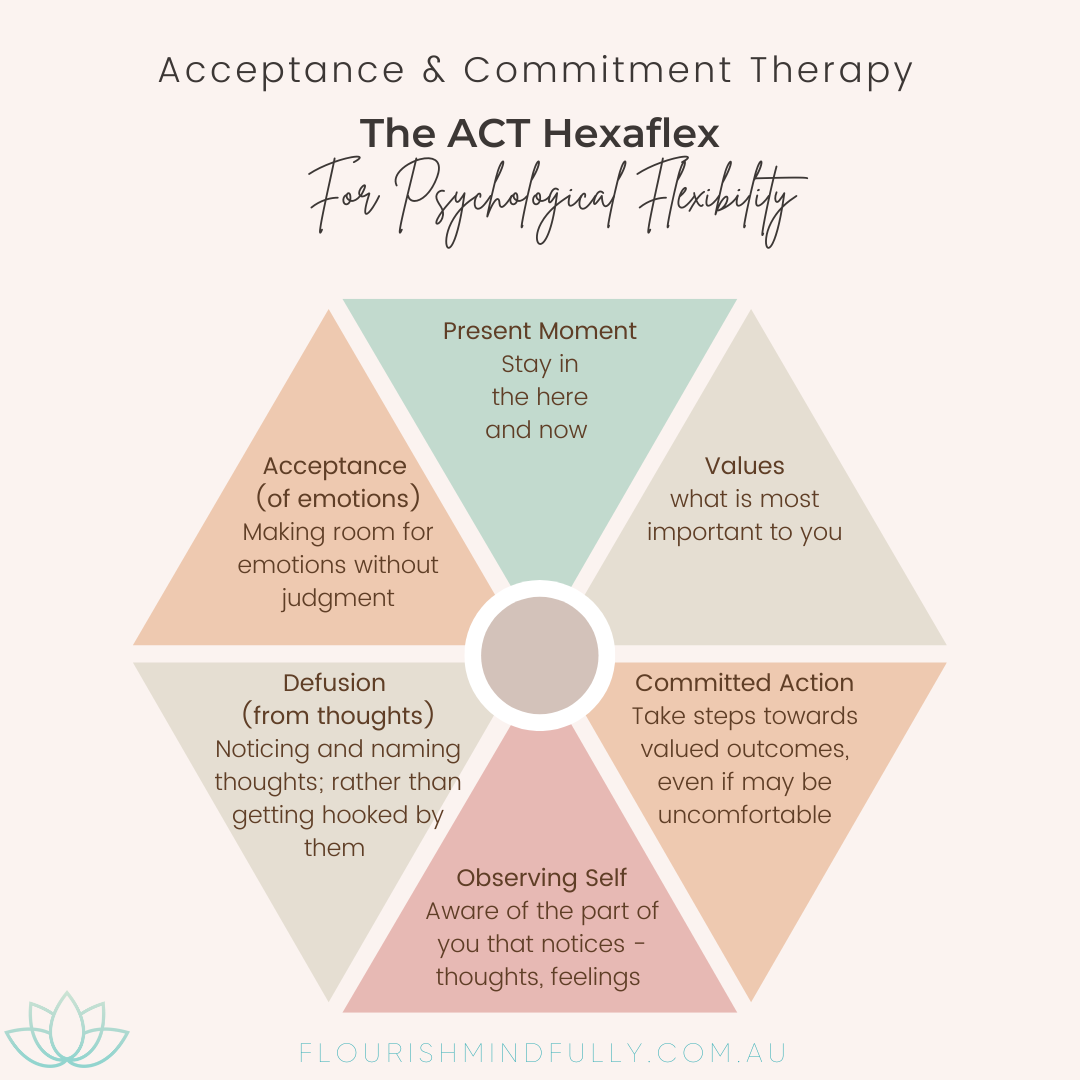
For managing jealousy, three ACT concepts are especially powerful:
- Defusion: This means un-fusing from your thoughts. Instead of thinking, "I am unlovable," you practice noticing, "I am having the thought that I am unlovable." This small linguistic shift creates immense psychological distance and reminds you that thoughts are just mental events, not objective truths.
- Acceptance: This is not about liking or wanting the feeling of jealousy. It's about making room for it without struggling. Imagine jealousy as a passenger in your car. You don't have to fight it or try to kick it out. You can acknowledge its presence, keep your hands on the steering wheel, and continue driving toward your destination. Fighting the feeling often gives it more power.
- Values & Committed Action: ACT asks, "What truly matters to you?" and "What kind of partner do you want to be?" You might value being trusting, supportive, and autonomous. When jealousy shows up and urges you to be controlling or suspicious, you can use your values as a compass. You can choose to act in a way that aligns with the partner you want to be, even while feeling jealous. This is incredibly empowering.
Conclusion
In this lesson, we have assembled a practical toolkit of evidence-based strategies for processing jealousy. By understanding the interplay of our thoughts, feelings, and behaviors, we can find entry points to interrupt the cycle of distress.
Key Takeaways:
- The goal is to handle jealousy, not eliminate it. It's a signal that deserves attention, not suppression.
- Cognitive Behavioral Therapy (CBT) provides tools to challenge and reframe the thoughts that drive jealousy and choose behaviors that shift your emotional state.
- Acceptance and Commitment Therapy (ACT) provides tools to accept the feeling of jealousy without letting it dictate your actions, and to stay committed to your values.
- A structured approach like the 5-step roadmap (Notice, Name, Narrate, Navigate Needs, Nurture Compersion) can guide you through the process of working with jealousy constructively.
Preview of the Next Lesson
Today we focused on managing a challenging emotion. In our next lesson, we will explore the other side of the coin. Our learning outcome will be to define compersion and describe the psychological mindsets and relational conditions that facilitate its experience. We will investigate this unique emotion—often described as the opposite of jealousy—and explore how it can be cultivated.