Introduction
Welcome to your second lesson. In our first session, we explored the high-level evolutionary theories behind why humans form pair bonds, looking at Parental Investment Theory and its limitations in our modern, "mismatched" world. We established that while our evolutionary history provides a foundational script, it doesn't tell the whole story.
Today, we will zoom in from the evolutionary "why" to the neurochemical "how." This lesson addresses the learning outcome: to describe the neurochemistry of bonding, including the roles of oxytocin, vasopressin, and dopamine in attachment. We'll investigate the specific molecules inside our brains that create the powerful feelings of attraction, love, and long-term attachment. Understanding this "chemical cocktail" is fundamental to appreciating the biological underpinnings of the emotional connections we form in any relationship structure.
The Neurochemical Toolkit of Bonding
At the heart of romantic love and attachment is a trio of powerful neurochemicals. While many molecules are involved, we'll focus on the three primary players: dopamine, oxytocin, and vasopressin. A great place to start is with a concise overview of their roles.
Decoding the Neurobiology of Romantic Love: Mechanisms of ...
The following section from the article 'Decoding the Neurobiology of Romantic Love' provides a clear and direct introduction to the key chemicals involved in forming affectionate bonds.
Please read the section titled 'The Neurobiological Framework of Affection'. As you read, focus on identifying the distinct primary function assigned to each of the three key molecules: dopamine, oxytocin, and vasopressin.
As the reading highlights, we can think of these three chemicals as having distinct, yet complementary, jobs:
- Dopamine (DA): The Motivation Engine. This is the neurotransmitter of reward and motivation. It's what creates the intense focus, craving, and goal-directed energy characteristic of early-stage attraction. It's less about the pleasure of having something and more about the drive to get it.

-
Oxytocin (OT): The Bonding Agent. Often called the "cuddle hormone" or "bonding hormone," oxytocin is a neuropeptide that promotes feelings of trust, calmness, and social connection. It's released during social bonding activities, from a mother nursing her infant to partners sharing physical intimacy.
-
Vasopressin (AVP): The Guardian of the Bond. Structurally very similar to oxytocin, vasopressin also plays a crucial role in long-term attachment. It is more strongly associated with behaviors like mate-guarding, protectiveness, and the formation of exclusive pair-bonds, particularly in males.
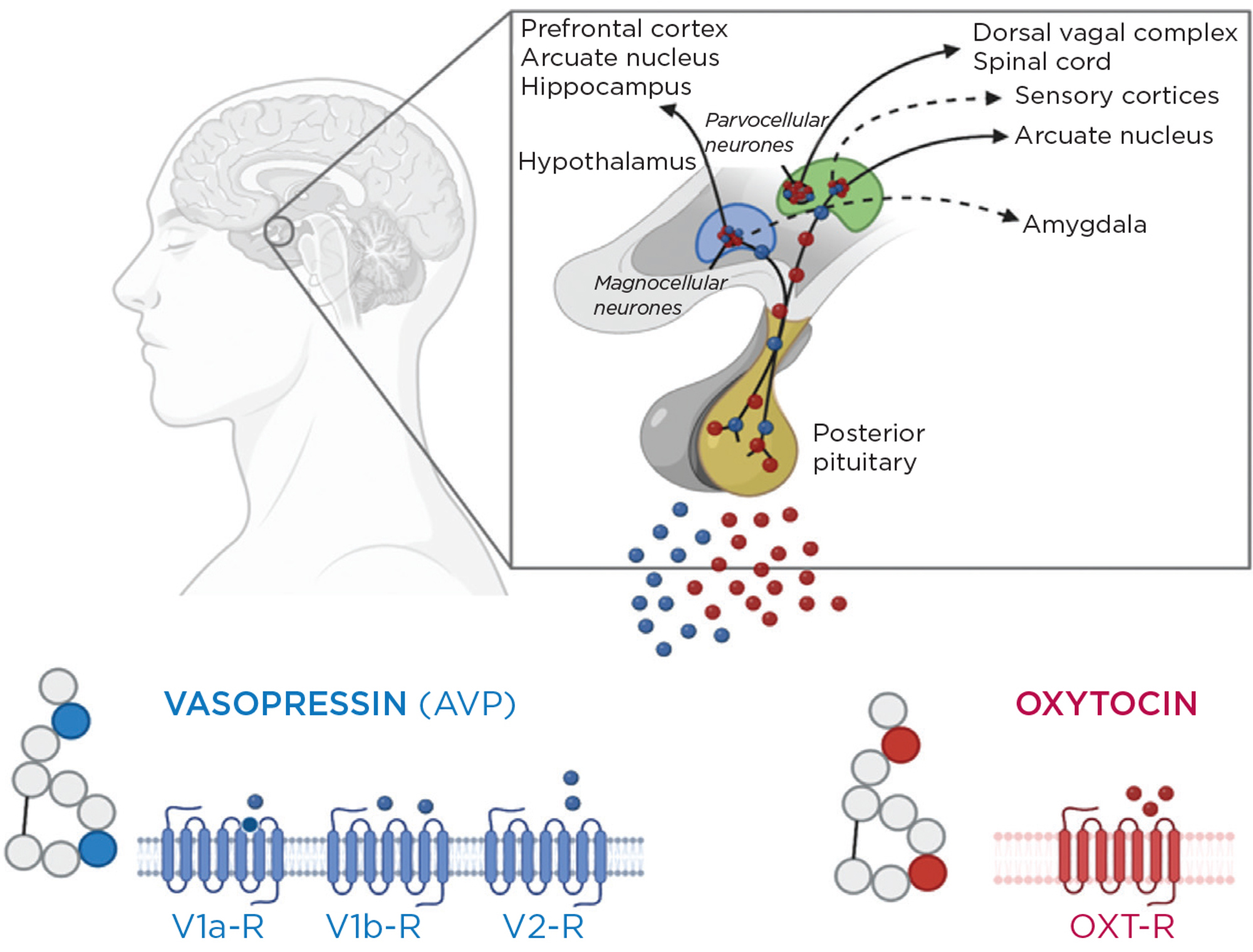
Having identified the players, let's now look at how they work together to turn initial attraction into a lasting bond.
From Attraction to Attachment: How the System Works
The real magic of bonding lies not in what these chemicals do in isolation, but in how they interact. Specifically, the process of attachment involves oxytocin and vasopressin linking the general-purpose reward system of dopamine to one specific person.
The following video provides an excellent explanation of this integration.
The Neuroscience of Love and Attachment: Oxytocin, Vasopressin, and Dopamine's Role in Bonding
This clip from 'The Neuroscience of Love and Attachment' explains how the 'feel-good' hormones of bonding are created by the integration of oxytocin, vasopressin, and the brain's dopamine reward system.
Please watch the segment from 05:55 to 08:42. Focus on how oxytocin and vasopressin don't just create a calming effect on their own, but how they combine with dopamine to forge a powerful, rewarding connection.
As the video explains, oxytocin and vasopressin are released during moments of connection, such as sexual activity or intimate touch. These chemicals then act on the brain's reward circuitry.
The classic illustration of this mechanism comes from studies of prairie voles, a species that forms lifelong monogamous pair-bonds. In these animals, researchers found that the brain cells (neurons) that release dopamine have receptors for vasopressin. When a male vole mates, vasopressin is released and stimulates these dopamine neurons, creating an intensely rewarding experience. The vole's brain essentially learns: "This specific partner = massive reward." This process is what cements the pair-bond, leading the vole to prefer its partner above all others.
While human brains are far more complex, this same fundamental principle applies: attachment is formed when the general reward system (dopamine) becomes conditioned to a specific individual through the action of oxytocin and vasopressin.
This process also has another interesting effect: it changes how we perceive our partner and the world. The same video you just watched has a final short segment that explains how love can make us feel safe and less critical.
The Neuroscience of Love and Attachment: Oxytocin, Vasopressin, and Dopamine's Role in Bonding
Let's watch one more brief clip from the same video. It explains what parts of the brain are 'turned off' by love, which facilitates the bonding process.
Please watch from 12:17 to 13:45. Note the two key brain areas that are deactivated and what their functions are.
By dampening activity in the amygdala (the brain's fear and threat-detection center) and the prefrontal cortex (responsible for critical judgment and scrutiny), the bonding process creates a neurochemical environment of safety and acceptance, making it easier to form a deep connection and overlook a partner's minor flaws—the biological basis for the phrase "love is blind."
Conclusion
In this lesson, we've moved from the broad strokes of evolution to the specific molecular machinery of attachment. This neurochemical perspective provides a powerful framework for understanding the intense, and sometimes confusing, feelings associated with forming relationships.
Key Takeaways:
- Human bonding is heavily influenced by the interplay of key neurochemicals.
- Dopamine drives the motivation, craving, and reward-seeking behavior of the initial attraction phase.
- Oxytocin and Vasopressin are crucial for the long-term attachment phase, promoting trust, calmness, and protective behaviors.
- The formation of a lasting bond occurs when oxytocin and vasopressin link the powerful dopamine reward system to a specific partner, making their presence uniquely rewarding.
- This bonding process also deactivates brain regions associated with fear and critical judgment, fostering a sense of safety and acceptance.
Preview of the Next Lesson
Now that we've covered the biological hardware of bonding, our next lesson will explore the psychological "software" that runs on it. We will describe the major adult attachment styles (e.g., secure, anxious, avoidant) and examine how these patterns—often formed in childhood—shape how we experience and navigate the neurochemical journey of attachment in our adult relationships.