¡Hola! Welcome back.
In our last lesson, we learned to name key body parts like la cabeza, las manos, and los pies. That was a great step, and you're now ready to build on it.
Today's lesson is a natural follow-up: we'll learn the names of common clothing items (la ropa) that we put on those body parts. Our goal is to name four essential items you and your son use every day: zapatos (shoes), camisa (shirt), pantalones (pants), and chaqueta (jacket). This vocabulary is fundamental for the morning routine of getting dressed.
1. Vocabulary: La Ropa (Clothing)
Let's start by looking at a helpful chart that shows common clothing items. The general word for clothing in Spanish is la ropa.
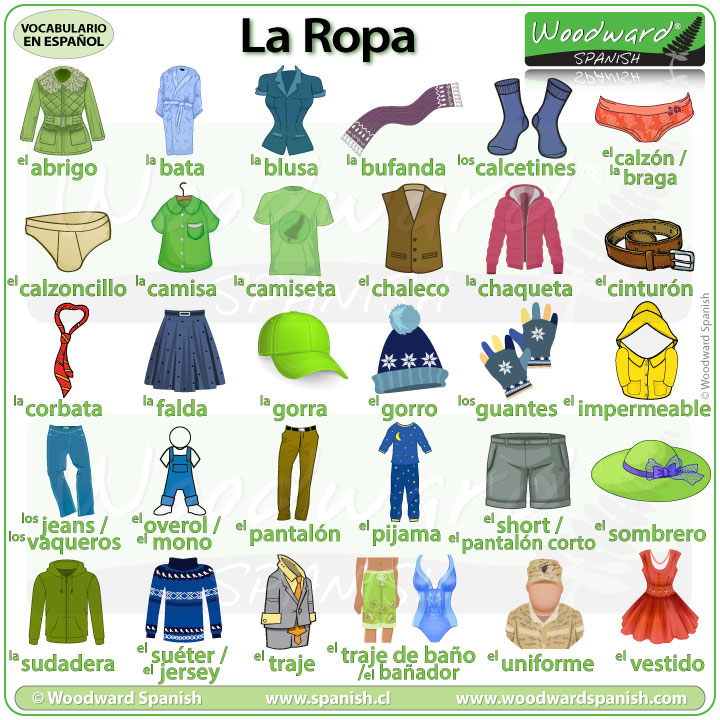
Here are the four key words for our lesson. Notice that some, like shoes and pants, are typically used in their plural form.
| English | Spanish (Singular/Plural) | Pronunciation Guide |
|---|---|---|
| shirt | la camisa / las camisas |
kah-MEE-sah |
| jacket | la chaqueta / las chaquetas |
chah-KEH-tah |
| pants | el pantalón / los pantalones |
pan-tah-LOHN / pan-tah-LOHN-es |
| shoes | el zapato / los zapatos |
sah-PAH-toh / sah-PAH-tohs |
A quick note on pantalones: In English, we always say "pants" (plural). In Spanish, you might see el pantalón (singular) to refer to one pair, but it's very common to use the plural form los pantalones, just like we do in English. For now, sticking with los pantalones is a great start.
To see these words in context with simple example sentences, let's turn to a resource designed for young learners.
Let's learn about clothes in Spanish! - Vocabulary
The article 'Let's learn about clothes in Spanish!' from Studycat clearly presents our target vocabulary. It's designed for kids, which makes it perfect for the kind of vocabulary you want to use with your son.
Please read the section 'Clothes vocabulary list in Spanish'. Focus on the entries for 'shirt - camisa', 'jacket - chaqueta', 'pants - pantalón', and 'shoes - zapatos'. Pay attention to the pronunciation guide and the simple example sentence provided for each.
2. Listening and Pronunciation
Hearing the words spoken by a native speaker is key to getting the pronunciation right. This video provides clear examples of our four words.
Clothing in Spanish: Words You Need to Know
The video 'Clothing in Spanish: Words You Need to Know' from The Language Tutor channel has a very clear and straightforward pronunciation guide for our vocabulary.
Please watch the following short clips: From 01:16 to 01:35 for 'la camisa' and 'el pantalón'. From 02:29 to 02:49 for 'los zapatos' and 'la chaqueta'. Listen carefully and try repeating each word out loud.
Pronunciation tips to remember:
Chaqueta: Thechsound is like the "ch" in the English word "cheese".Zapatos: In most of Latin America (and in the video), thezsounds like an "s". So, it's pronounced "sah-PAH-tohs". You've already practiced this withcabeza.Camisa: The stress is on the middle syllable: ca-MI-sa.
3. Putting It Into Practice
Now let's connect today's lesson with what you already know. This is how you'll start building small conversations.
1. Point and Name:
As you and your son get dressed, you can simply point to an item and say the Spanish word. This is a very effective and natural way to practice.
- Point to his shoes and say:
¡Los zapatos! - Hold up his shirt and say:
La camisa.
2. Connect Clothes to Body Parts:
You can start making simple "sentences" by combining this lesson's vocabulary with the last one.
Los zapatosgo onlos pies. (Shoes on the feet.)La chaquetacoversla cabezaandlos brazos. (The jacket covers the head and arms - we haven't learned 'arms' yet, but it shows how you can expand!)
Test your understanding!
You are helping your son put on his shoes. Which body part from our last lesson do shoes go on? How would you say both words together?
Show answer
Shoes go on the feet. You could say: zapatos and pies.
3. Ideas for Games:
Your practical approach to learning is perfect for this topic. The article "Clothes in Spanish for Language Learners" suggests some great hands-on activities. Here are a couple of ideas you can adapt:
- The Suitcase Game: Put a few items of clothing (a shirt, pants, a jacket) in a bag or small suitcase. Have your son pull one out, and you can both say the name in Spanish.
- Dress a Stuffed Animal: Use a favorite teddy bear or doll. Say the name of a clothing item (
la camisa) and help your son put it on the toy.
Key Takeaways
¡Excelente! You've added some very practical words to your Spanish vocabulary.
- You learned the general word for clothes:
la ropa. - You can now name four essential clothing items:
la camisa,la chaqueta,los pantalones, andlos zapatos. - You know how to practice this vocabulary by pointing, naming, and connecting it to body parts you learned previously.
Next Steps
Now that you can name some clothes, the next logical step is to talk about putting them on and taking them off. In our next lesson, we will learn how to use simple commands like ponte los zapatos (put on your shoes) and quítate la chaqueta (take off your jacket). This will be a huge step in navigating the morning routine with your son.
¡Hasta la próxima