Hello. Last lesson showed why a bump near a piercing or tattoo cannot be identified reliably by its raised appearance: irritation, allergy, infection, foreign-body inflammation, and an easily bleeding growth can overlap. This lesson shifts from what might it be? to how soon should it be assessed? You do not need a diagnosis before deciding that a change warrants medical attention.
Allow about 35–40 minutes, including the short video and readings. The central distinction is between a healing site that is steadily improving, a change that needs prompt clinical review, and signs of serious illness that call for emergency care.
Start with the trend, not a single symptom
A fresh piercing or tattoo is a wound. Some early tenderness, mild redness or darkening of the surrounding skin, and a little pale fluid that dries into a crust can occur during healing. What matters is whether these features ease over time. Increasing pain, heat, swelling, drainage, or redness after initial improvement changes the assessment.
Watch the first part of Doctor O’Donovan’s Doctor explains HOW TO RECOGNIZE AND TREAT INFECTED EAR PIERCING for that contrast. The video is about ear piercings, but the distinction between improving wound inflammation and worsening signs of infection is useful for other piercing sites.
Doctor explains HOW TO RECOGNIZE AND TREAT INFECTED EAR PIERCING
Doctor O’Donovan contrasts expected early piercing changes with symptoms that warrant medical attention.
Watch healing versus infection. Focus on the change in symptoms, rather than trying to decide from redness or crust alone. The video also mentions feeling generally ill; that affects urgency even when the visible area looks small.
A useful rule is that watchful waiting is for a mild change that is clearly improving and has no warning signs. It is not a reason to wait for a suspected infection to become unmistakable. Redness may look bright red on lighter skin or appear darker than usual on darker skin; warmth, tenderness, swelling, and progression remain important clues.
Suspected infection: seek prompt assessment
A piercing or tattoo site needs same-day medical advice or assessment when pain, warmth, swelling, or redness is increasing; redness is spreading; or pus appears. Feeling feverish, shivery, or generally unwell makes prompt assessment more important. These signs do not establish which treatment is needed, but they are reasons not to label the change a keloid and leave it untreated.
The NHS guidance on Infected piercings makes the practical threshold clear: seek urgent help if you think a piercing might be infected. Read its urgent-advice section through the brief description of treatment. Its named services are specific to the UK; elsewhere, use the equivalent same-day primary-care or urgent-care service.
Read the NHS guidance for what to do when infection is suspected, particularly its advice about jewellery.
In “Urgent advice: Ask for an urgent GP appointment or get help from NHS 111 if,” start with urgent advice. Continue into “Treatment for infected piercings” until the sentence “You may need antibiotics if your piercing is infected.” Stop before “How to prevent infections in new piercings.” Notice that the guidance says not to remove jewellery yourself unless a doctor tells you to; assessment comes before that decision.
Painful swelling in pierced ear or nose cartilage merits same-day, preferably in-person, assessment, even without a fever. Infection around cartilage can be more consequential than an uncomplicated irritated earlobe and may need timely treatment. If jewellery is becoming embedded or the swelling is rapidly worsening, do not wait for a routine appointment. Do not squeeze the site, attempt to drain it, or assume that removing jewellery will solve the problem; let a clinician assess it.
For comparison, a mildly tender new earlobe piercing with a little pale crust that is becoming more comfortable each day may be observed. A helix piercing that becomes hotter, more swollen, and distinctly more painful after initially settling belongs in the same-day category. The difference is not simply ear versus ear: it is the worsening pattern, with cartilage adding concern.
When illness extends beyond the skin: emergency signs
An infection can sometimes become a serious whole-body illness. Confusion or disorientation, severe breathlessness, fainting or loss of consciousness, or being profoundly unwell alongside a possible infection call for emergency care now. Rapidly worsening symptoms with severe pain or marked skin change also deserve emergency assessment. Do not wait for a scheduled appointment or for every listed symptom to appear.
Read the wound-infection guidance from University Hospitals Sussex NHS Foundation Trust. It separates local worsening signs from signs of serious infection. Although written for wounds generally, it applies to the broken skin created by a piercing or tattoo.
Identifying a wound infection - University Hospitals Sussex NHS Foundation Trust
Read the hospital guidance to distinguish a worsening local wound from a possible medical emergency.
Under “What are the signs and symptoms of wound infection?”, read from local infection signs, stopping before “Symptoms of serious infection.” Then read “Symptoms of serious infection” from serious warning signs. Focus on the difference between arranging prompt assessment for a worsening site and seeking immediate emergency help for severe systemic illness. Use your local emergency number rather than the number printed in the article if you are outside the UK.
Not every fever means sepsis: a person with a suspected wound infection and a fever needs urgent, same-day assessment, while confusion, severe breathlessness, collapse, or similarly severe illness calls for emergency care. If someone has a condition or medication that weakens their immune response, it is sensible to seek advice earlier rather than rely on a high fever appearing.
Bleeding, ulceration, and a changing lump need a different decision
Infection is not the only reason to seek care. Recall the fragile, easily bleeding growth discussed in the previous lesson. A pyogenic granuloma is one possibility, but “it looks like a pyogenic granuloma” is not a secure diagnosis. Other conditions can bleed, ulcerate, or change, including conditions that need different treatment.
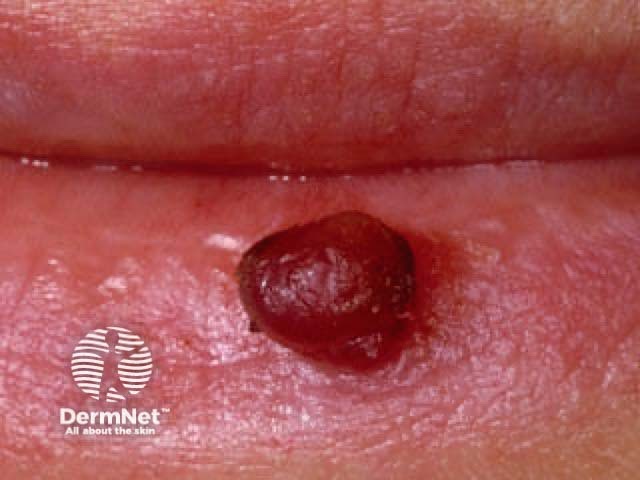
The urgency depends partly on what the bleeding is doing:
- Bleeding that is heavy or will not stop with firm, continuous pressure using clean gauze or cloth needs urgent emergency assessment. Feeling faint or weak with substantial bleeding strengthens that need.
- A growth that repeatedly bleeds with ordinary contact, or keeps reopening, needs a prompt clinical appointment—ideally within days, even if each episode stops. Avoid picking or squeezing it to “check” what it is.
- A new ulcer, a sore that is not healing, or ulceration developing on a presumed scar needs clinical assessment. A lesion that is rapidly changing, painful, or bleeding should be seen more promptly than a stable change.
An unexplained lump that enlarges or changes also warrants a clinician’s assessment rather than indefinite observation or self-treatment as a keloid. If it is changing steadily but there are no acute warning signs, arrange an appointment within the next week or two; seek an earlier appointment if growth is rapid or it begins to bleed, break down, or become painful. These are assessment thresholds, not claims that the lump is dangerous. Examination—and sometimes testing—may be needed to learn what it is.
A compact way to make the decision
| What is happening | Appropriate response |
|---|---|
| Mild early tenderness or crusting that is steadily improving, without other warning signs | Continue to observe the healing trend; reassess if it reverses. |
| Increasing local pain, heat, swelling, spreading redness, or pus; painful cartilage swelling; fever or feeling unwell with a possible infection | Seek same-day medical advice or assessment. |
| Confusion, severe breathlessness, collapse, profound illness with possible infection, or heavy bleeding that will not stop | Seek emergency care now. |
| Repeatedly bleeding growth, new ulceration, a non-healing sore, or an unexplained changing lump without emergency features | Arrange prompt clinical assessment; accelerate it if change is rapid or symptoms worsen. |
The categories are not fixed labels for a person or a lesion. A changing lump that starts bleeding heavily moves into the emergency category; a mildly sore new piercing that becomes increasingly hot and swollen moves from observation to same-day assessment. When the situation is uncertain, describing when the change began, how quickly it is progressing, whether it involves cartilage, and whether you feel unwell helps an urgent-care service judge the next step.
Key takeaways
Use progression and severity to choose urgency, not a guessed name for the bump. Improving mild healing changes can be watched. Suspected infection—especially painful cartilage swelling—calls for same-day advice or assessment. Severe whole-body symptoms or uncontrolled bleeding call for emergency care. Persistent bleeding, ulceration, and an unexplained changing lump need clinical evaluation even when infection seems unlikely.
The next lesson turns to prevention: which choices can reduce the chance of keloids after elective skin injury, and why no wound-care plan can guarantee that a keloid will not form.