Hello! Welcome back to your course on Digital Marketing for iGaming.
In our last lesson, we identified the key digital marketing channels—Search, Social, Email, and Affiliate marketing—that iGaming brands use to reach potential players. Now that you know the tools, it's time to understand the journey that players take.
This lesson focuses on the marketing funnel, a fundamental concept that describes the stages a person goes through, from first discovering a brand to becoming a loyal customer. For an iGaming marketer, understanding this journey is essential for sending the right message at the right time.
By the end of this lesson, you will be able to describe the four main stages of the marketing funnel—Awareness, Consideration, Conversion, and Retention—using specific examples from the world of online casinos and sports betting.
What is a Marketing Funnel?
A marketing funnel is a model that visualizes the path a potential customer takes from their first interaction with your brand to the ultimate goal: making a purchase or, in our case, becoming an active player. It's called a "funnel" because you start with a large number of people at the top, but only a fraction of them make it all the way to the bottom.
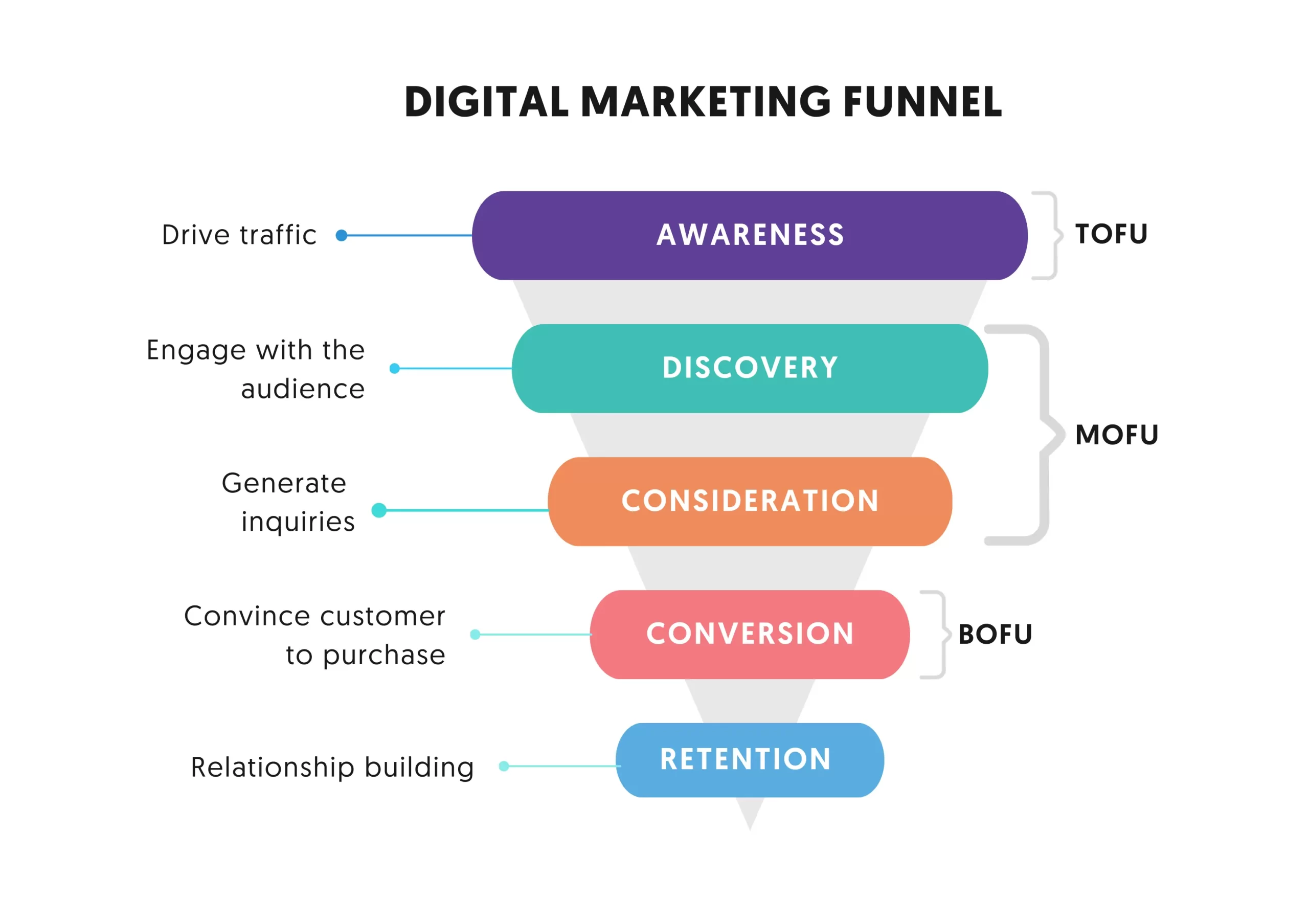
Let's break down what these terms mean and what happens at each stage in an iGaming context.
The Stages of the iGaming Marketing Funnel
To give you a practical, in-depth look at how the funnel works for online gambling, we'll use a very detailed article as our guide. We'll go through it stage by stage.
1. Awareness Stage (Top of the Funnel - TOFU)
The goal at this stage is simple: make people aware that your brand exists. Your audience here isn't actively looking for a betting site. They might just be browsing sports news, watching a gaming stream, or looking for entertainment. Your job is to get on their radar.
Optimize Online Gambling Ads for Every Customer Journey ...
Let's start by exploring the Awareness stage. The following reading from Affnook explains the goal of communication at this stage and lists several types of ads used to capture initial attention in iGaming.
Please read the section titled 'The Awareness Stage: Capturing Attention'. Focus on understanding the goal of marketing at this stage and the examples of ad formats like Display Ads and Native Ads.
As you just read, marketing at the awareness stage is broad and visual.
iGaming Examples:
- A visually striking banner ad for a new online casino appears on a popular sports blog.
- A betting brand sponsors a YouTube video series about football history. The brand's logo is visible, but there's no direct "bet now" message.
- An iGaming company creates an engaging post on X (Twitter) with a poll about an upcoming championship match, generating conversation around their brand name.
At this point, you're just planting a seed. The person might not click or even consciously register the brand name, but the first touchpoint has been made.
2. Consideration Stage (Middle of the Funnel - MOFU)
Once someone is aware of your brand (or aware they have a need you can solve), they enter the consideration stage. Here, they are actively researching and comparing options. They might be searching Google, reading reviews, or asking for recommendations. Your goal is to provide them with the information they need to see your brand as a credible and attractive choice.
Optimize Online Gambling Ads for Every Customer Journey ...
Now let's move to the middle of the funnel. This next section of the Affnook article explains what marketers need to do when a potential player starts actively looking for information.
Read the section 'The Consideration Stage: Driving Interest and Engagement'. Pay close attention to the role of search engines and the types of keywords a potential player might use (e.g., 'best online casino games').
In the consideration stage, you shift from broad awareness to targeted information.
iGaming Examples:
- A potential player searches "best welcome bonus for sports betting." Your site appears at the top of Google because you're running a Search Ad targeting that exact keyword.
- An affiliate partner writes a detailed review of your online casino, comparing its game selection and payout speed to three competitors.
- Your brand's website has a blog post titled "A Beginner's Guide to Live Dealer Blackjack," attracting people who are curious about the game and positioning your brand as an expert.
This is where you start building trust and demonstrating your Unique Selling Proposition (USP), which we'll cover in a future module.
3. Conversion Stage (Bottom of the Funnel - BOFU)
This is the moment of truth. The potential player has done their research and is ready to take action. The goal of the conversion stage is to make it as easy and appealing as possible for them to sign up and make their first deposit.
In iGaming, the primary conversions are:
- Registration: Creating an account.
- First-Time Deposit (FTD): Funding the account with real money.
Optimize Online Gambling Ads for Every Customer Journey ...
At the bottom of the funnel, the focus is on closing the deal. This part of the article details the persuasive tactics used to turn an interested prospect into a depositing player.
Read 'The Conversion Stage: Securing the Deposit'. Notice the specific types of promotions used, such as matched deposit bonuses and free spins, to encourage action.
As the article highlights, this stage is all about creating compelling offers and removing friction.
iGaming Examples:
- A landing page with a clear, can't-miss offer: "Sign Up Today and Get a 100% Deposit Match up to $500 + 50 Free Spins!"
- A user starts filling out the registration form but gets distracted and leaves. An hour later, they see a "remarketing" ad on another website that reminds them: "Complete your registration to claim your bonus!"
- The deposit page is simple, accepts multiple payment methods, and displays trust badges (like licensing information) to reassure the player.
A smooth conversion process is critical. Any confusion or difficulty at this stage can cause a potential player to abandon the process entirely.
4. Retention Stage
Your work isn't done after the first deposit! Acquiring a new player is expensive. The real profit in iGaming comes from keeping players engaged and loyal over the long term. The goal of the retention stage is to build a relationship that encourages repeat play.
Optimize Online Gambling Ads for Every Customer Journey ...
Finally, let's look at what happens after the conversion. This last section explains the importance of loyalty and the marketing efforts used to keep players coming back.
Please read 'The Retention Stage: Keeping Players Around'. Focus on the strategies mentioned, like personalized offers and loyalty programs, which are key to your interest in community building.
Retention is where channels like email and community platforms (Telegram, Discord) truly shine.
iGaming Examples:
- A player who frequently bets on Premier League football receives an email with boosted odds for their favorite team's next match.
- An online casino launches a VIP program where loyal players get exclusive bonuses, faster withdrawals, and a dedicated account manager.
- A brand's Discord server hosts a weekly "trivia night" with bonus money as prizes, giving players a reason to log in and interact with the community even when they're not playing.
Strong retention strategies are what separate the most successful iGaming brands from the rest.
Test your understanding!
An iGaming brand that specializes in esports betting wants to run a campaign for the upcoming Valorant Champions Tour (a major tournament).
For each of the four funnel stages (Awareness, Consideration, Conversion, Retention), suggest one specific marketing activity they could do.
Show answer
Here's one possible set of activities:
- Awareness: Partner with a popular Valorant streamer on Twitch. The streamer's overlay would feature the brand's logo during their live streams in the weeks leading up to the tournament.
- Consideration: Publish a blog post on their website titled "Top 5 Teams to Watch at Valorant Champions Tour," and promote it using Google Search Ads for keywords like "Valorant betting odds."
- Conversion: Create a special landing page with a time-sensitive offer: "Sign up during VCT and get a free $10 bet on the Grand Final."
- Retention: Create a private channel in their Discord server for "VCT Bettors." In this channel, they would post live match updates, share exclusive betting tips from an expert, and run polls, making the existing players feel like part of an exclusive club.
Conclusion
You've now walked through the entire customer journey, from a player not knowing a brand exists to them becoming a loyal member of its community. This marketing funnel is the strategic backbone of every campaign.
Key Takeaways:
- The marketing funnel models the customer journey in four key stages.
- Awareness: Making a broad audience aware of your brand.
- Consideration: Providing information to people actively researching their options.
- Conversion: Persuading prospects to take action, like making a first-time deposit (FTD).
- Retention: Building loyalty and encouraging repeat business through personalized offers and community engagement.
Preview of the Next Lesson:
Now that you understand the stages of the journey, our next lesson will focus on how we measure success at the very top of the funnel. We'll define and learn how to calculate three of the most fundamental marketing metrics: impressions, clicks, and click-through rate (CTR). This will be your first step into the analytical side of digital marketing.