Hello! Welcome back to your course on Digital Marketing for iGaming.
In our last lesson, we defined what digital marketing is and discussed its core purpose for any iGaming business: to attract and retain players, build a trustworthy brand, increase revenue, and stay competitive. We covered the "what" and the "why."
Today, we move on to the "how." This lesson will introduce the primary tools of the trade: the key digital marketing channels. You will learn to identify four foundational channels and see how each one is used in a real-world iGaming context. The channels we will cover are:
- Search Marketing
- Social Media Marketing
- Email Marketing
- Affiliate Marketing
Understanding these channels is the next crucial step in building your practical marketing toolkit. Two of these—social media and affiliate marketing—are so important in this industry that we will dedicate entire future modules to them. For now, let's build the foundation.
An Overview of the Main iGaming Marketing Channels
To start, let's get a broad overview of the most effective marketing channels used in the iGaming industry. The following reading provides an excellent summary of each one, which we will then break down and explore in more detail.
iGaming Advertising Guide: Top Strategies, Channels & KPIs
The article 'iGaming Advertising Guide' from Affnook gives a clear, concise breakdown of the most important marketing channels for an online gambling business. It will serve as our main reference for this lesson.
Please read the section titled 'Top Channels for iGaming Advertising'. As you read, make a mental note of the core purpose of each of the first five channels listed: Affiliate Marketing, Programmatic Advertising, Social Media, SEO & Content Marketing, and Email Marketing. (Note: We will focus on four of these in our lesson).
Now that you have an overview, let's unpack each of the four key channels identified in our learning outcome.
1. Search Marketing (SEO & Content Marketing)
As the article you just read explains, Search Engine Optimization (SEO) is all about making your website more visible on search engines like Google.
What it is: Search marketing is the process of gaining traffic and visibility from search engines through both paid and unpaid efforts. The unpaid side, SEO, involves creating valuable content and structuring your website so that it ranks highly when a potential player searches for relevant terms.
iGaming Use Case: Imagine a potential player is looking for a new place to bet on football. They might search for "best site for football odds" or "online casino with live roulette." The goal of an iGaming operator's SEO strategy is to ensure their website appears on the first page of Google's results for those searches.
As the Affnook article points out, this is powerful because it attracts "high-intent users"—people who are already actively looking for what you offer. This is achieved by creating content like:
- Reviews of different slot games.
- Guides on "how to bet on esports."
- Comparisons of betting odds for an upcoming match.
This channel builds trust and attracts users who are actively in the "consideration" phase of their journey—a topic we'll explore in the next lesson.
2. Social Media Marketing
Social media is a channel you expressed a strong interest in, and for good reason. It's one of the most dynamic ways to build a community in the iGaming space.
What it is: Social media marketing involves using platforms like X (Twitter), Telegram, Discord, and others to build a brand, engage with a community, and drive traffic to your iGaming platform. It includes both organic (unpaid) content and paid social advertising.
iGaming Use Case: An online casino wants to build a community of loyal players. They create a Telegram channel where they post:
- Exclusive bonuses for channel members.
- Polls asking which new game they should add next.
- Announcements of big wins by other players (social proof).
This strategy doesn't just advertise; it creates a community and gives players a reason to stay engaged with the brand even when they aren't actively playing. The image below shows a great example of what this looks like in practice.

Because many platforms like Facebook and Google have strict rules about gambling ads, building a strong organic presence on more flexible platforms like X and Telegram is a critical skill for an iGaming marketer.
3. Email Marketing
While it might seem old-fashioned compared to social media, email is one of the most powerful and profitable channels for player retention.
What it is: Email marketing is the practice of sending targeted messages directly to players who have given you their email address. It is used to nurture relationships and guide players toward taking specific actions.
iGaming Use Case: A player signs up for a sportsbook but doesn't make a deposit. A few hours later, they receive an automated email reminding them of their welcome bonus and showing them the top sports events they can bet on that day.
For active players, the sportsbook might send personalized emails based on their behavior, as the Affnook article suggested:
- A sports bettor might receive an email with boosted odds for their favorite team.
- A casino player might get an offer for 20 free spins on a slot game they've played before.
This channel is excellent for retention because it's personal, direct, and allows for highly customized messaging that keeps players coming back.
4. Affiliate Marketing
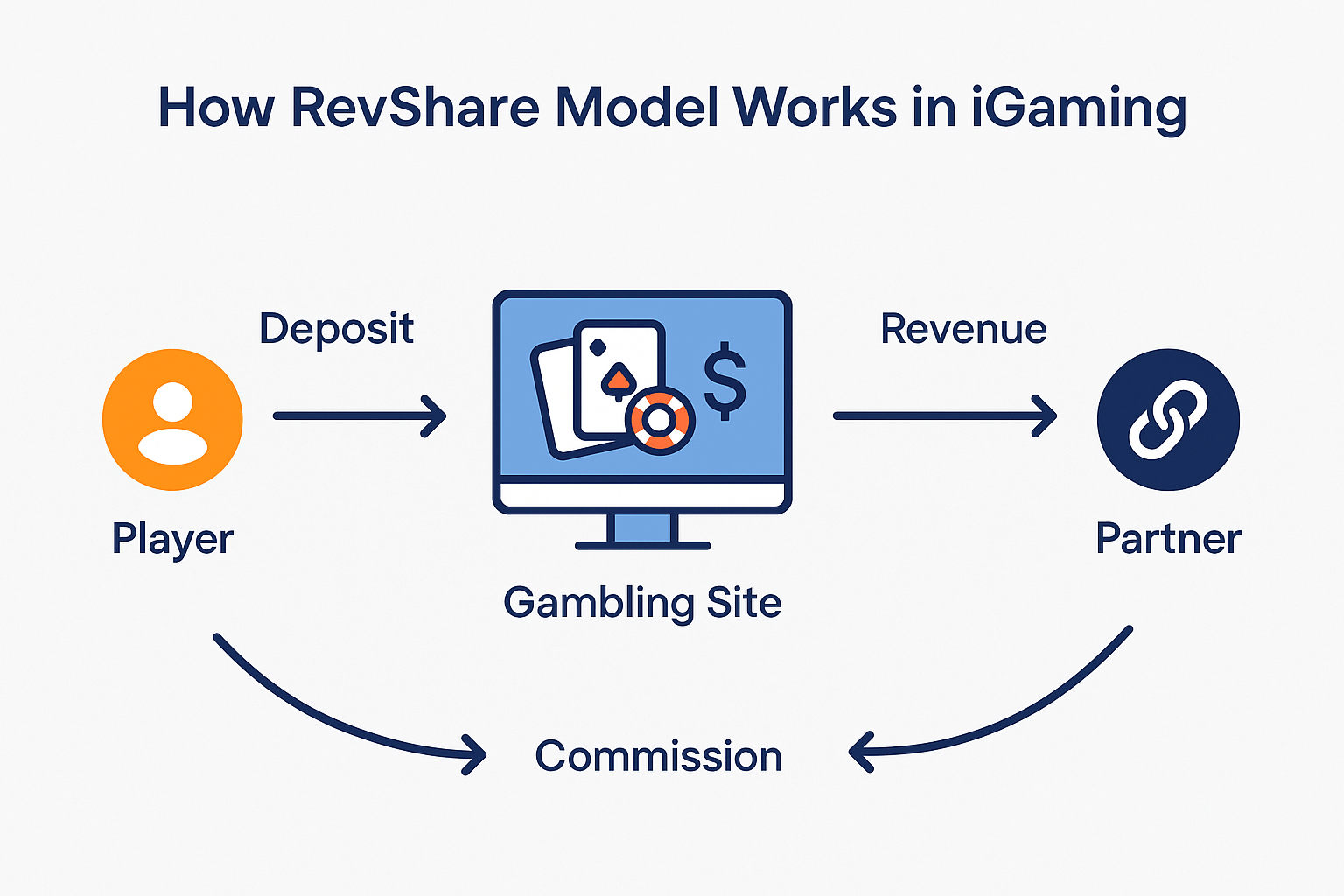
Affiliate marketing is the dominant customer acquisition channel in the iGaming industry and is directly related to your goal of understanding CPA and RevShare models.
What it is: Affiliate marketing is a performance-based model where an iGaming brand partners with third parties (affiliates) who promote the brand to their own audience. The affiliate earns a commission for every player they refer. Affiliates can be anyone from a popular YouTuber who streams casino games to a website that reviews sportsbooks.
iGaming Use Case: A popular "tipster" on X (Twitter) has a following of 50,000 sports betting enthusiasts. They partner with an online sportsbook. When they post their betting tips for the weekend's games, they include a unique tracking link to the sportsbook. For every follower who clicks that link, signs up, and deposits money, the tipster earns a commission.
This commission is typically paid in one of two ways:
- CPA (Cost Per Acquisition): A flat fee for each new depositing player.
- RevShare (Revenue Share): A percentage of the net revenue generated by the referred player over their lifetime.
To hear these concepts explained in a more conversational way, and to get a feel for the different traffic strategies affiliates use, you can watch this short segment.
6 Million Dollar Traffic Tips for Betting & Casino Affiliates - How to Run iGaming Offers
The video '6 Million Dollar Traffic Tips' by Powerhouse Affiliate gives a practical overview of how affiliates approach the iGaming market, including the traffic sources they use.
Watch the section from 04:47 to 09:34. The speaker discusses 'direct' ways to get traffic, which correspond to the Search (SEO), Paid Ads, and Social Media channels we've talked about. Notice how he emphasizes creating content like 'how-to' videos to attract the right audience.
Test your understanding!
An online casino is launching a new, exclusive slot game based on a popular medieval fantasy series. They want to create a marketing campaign to attract new players and encourage existing ones to try the game.
How could they use at least three of the four channels we discussed (Search, Social, Email, Affiliate) to achieve this?
Show answer
Here is one possible combination:
- Affiliate Marketing: The casino could partner with popular casino streamers on Twitch or YouTube. They would give these streamers early access to the game and a special bonus code to share with their viewers. When viewers sign up using the affiliate's link and code, the streamer earns a commission.
- Email Marketing: They would send an email to their existing player database announcing the new game. The email could include an offer for "50 Free Spins" on the new slot for the first 1,000 players who claim it, creating a sense of urgency.
- Social Media Marketing: On their X (Twitter) and Instagram accounts, they would post exciting video clips of the game's bonus rounds and biggest potential wins. They could also run a contest asking followers to comment with their favorite character from the fantasy series for a chance to win a bonus, driving engagement.
This integrated approach uses affiliates to attract new players, email to engage existing ones, and social media to build hype and awareness for both audiences.
Conclusion
You've now taken a tour of the four most important digital marketing channels in the iGaming world. These are the fundamental pathways through which all marketing activity flows.
Key Takeaways:
- Search Marketing (SEO): Attracts players who are actively searching for betting sites or games, bringing in high-intent traffic.
- Social Media Marketing: Builds community and brand loyalty on platforms like X, Telegram, and Discord, which is crucial for navigating ad restrictions.
- Email Marketing: A powerful tool for retaining players by sending personalized offers and content directly to their inbox.
- Affiliate Marketing: A dominant channel in iGaming where partners are paid commissions (CPA or RevShare) for referring new players.
Preview of the Next Lesson:
Now that you know the channels marketers use, our next lesson will focus on the customer's journey. We will explore the marketing funnel, which describes the stages a person goes through—from first hearing about a brand (Awareness) to making a deposit (Conversion) and becoming a loyal player (Retention). Understanding this journey is key to using each marketing channel effectively.