Hello and welcome back.
In our last lesson, we explored how to listen to your intuition and combine it with your knowledge of traditional card meanings. We focused on techniques for hearing that inner voice during a reading, treating it as a new layer of data.
Today, we take the crucial next step. This lesson is about learning to record and build upon those intuitive insights. Your goal is to identify and document personal symbolism and connections that emerge from the cards over time. This is how you move from being a student of tarot to developing your own unique, personal relationship with the cards. The primary tool for this fascinating work will be your tarot journal.
1. From Universal Meanings to Personal Truth
Throughout this course, you've learned the established, archetypal meanings of the 78 cards. This is the common language of tarot. However, for tarot to be a truly powerful tool for personal insight, you must begin to build your own private dialect—one where the cards speak to you through the lens of your own memories, experiences, and knowledge.
A perfect illustration of this comes from tarot reader John Ballantrae. He explains how his understanding of the Emperor card was forever changed not by a tarot book, but by a song and a news event.
Don't learn Tarot card meanings. Do this instead...
Watch this video to see a powerful example of how personal experiences can create a deep and unique understanding of a card's meaning, moving far beyond generic keywords.
Please watch from 00:34 to 09:02. Pay close attention to how the speaker connects the Sinead O'Connor song 'Emperor's New Clothes' and a news story about an archbishop to the Emperor card. Notice how this personal story gives him a nuanced interpretation of the card ('untouchability,' disregarding criticism) that he can then apply to various questions.
As the video shows, a random event or piece of media can suddenly crystallize a card's meaning for you in a way that no book ever could. Your legal background involves interpreting established laws and precedents. In personal tarot, you are, in a sense, creating your own precedents. Each personal connection you forge becomes part of your unique case law for interpreting the cards in your own life.
2. How to Systematically Uncover Personal Symbolism
While some personal connections will arise spontaneously, as in the video you just watched, you don't have to wait for lightning to strike. You can actively cultivate these connections by engaging with the cards in a structured way.
A Five-Step Method for Intuitive Connection
In the last lesson, we discussed "reading the story" in a card. This five-step process from Biddy Tarot refines that idea into a repeatable method for moving from observation to personal insight.
How to Interpret ANY Tarot Card Without Memorization
This short video provides an excellent, step-by-step process to interpret any card by connecting with it personally, rather than just trying to recall a memorized meaning.
Watch from 02:45 to 06:01. Follow the five steps demonstrated. The key steps for our purpose today are Step 4 ('Connecting with the card') and Step 5 ('Reflect on the insights'). This is where you actively place yourself in the card's narrative and draw personal conclusions.
The Five-Question Framework
Another powerful technique involves asking a specific set of questions to deconstruct the card's imagery and find where your personal story fits in. This analytical approach can be very effective for systematically mining the cards for meaning.
Develop Tarot Keywords Specific to Your Deck
The article 'Develop Tarot Keywords Specific to Your Deck' by Joy Vernon offers a clear, five-question framework to help you generate your own deck-specific interpretations. It's a methodical way to build your personal symbol library.
Please read the sections 'Developing Your Own keywords' and 'Ask These Five Questions To Develop Tarot Keywords Specific to Your Deck.' Focus on the five core questions presented. Then, look at the 'Deck-Specific Keyword Examples' to see how the author applies these questions to cards from a specific deck to arrive at unique insights.
These five questions—Who, What, Where, What is the mood, and What are the props?—give you a consistent checklist for every card you draw, ensuring you look beyond the obvious and engage deeply with the image.
3. The Tarot Journal: Your Personal Encyclopedia
Having these insights is one thing; documenting them is what makes them a lasting part of your practice. This is the role of the tarot journal. It is not just a log of past readings, but a living document where you build your personal tarot lexicon.
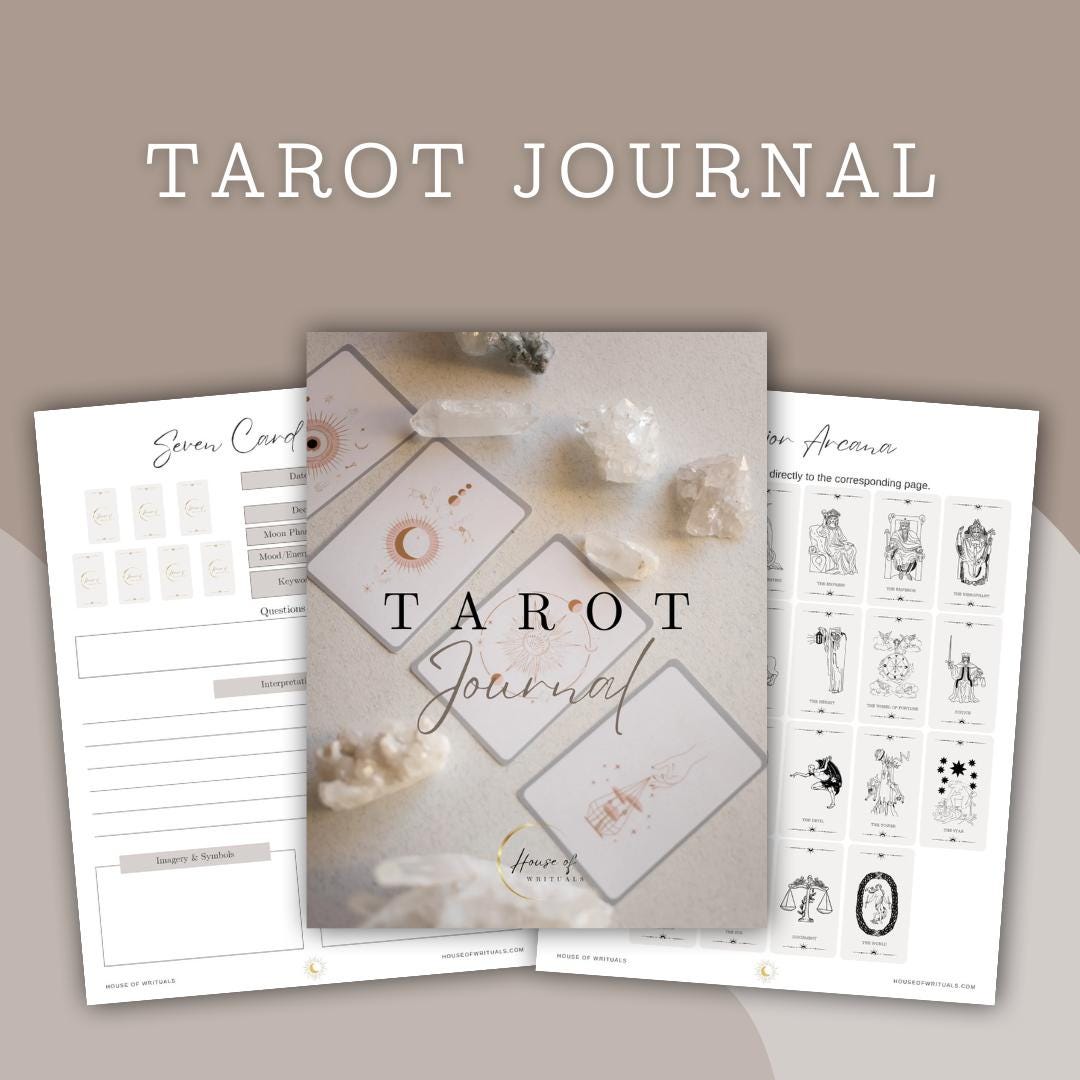
The following resource provides a comprehensive guide to starting and maintaining a tarot journal specifically for this purpose.
This article, 'Tarot Journaling' from Creative Soul Tarot, provides an excellent roadmap for using a journal to deepen your understanding of each card.
Please read the sections 'Work with a journal process that resonates with you!', 'Let's Begin!', and the two paragraphs that immediately follow. Pay special attention to the process described: Morning Study: Drawing a card and noting your initial perceptions and questions about its imagery. Evening Reflection: Returning to the card and noting how its energy appeared in your day, and recording any 'New Insights' or personal keywords.
This daily practice of observation and reflection is the most effective way to build a rich, personal library of card meanings. The evening reflection, where you note how the card's energy manifested, is where abstract symbols connect to concrete life events.

Test your understanding!
Let's apply an exercise suggested in the "Tarot Journaling" article. Pick a card you are very familiar with, perhaps one that has appeared for you often.
Now, think of a character from a book you've read, a film you've seen, or even a figure from history. Who does this card remind you of?
- For example, does the Queen of Swords remind you of a sharp, no-nonsense character like Miranda Priestly from The Devil Wears Prada?
- Does the Hermit reflect the solitary wisdom of a historical philosopher or a reclusive scientist?
Jot down the card, the person/character, and a few bullet points explaining why you made that connection. How does this connection add a new layer to your understanding of the card?
Show answer
There is no single correct answer, as this is a deeply personal exercise. The goal is to practice making these connections.
For instance, if you chose The Chariot and connected it to Alexander the Great:
-
Why the connection?
- Ambition and Drive: Both The Chariot and Alexander represent immense willpower, ambition, and a relentless drive to move forward and conquer challenges.
- Control over Opposing Forces: The Charioteer holds the reins of two sphinxes, representing control over conflicting energies. Alexander was known for his military genius in uniting disparate peoples and controlling a vast, often fractious, empire.
- Victory and Momentum: The core meaning of The Chariot is victory through willpower. Alexander's life was a story of near-constant forward momentum and military triumph.
-
New Layer of Meaning: This connection might add a cautionary layer to The Chariot for you. While it represents victory, Alexander's relentless drive also led to him pushing his army to the brink and dying young. So, The Chariot might now also remind you of the potential downsides of unchecked ambition or the need to know when to stop.
Conclusion
Today's lesson was about transforming the tarot from a universal system into a personal language. By actively looking for and documenting the connections between the cards and your own life, you build a practice that is uniquely yours and deeply insightful.
Key Takeaways:
- Personal symbolism makes tarot readings more potent and meaningful for self-reflection.
- You can actively find personal connections through structured methods like the five-step process or the five-question framework.
- Your life experiences, interests, and even pop culture can become rich sources for your personal tarot symbolism.
- The tarot journal is the essential tool for documenting these insights, tracking how your understanding evolves, and creating your own personal "book of meanings."
Preview of the Next Lesson:
In our next lesson, we will learn to perform a Celtic Cross spread for an in-depth analysis of a personal situation. This is one of the most famous and comprehensive spreads in tarot. The personal symbol library you are now beginning to build will be invaluable, allowing you to interpret the ten different positions of this spread with a depth and nuance that goes far beyond generic keywords, helping you to construct a truly personal and detailed narrative.