Introduction
Welcome to our final lesson in the course on China's foreign and security policy. In our last session, we examined China's complex strategy in global climate negotiations, seeing how it balances domestic needs with its ambition for global leadership. We identified a recurring theme: China is not just a participant in the existing global order, but an active force seeking to reshape its rules and institutions.
Today, we will explore this theme in what is arguably one of the most critical domains of 21st-century geopolitics: the digital world. This lesson fulfills the learning outcome: Analyze China's efforts to shape global norms related to internet governance and digital sovereignty.
We will investigate the fundamental clash between two worldviews. On one side is the traditionally Western-led vision of a single, global, open internet governed by a "multi-stakeholder" model involving companies, engineers, and civil society. On the other is China's vision of "cyber sovereignty," where national governments have the right to control the internet within their borders.
Your background in diplomacy and international law will be particularly relevant here, as we'll unpack how China uses multilateral forums, legal language, and strategic coalition-building to advance its agenda.

1. The Core Concept: "Cyber Sovereignty"
Before we analyze China's international actions, we must first understand the concept at the heart of its strategy: cyber sovereignty (网络主权, wǎngluò zhǔquán).
Domestically, this principle justifies the state's tight control over the internet, famously embodied by the "Great Firewall." From the Chinese Communist Party's perspective, an uncontrolled internet poses direct threats to political stability and regime security by allowing the spread of dissent and foreign influence. Cyber sovereignty provides the ideological and legal foundation for censorship, data localization laws, and state surveillance.
The key to China's foreign policy in this area is its effort to export this domestic principle and establish it as a legitimate norm in international law.
To grasp the official rationale, please read the following brief excerpts from a paper on China's cybersecurity governance.
China's Cyber Security Governance as Part of Foreign and Security ...
This paper, 'China's Cyber Security Governance as Part of Foreign and Security...', provides a concise summary of the concept of 'internet sovereignty' and China's strategic motivations for promoting it.
Please read two short sections of the paper: Section 2, 'China and Cybersecurity' (page 165): Focus on how the concept of 'internet sovereignty' is linked to the CCP's domestic security concerns and regime stability. Section 4, 'China’s Approach to Global Cybersecurity Governance' (pages 170-171): Pay attention to the four principles China promotes internationally: Peace, Sovereignty, Shared Governance, and Shared Benefits. Notice how 'Sovereignty' is the cornerstone.
As the paper highlights, China argues that the principles of the UN Charter—particularly state sovereignty and non-interference—must apply to cyberspace just as they do to physical territory. This is a direct challenge to the idea of a borderless, universal internet.
2. Strategy I: Building the Digital World
China's first strategy is practical and physical: building the digital infrastructure that will underpin the 21st-century global economy. This is the goal of the Digital Silk Road (DSR), a key component of the broader Belt and Road Initiative.
The logic is simple: if Chinese companies build the 5G networks, lay the fiber-optic cables, and create the dominant e-commerce and social media platforms, then Chinese standards, technologies, and norms will inevitably follow. This creates a digital ecosystem where China's vision of the internet feels natural and becomes the default.
The following documentary provides an in-depth look at how the DSR is taking shape in Southeast Asia.
China In A Post-Pandemic World: Digital Silk Road | Silk Road 2.0 - Part 1/3 | CNA Documentary
This CNA documentary, 'China In A Post-Pandemic World: Digital Silk Road', offers a compelling case study of China's strategy in action, from hard infrastructure to popular apps.
Please watch the following segments. Pay attention not just to the technology, but to the strategic implications discussed. Introduction (00:00 - 03:44): This sets the stage, introducing the DSR as a key pillar of China's post-pandemic foreign policy. The Power of Platforms (a clip from 26:10 - 29:30): This section on TikTok illustrates how Chinese apps shape culture and consumer habits, creating 'soft' influence. The Strategic Backbone (38:44 - 43:20): This is the most crucial part. It details China's role in laying undersea fiber optic cables, which carry 95% of all internet data. Note the powerful historical analogy made by the expert comparing these cables to Britain's control of telegraph cables in the 19th century.
The video demonstrates that the DSR is not just a commercial project. By controlling the foundational infrastructure (like undersea cables), China positions itself to control the flow of data. This control has significant strategic value, particularly in a potential conflict, mirroring how Great Britain leveraged its control of telegraph networks during World War I. This creates a world where China's vision of cyber sovereignty is built into the very hardware of the internet.
3. Strategy II: Rewriting the Global Rulebook
While building the physical infrastructure, China is simultaneously engaged in a diplomatic campaign to rewrite the legal and normative rules governing the internet. This involves a deliberate effort to shift the center of gravity for internet governance away from Western-dominated, multi-stakeholder bodies (like ICANN) towards state-centric, multilateral forums like the United Nations and its specialized agency, the International Telecommunication Union (ITU).
An influential academic paper provides a detailed account of exactly how China pursues this strategy. It introduces the concept of "framing"—a key tool in diplomatic persuasion.
How China is Changing the Rules of Internet Freedom
The paper 'How China is Changing the Rules of Internet Freedom' by Rachel A. Hulvey offers a fascinating deep-dive into China's diplomatic playbook. It uses a major UN conference as a case study to show how China mobilizes support for its vision.
This is a detailed academic text, so focus on the core argument about diplomatic strategy. Please read the following parts: Abstract and Introduction (pages 3-5): This will give you the main thesis—that China uses 'cyber sovereignty frames' to mobilize support against the liberal internet order. China’s Motivations and Means... (pages 6-11): Read this to understand why China wants to change the rules (protecting domestic security, challenging US influence) and how it plans to do it ('regime shifting' to UN bodies). A Theory of Competitive Frames (pages 15-20): This is the theoretical core. Focus on how China uses 'discourse power' (huayu quan) to frame the debate around the widely accepted value of sovereignty, making its position attractive to many developing and non-aligned nations. Skim Test One & Test Two (pages 21-37): You don't need to read the statistical analysis in detail. Instead, focus on the narrative of what happened at the 2012 World Conference on International Telecommunications (WCIT-12). Understand that China and its allies successfully framed proposals as defending state sovereignty, and by doing so, built a winning coalition (including many G77 countries) to pass resolutions that expanded government roles in internet governance, against strong US opposition.
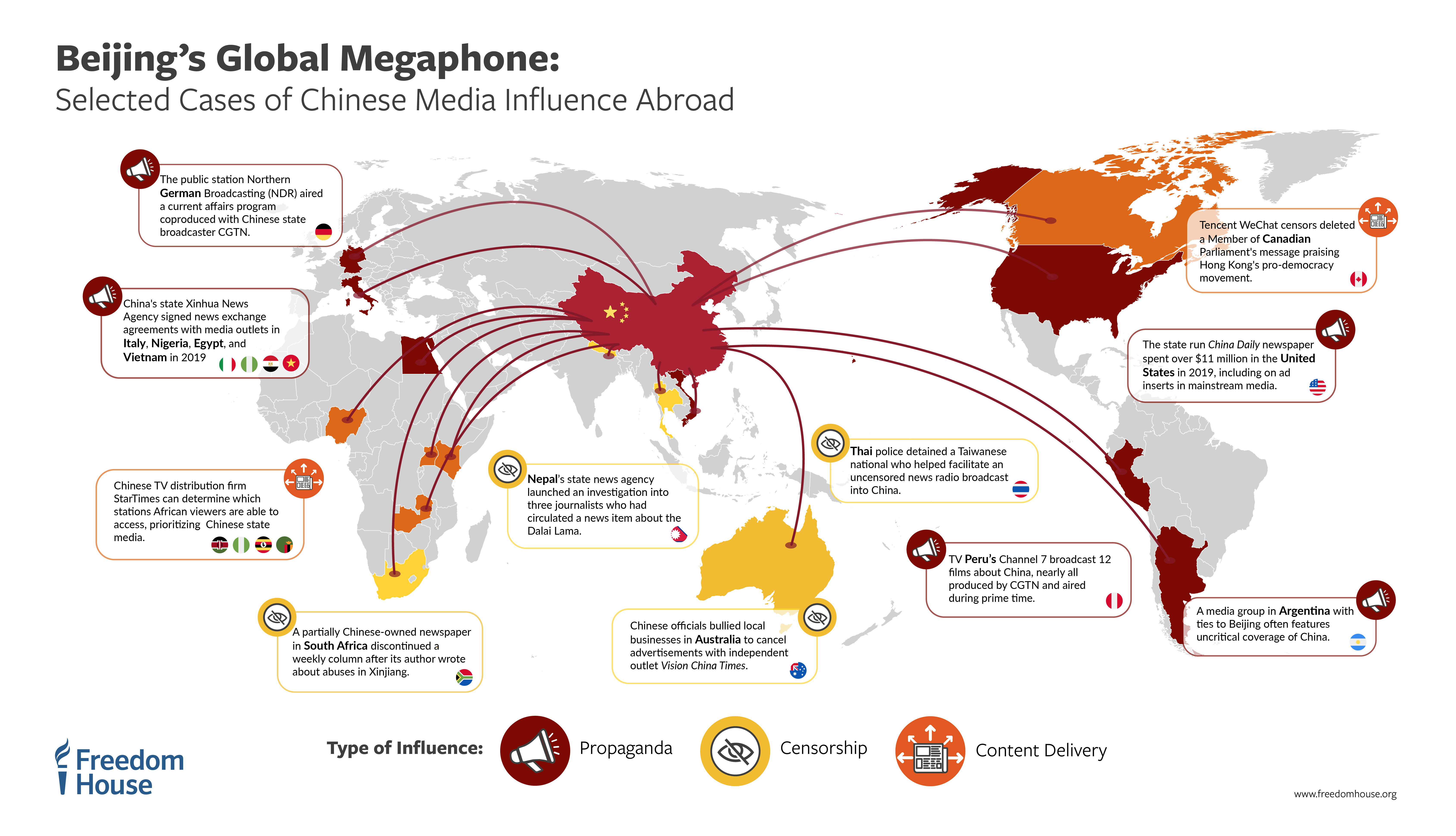
This paper provides a powerful real-world example of China's strategy. By framing complex technical issues in the political language of sovereignty, equality, and development, China successfully "tells its story well" and builds coalitions with countries in the Global South that are also wary of American dominance and keen to assert their own authority.
This is a subtle but profound form of influence. It's not about coercion but about persuasion and changing the very terms of the debate. China is playing the long game, aiming to create an international legal environment where its model of state-led internet governance is not seen as an aberration, but as a legitimate and sovereign choice.
Conclusion
China's effort to shape global internet norms is a textbook example of its broader foreign policy ambition. It is a patient, multi-pronged campaign to challenge the post-Cold War liberal order and create an international system that is more accommodating to its own political model and strategic interests.
Key Takeaways:
- A New Norm: China is systematically trying to replace the norm of a single, open internet with its own principle of "cyber sovereignty," which prioritizes state control.
- Two-Pronged Strategy: This campaign is waged on two fronts simultaneously: a practical front of building and controlling digital infrastructure through the Digital Silk Road, and a normative front of rewriting the rules in multilateral forums like the UN.
- The Power of Framing: China's diplomatic success hinges on its ability to frame its agenda not as authoritarianism, but as a defense of sovereignty, development, and equality, which resonates strongly with many countries in the Global South.
- A Contested Future: The future of the internet is not guaranteed. It is an arena of intense great power competition, with the potential for a "splinternet" where different digital blocs operate under different rules and norms.
This lesson concludes our journey through the foreign and security policy of modern China. From the revolutionary zeal of the Mao era to the calculated assertiveness of Xi Jinping, we have seen a nation determined to reclaim what it sees as its rightful place at the center of the world stage. Whether in trade, security, climate change, or the digital domain, China is no longer just adapting to the global order—it is actively remaking it.