Introduction
Welcome to a new module focused on Bras in Comedy & Coming-of-Age Films. In our previous lessons, we explored the dramatic and often visceral world of horror, concluding with an analysis of how everyday and stylized bra appearances create different effects within various sub-genres. We're now shifting our focus from fear and survival to humor, awkwardness, and growth.
Today, we'll address the learning outcome: Describe the 'first bra' trope and its styling in coming-of-age films. This trope is a cornerstone of the genre, serving as a powerful visual shorthand for the transition from childhood to adolescence. We will examine how this rite of passage is portrayed on screen, focusing on the specific garments and styling choices that costume designers use to convey themes of excitement, anxiety, social pressure, and self-discovery.
The 'First Bra' as a Narrative Milestone
In coming-of-age stories, the "first bra" is rarely just a piece of clothing. It's a symbol loaded with meaning, representing a character's first steps into a new, often confusing, phase of life. The trope typically revolves around a few key emotional and narrative beats:
- The Desire: A character yearns for a bra as a marker of maturity, often before her body physically requires one.
- The Acquisition: The often-awkward shopping trip, usually with a parent, which becomes a memorable scene.
- The Experimentation: The private or public attempts to wear and style this new garment, leading to both comedy and pathos.
- The Social Significance: The bra as a status symbol among peers, a requirement for belonging, or a source of unwanted attention.
Our focus will be on how costume design visually tells this story.
Case Study 1: The Earnest Hope of Are You There God? It's Me, Margaret. (2023)
Judy Blume's novel is a definitive text on this subject, and its recent film adaptation provides a perfect contemporary case study. The story centers on 11-year-old Margaret Simon as she navigates puberty.
To understand how the film approaches this, let's look at a review that highlights the story's focus on this very topic.
Are You There God? It's Me, Margaret review
A review of 'Are You There God? It's Me, Margaret' in The Guardian touches directly on how the film portrays Margaret's preoccupation with getting her period and wearing a bra.
Please read the two paragraphs starting 'Blume’s novel featured...' and 'The greatest decor might be found...'. Focus on the descriptions of Margaret 'investigating different ways to sport a bra when her body does not require one' and the social rules of the secret club, where members 'must forswear socks, wear bras'.
As the article notes, the film dedicates significant screen time to Margaret’s relationship with bras. This isn't about fashion; it's about aspiration and belonging.
The styling in these scenes reflects this earnest, pre-fashion stage:
- The Garment: The bras are simple, functional training bras—soft, unlined, and without underwires. They are purely utilitarian, offering minimal support and serving more as a symbolic layer.
- The Context: The social pressure is a key element. The "secret club" rule that members must wear a bra transforms the undergarment into a ticket for inclusion. This elevates it from a personal item to a piece of a social uniform.
- The Scene: The classic mother-daughter shopping trip is a pivotal moment that visually captures the trope.
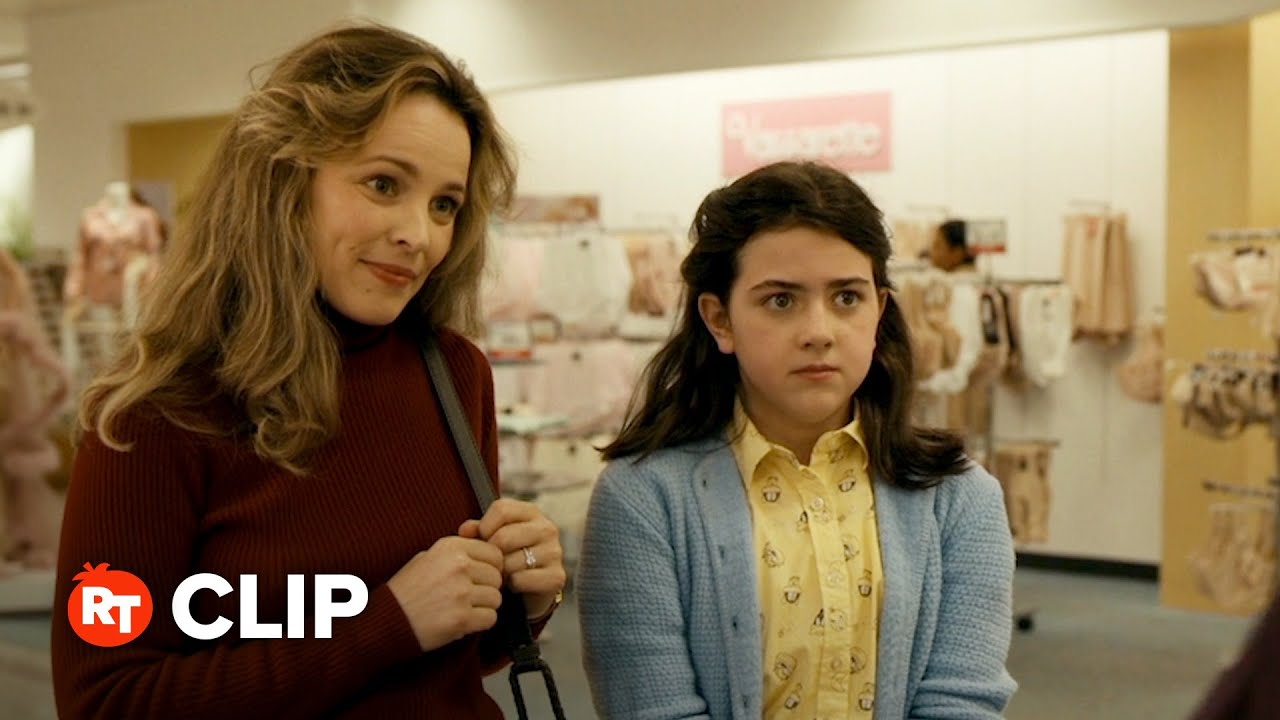
In this case, the styling is about simplicity and realism. The bra itself is unremarkable; its power comes from the character’s intense desire for it and what it represents in her social world.
Case Study 2: Performative Awkwardness in PEN15 (2019-2021)
The comedy series PEN15 lovingly recreates the middle school experience of the early 2000s, with a heavy focus on cringeworthy authenticity. The show's unique premise—with adult actors playing their 13-year-old selves—presented a specific costuming challenge that gives us insight into styling the "first bra" look.
'Pen15' Is Bringing Back Cringeworthy Middle School Fashion
This article from WWD interviews the show's costume designer, Melissa Walker, who explains the technical details of styling the characters to appear pre-pubescent.
Please read the first paragraph of this short article. Note the specific technique used by the costume designer ('several different versions of compression bras') to create the desired flat-chested silhouette for the adult actors.
The use of compression bras is a fascinating technical detail. While the goal was to create a physically "younger" silhouette, the show also explores the performative aspect of wearing a first bra—the desire to show it off, even if you don't know how.

This image is a brilliant illustration of a different angle on the trope. Unlike Margaret's private and aspirational approach, Maya's styling is about public performance.
- The Garment: This is not a simple training bra. It’s a delicate, lacy, light blue bralette. This choice reflects the aesthetics of the early 2000s and a desire to leapfrog the "training" stage straight to something perceived as more grown-up and fashionable.
- The Styling: Wearing the bralette over a t-shirt is the key. It's an incorrect but deliberate choice. The character is so proud of this new item that she wants it to be seen, but she lacks the knowledge or confidence to integrate it into her wardrobe properly (e.g., under a sheer top). This styling choice visually communicates her naivety and the garment's status as a novel accessory rather than functional underwear.
Common Styling Elements of the Trope
Drawing from these examples, we can identify a set of common styling choices used to depict the 'first bra' trope in film and television:
-
The "Invisible" Training Bra: Soft, cotton, often white or beige. The styling emphasizes its newness through the character's self-conscious body language—adjusting straps, checking if it's visible, or constantly being aware of its presence. The bra itself is plain, but the character's interaction with it tells the story.
-
The "Aspirational" Bralette: Often lacy or in a bright color, representing a desire for a more mature or fashionable identity. The styling might involve:
- Accidental Exposure: A strap peeking out from a tank top, which is a source of either pride or embarrassment.
- Performative Layering: As seen in PEN15, wearing it visibly but awkwardly, signaling inexperience.
-
The Ill-Fitting Bra: A common visual gag or point of realism. Costume designers may intentionally use a bra that is slightly too large in the cups or has a band that rides up the character's back. This visual detail immediately conveys the awkwardness of a body in transition and the difficulty of navigating this new world of sizing and fit.
-
The Shopping Bag: The scene often ends not with the bra being worn, but with the character holding a branded bag from a department store or lingerie shop. The bag itself becomes the prop, a tangible symbol of the milestone just passed.
Conclusion
In this lesson, we have dissected the 'first bra' trope and its specific styling conventions in coming-of-age films. We've seen that the choice of garment—from a simple training bra to a lacy bralette—and the way it's worn are crucial for telling a story about growth, social dynamics, and self-perception.
Key Takeaways:
- The 'first bra' trope uses undergarments as a central symbol of the transition from childhood to adolescence.
- Styling choices often prioritize emotional storytelling over fashion. In Are You There God? It's Me, Margaret., the focus is on the desire for a simple bra as a tool for social belonging.
- The trope can also be used for comedic effect, as seen in PEN15, where wearing a bralette over a shirt highlights a character's performative but naive attempt at maturity.
- Common visual elements include simple training bras, aspirational bralettes, intentionally ill-fitting garments, and the iconic shopping trip scene.
Next Lesson
We will continue our exploration of bras in comedy by moving from this very specific rite of passage to a broader theme. In the next lesson, we will identify mismatched and everyday bra styling used for comedic or relatable effect. We will look at how costume designers use "normal" or imperfect underwear choices to make characters more human, funny, and authentic.