In our first lesson, we established what makes an artistic photo book a unique form of expression. We discussed it as a "vessel" for an idea, an intentionally crafted object whose power lies in its sequencing, design, and physicality. We ended on the provocative idea that, through the artist's subjective choices, every photobook is a form of "fiction."
This lesson will put that theory into historical context. We will explore several key milestones in the evolution of the photo book, focusing on the pioneering artists who defined and redefined the medium. By examining these seminal works, you will see how the abstract principles we've discussed were forged through groundbreaking creative practice. Your background in fine arts and graphic design will provide a strong foundation for appreciating not just the images, but the innovative ways these artists used the book format itself as a conceptual and material element of their work.
The Post-War Revolution: The Subjective Narrative
After World War II, a shift occurred in photography. The dominant mode of objective, organized photojournalism gave way to a more personal, fluid, and critical approach. No single work embodies this shift more than Robert Frank's The Americans.
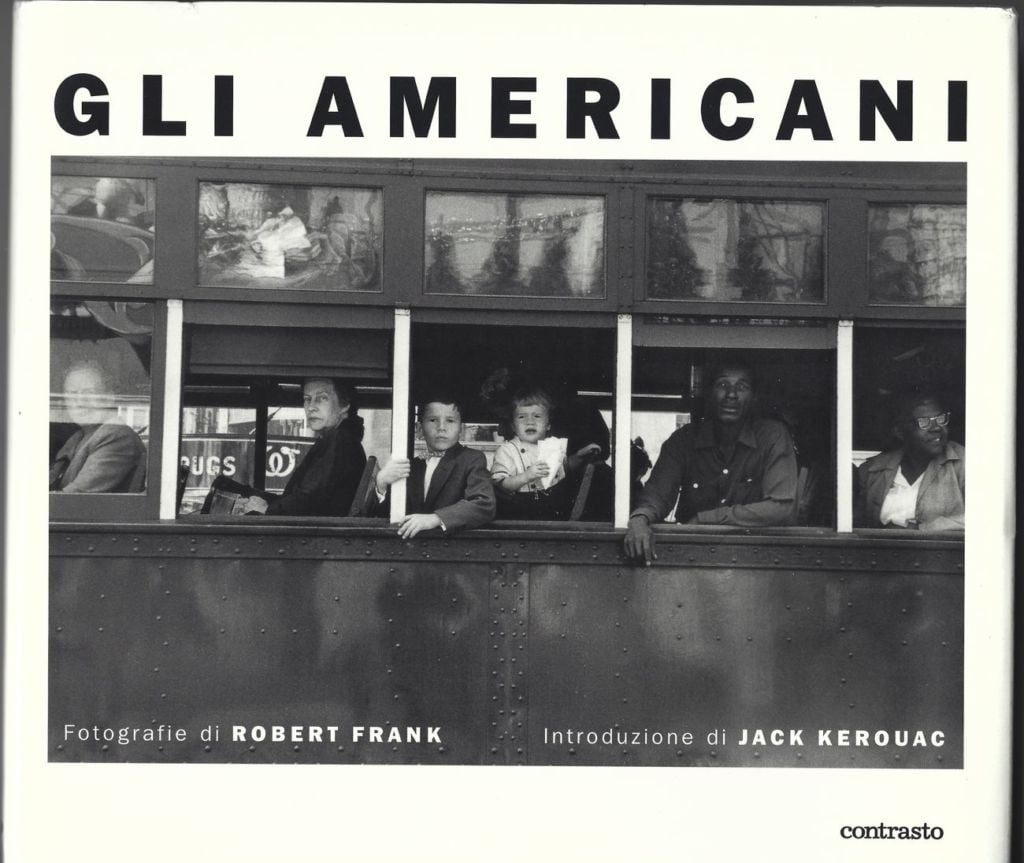
First published in France in 1958 and a year later in the United States, The Americans was a thunderclap. Frank, a Swiss immigrant, traveled across the country on a Guggenheim Fellowship, and the book that resulted was not a celebration of the American Dream, but a complex, melancholic, and deeply personal poem about its frayed edges. It perfectly illustrates the concept of the book as a subjective narrative—a "fiction" built from real moments.
The following video provides an excellent analysis of the book's context, Frank's approach, and its lasting impact.
Robert Frank – The Americans: Photo Icons Explained
This video, "Robert Frank – The Americans: Photo Icons Explained," deconstructs the book's significance and provides essential historical and biographical context.
Please watch the following segments to understand the work's revolutionary nature: Context and Reception: Begin by watching from the start to understand the post-war American landscape and why the book was initially so controversial. The Outsider's View: Continue from Frank's background to see how his immigrant status and association with the Beat Generation shaped his perspective. Style and Structure: Watch the sections on his photographic style and the book's poetic structure. Note the discussion of his 'emotional' rather than purely technical approach and the organization into four chapters. Legacy: Conclude with the final segment on its lasting influence.
As the video explains, Frank's book was not just a collection of images but an "emotional and poetic essay." His fluid, "stream-of-consciousness" approach, as described in the National Gallery of Art text Photobooks after Frank, helped "expand the possibilities of photography beyond objective documentation." It became a benchmark, demonstrating how sequencing and a consistent authorial voice could create a powerful, unified statement.
The Conceptual Turn: The Book as Object
While Frank's work opened the door for personal expression, other artists took the medium in a completely different direction, focusing on the book as a conceptual object. In this realm, your graphic design sensibilities will be particularly engaged. The key figure here is Ed Ruscha, a painter associated with Pop Art who began making books in the 1960s.
His first and most famous book, Twentysix Gasoline Stations (1963), is exactly what its title promises. It is a deadpan, systematic documentation of gas stations along Route 66.

Unlike the fine-art gravure printing of The Americans, Ruscha's books were commercially printed, cheap, and unassuming. The "art" was not in the beauty of the individual photographs—which were often banal—but in the concept and the structure of the book itself.
[PDF] From the Library: Photobooks after Frank - National Gallery of Art
The National Gallery of Art's exhibition catalog provides a concise explanation of Ruscha's contribution.
Please read the section titled "Authorship, Appropriation, and Anonymity." Focus on the description of Ed Ruscha's work, starting from his motivation. This passage effectively explains how his books were designed to counter the elite, handcrafted tradition and question what could be considered a worthy subject for art.
Ruscha's work is a milestone because it foregrounds the book as a piece of conceptual art. The design, the title, the number of pages, and the systematic subject matter are all part of a self-contained idea. The book isn't about the gas stations in a narrative sense; the book is the artwork, a typological collection presented in a specific, reproducible format. This approach radically expanded the definition of a photo book, treating it as a form of sculpture or a ready-made object.
The Intimate Gaze: The Diaristic Turn
A third major development was the turn inward, where the photo book became a vehicle for intensely personal, autobiographical, and often raw narratives. In the Tate Talks video from our previous lesson, this was described as the "personalization of photography." No work is more emblematic of this than Nan Goldin's The Ballad of Sexual Dependency (1986).
Goldin’s book is a visual diary of her life and the lives of her friends—her "tribe"—in the bohemian subcultures of Boston, New York, and Berlin. It documents love, drug use, parties, and domestic life with an unflinching and deeply empathetic eye. The work began as a slideshow set to music, performed in clubs, and its translation into a book retained that feeling of a flowing, personal narrative.
Iconic Photography Books That Shaped the Medium's History
The article "Iconic Photography Books" situates Goldin's work as a contemporary classic.
Please read the section titled "Nan Goldin, The Ballad of Sexual Dependency." Pay attention to how it's described as an uncompromisingly honest visual diary chronicling the artist's own experiences and struggles for intimacy.
The Ballad cemented the photo book as a powerful medium for memoir and self-representation. Unlike Frank's poetic distance or Ruscha's conceptual coolness, Goldin's work is defined by its emotional immediacy and insider perspective. She is not an observer of a scene, but a participant. This approach has influenced countless artists who use photography to explore themes of identity, community, and personal history.
A Broader View
While Frank, Ruscha, and Goldin represent three distinct and crucial paths in the photo book's history, they are part of a much larger conversation.
-
William Klein, a contemporary of Frank, created Life Is Good & Good for You in New York (1956), a book that captured the city with a raw, aggressive energy. His use of blur, high contrast, and confrontational framing created a frenetic, claustrophobic vision that stood in stark contrast to the more graceful compositions of photographers like Henri Cartier-Bresson.
-
As Martin Parr mentions in the Tate Talks video, the history of the photo book is constantly being rewritten as "hidden histories" from around the world are discovered. The rich traditions of Japanese photobooks, for example, particularly from the Provoke era, offered radical new visual languages and have been hugely influential since becoming more widely known in the West.
This ongoing discovery shows that the canon of the photo book is not a fixed monument, but a living, evolving field.
Key Takeaways
- The artistic photo book has a rich history defined by pioneers who used the format for distinct artistic aims.
- Robert Frank's The Americans established the photo book as a vehicle for a subjective, poetic, and critical narrative, moving beyond simple documentation.
- Ed Ruscha's artist's books, like Twentysix Gasoline Stations, redefined the medium as a form of conceptual art, where the book's structure and ordinariness were central to its meaning.
- Nan Goldin's The Ballad of Sexual Dependency represents the diaristic turn, using the book to create an intensely personal and intimate chronicle of her own life and community.
- These milestones are not isolated events but part of a continuous evolution that is still unfolding as new works and histories are brought to light.
In our next lesson, we will transition from this historical overview to a focused case study. We will select one seminal photo book and conduct a deep analysis of its conceptual and visual strategies, preparing you to apply similar thinking to your own project.