Introduction
Welcome back. In our previous lesson, you made a crucial strategic decision by identifying your "pillar" content platform and your primary distribution channels. You've defined what you want to be known for (your positioning) and where you will build your authority.
This lesson focuses on the "when" and "how," translating your strategy into a concrete plan. We will address the learning outcome: Develop a personal content calendar focused on strategic visibility and influence.
For a Content Lead like yourself, the concept of a content calendar is familiar. However, we will approach this from the perspective of personal thought leadership, which requires a different strategic mix and cadence than a corporate content calendar. The goal is to move from simply publishing content to systematically engineering visibility and influence, a key step in building your personal content engine.
1. The Anatomy of a Strategic Personal Content Calendar
A thought leadership content calendar is more than just a schedule of posts. It's a strategic document that ensures consistency, aligns your efforts with your goals, and keeps your content focused on building authority. It's the operational blueprint for your personal brand.
To begin, let's look at the essential components of a modern, effective content calendar.
Beyond Inspiration: The New B2B Tech Content Calendar Guide
The article 'Beyond Inspiration: The New B2B Tech Content Calendar Guide' provides an excellent breakdown of what a modern calendar should contain. While it's written for B2B teams, the principles are directly applicable to building a personal brand.
Please read the section titled 'The Anatomy of a B2B Content Calendar in 2025'. Focus on the list of minimum requirements, as these will form the columns of your own calendar.
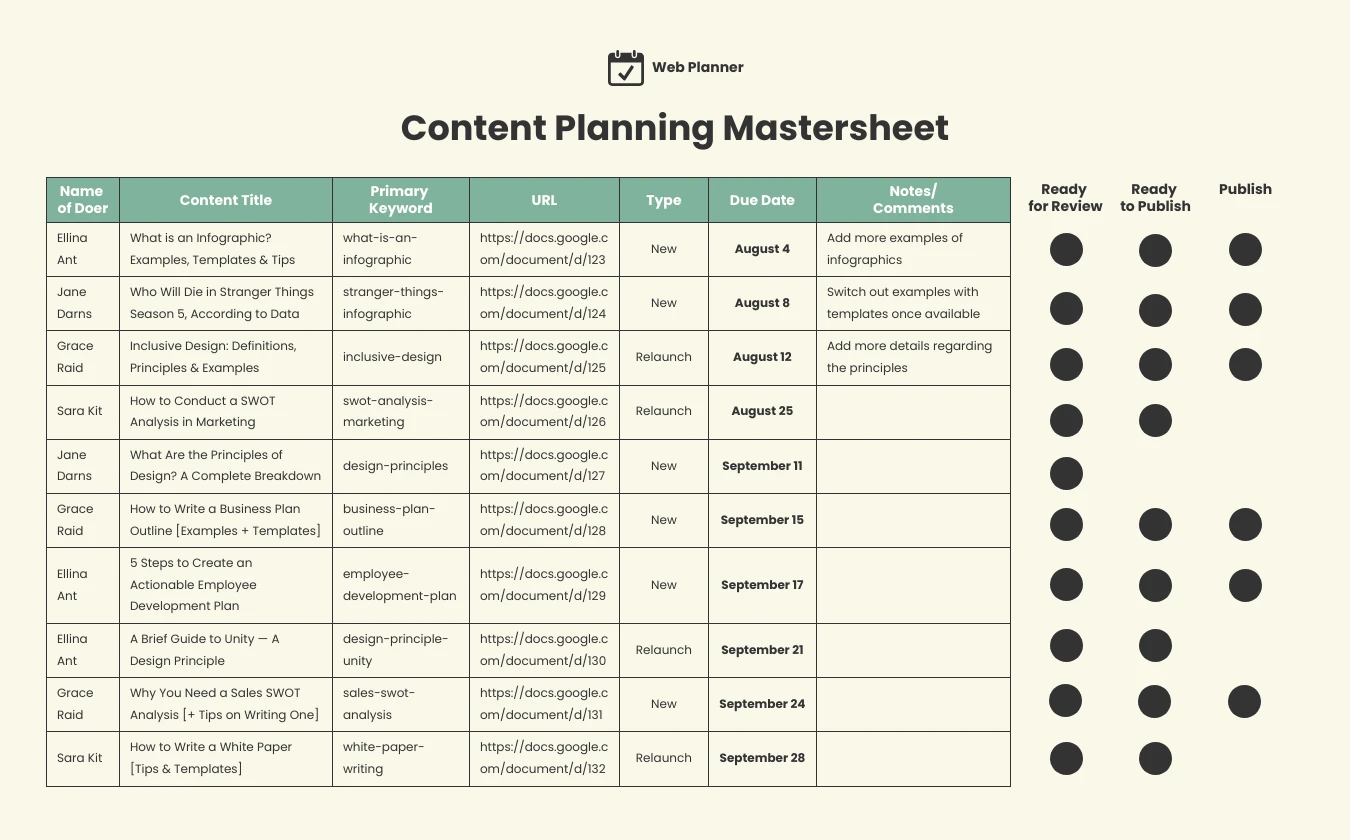
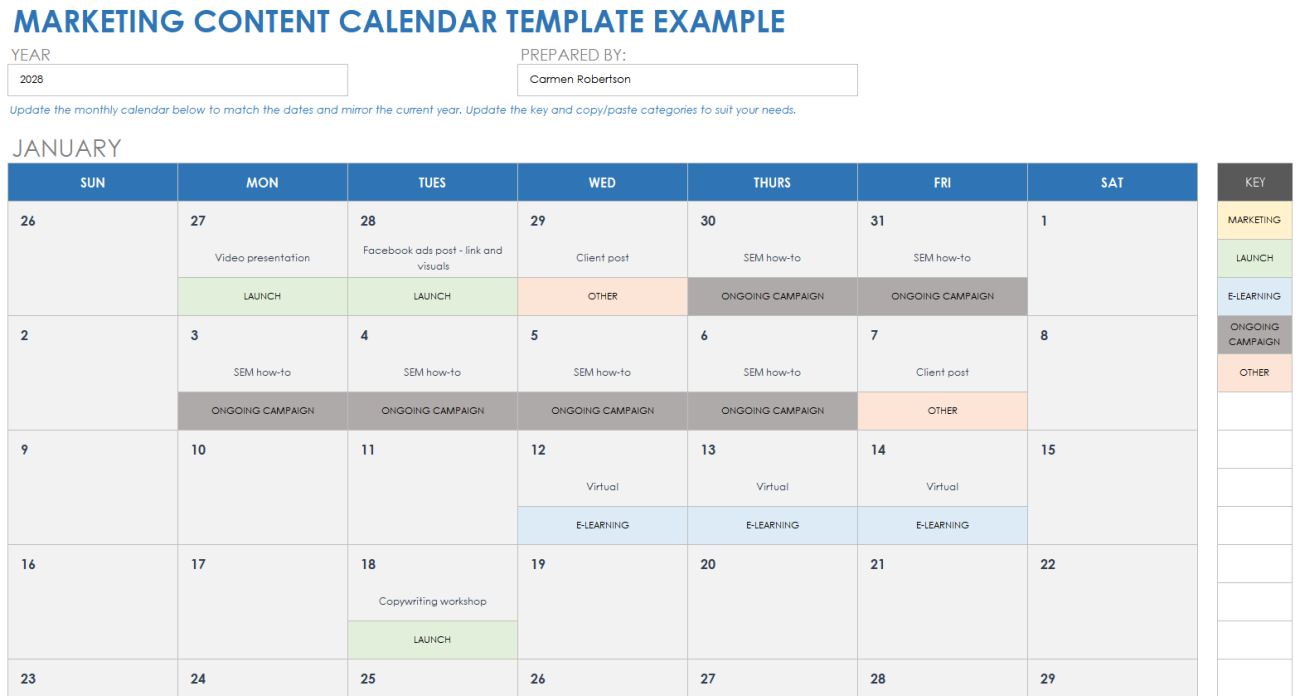
As the article outlines, your calendar should track key information for each piece of content:
- Topic/Headline: The specific idea for the post.
- Core Theme/Pillar: The broader topic category it falls under (we'll define these shortly).
- Content Type/Mix: Its strategic purpose (e.g., to build authority, to connect personally).
- Format: The medium you'll use (e.g., text-only, video, carousel).
- Channel: Where it will be published (e.g., LinkedIn, personal blog).
- Publication Date & Time: The specific schedule.
- Status: Its current stage (e.g., Idea, Drafting, Published).
Here are two visual examples of how this information can be organized:
2. Defining Your Content Mix: The "Authority First" Framework
The most crucial element of a strategic calendar is the content mix. Simply filling slots with random ideas won't build authority. You need a deliberate balance of content that establishes expertise, builds personal connection, and gently guides your audience.
The traditional Top-of-Funnel (TOFU), Middle-of-Funnel (MOFU), and Bottom-of-Funnel (BOFU) model can be awkward for personal branding on platforms like LinkedIn. A more effective approach for individuals is the "Authority First" framework.
LinkedIn Content Strategy Framework 2025 - How to Get Started
The video 'LinkedIn Content Strategy Framework 2025' by Pierre Herubel introduces this powerful model. It prioritizes establishing your expertise before anything else, which is perfectly aligned with your goal of building strategic influence.
Please watch the following segments that break down the framework: Introduction to the 'Authority First' Framework (03:01 - 03:38) Authority Content (70%) (03:38 - 04:43) Personal Content (15%) (04:43 - 06:31) Conversion Content (15%) (06:31 - 08:53) Summary of the 70-15-15 Rule (08:53 - 10:58) Pay close attention to the purpose of each content type and the recommended ratio.
To summarize this powerful framework, your content should follow a 70-15-15 rule:
- 70% Authority Content: This is the core of your strategy. It's content where you share your expertise, unique point of view, industry analysis, and how-to guides. This content directly demonstrates your value and builds your reputation as a go-to expert.
- 15% Personal Content: This content humanizes your brand. You share personal stories, behind-the-scenes insights, and opinions related to your professional journey. This builds trust and connection, as people buy from people they know, like, and trust.
- 15% Conversion Content: This is content with a clear call to action. It might be promoting a newsletter, a webinar, a consultation call, or a product. By building authority and connection first, this content feels helpful rather than salesy.
This mix ensures you are consistently providing value while also creating opportunities to move your audience toward your business goals.
3. Structuring Your Calendar: Pillars, Cadence, and Timing
With the strategic mix defined, you need a system for generating and organizing your topics. This is where content pillars and a consistent cadence come in.
Content Pillars
Content pillars are 2-4 broad themes that you will consistently talk about. They are derived from your thought leadership positioning statement and expertise. They provide structure for your brainstorming and ensure your content remains focused.
The Only LinkedIn Content Strategy You Need in 2025
Let's revisit 'The Only LinkedIn Content Strategy You Need in 2025' by Tommy Clark. This section details common, effective content pillars for a B2B thought leader.
Watch the segment from 04:29 to 09:23, which outlines three key pillars: Industry Thought Leadership & POVs Hiring/Team/Culture Content Founder/Personal Story Content Think about how your own expertise could be categorized into similar high-level pillars.
Your pillars act as buckets. When you need to create an "Authority" post, you pull an idea from your "Industry Thought Leadership" pillar. When you need a "Personal" post, you draw from your "Personal Story" pillar.
Cadence and Timing
Consistency is more important than frequency. A sustainable cadence is key.
The Only LinkedIn Content Strategy You Need in 2025
The same video provides clear, practical advice on how often and when to post for maximum impact on LinkedIn.
Now, watch the section 'Cadence and Timing' from 09:23 to 13:20. The key recommendations are to post 3-5 times per week and aim for mid-morning in your target audience's time zone.
A good starting point is 3 posts per week. This is manageable and frequent enough to build momentum. For example:
- Tuesday: Authority Post
- Thursday: Authority Post
- Friday: Personal or Conversion Post (alternating weeks)
4. Activity: Draft Your One-Month Personal Content Calendar
Estimated time: 15-20 minutes
Now it's time to put all these pieces together. Your task is to draft a one-month (4-week) personal content calendar for LinkedIn. This will serve as a working prototype for your content engine.
Your Task:
- Open a spreadsheet or create a simple table in a document.
- Create the following columns:
Week,Day,Pillar,Type (70/15/15),Tentative Topic/Headline,Format. - Plan for 3 posts per week for 4 weeks (a total of 12 posts).
- Define 2-3 Pillars for your content (e.g., "Content-to-Revenue Systems," "Sales-Marketing Alignment," "Personal Career Journey").
- Apply the 70-15-15 rule to your 12 posts. This means you should have approximately:
- 8 Authority posts
- 2 Personal posts
- 2 Conversion posts
- Fill in the calendar. For each of the 12 slots, decide on a pillar, type, a tentative topic, and a format (e.g., text-only, text + image, carousel).
Example Snippet of a Calendar:
| Week | Day | Pillar | Type (70/15/15) | Tentative Topic/Headline | Format |
|---|---|---|---|---|---|
| 1 | Tuesday | Content-to-Revenue Systems | Authority (70) | "Stop Measuring Pageviews. 3 Metrics That Tie Content to Pipeline." | Text-only |
| 1 | Thursday | Sales-Marketing Alignment | Authority (70) | "A Simple SLA Template to Fix Your Lead Handoff Process." | Carousel |
| 1 | Friday | Personal Career Journey | Personal (15) | "The Mistake I Made Early in My Career as a Content Writer." | Text + Image |
| 2 | Tuesday | Content-to-Revenue Systems | Authority (70) | "How to Repurpose One Webinar into a Full Week of Content." | Text-only |
| ... | ... | ... | ... | ... | ... |
This exercise will transform the abstract frameworks from this lesson into a tangible, actionable plan.
Conclusion
Fantastic work. You have now created the operational heart of your personal thought leadership strategy. A well-structured content calendar is what turns good intentions into consistent action and measurable results.
Key Takeaways:
- A personal content calendar is a strategic tool for planning your content mix, cadence, and themes to build authority.
- The "Authority First" (70-15-15) framework is a powerful model for balancing expertise, personal connection, and business goals.
- Organizing your ideas into 2-3 core content pillars keeps your messaging focused and makes content creation more efficient.
- A consistent cadence of 3-5 posts per week, published at strategic times, is crucial for building momentum on platforms like LinkedIn.
Preview of the Next Lesson:
Your new calendar has slots designated for "Authority" content. But what does a high-quality, deeply insightful authority piece look like? In our next lesson, we will focus on execution: "Outline a thought leadership article that presents a unique argument or framework." You will learn how to structure one of the cornerstone pieces of content that will populate your calendar and establish your expertise.