Welcome to our third lesson. In our previous session, we established the foundational concepts of literary analysis, defining close reading as a two-step process: first, you observe the details of the text, and second, you interpret what those observations mean. We compared this to a detective gathering evidence before forming a theory.
Today, we will focus exclusively on that first, crucial step: gathering the evidence. Our goal is to perform a close reading of a short prose passage by focusing on its surface-level features. Think of this as the data collection phase. Your background in information management has trained you to see how the structure and presentation of information are vital to its meaning; we will apply a similar lens to literature, learning how to systematically extract meaningful "data" from the words on the page. We'll concentrate on three key areas: word choice (diction), sentence structure (syntax), and punctuation.
A Framework for Observation
Before we can effectively observe, we need to know what we're looking for. The surface of a text might seem simple, but it's rich with detail. Let's build a mental checklist of the key elements to notice.
The following document from Bucks County Community College provides a concise and effective breakdown of what to examine at the sentence level.
This handout offers a clear, focused guide on the sentence-level details that form the basis of close reading.
Please read the section at the end of the document titled Sentence Level: Diction (connotations), Syntax, and Punctuation. Pay close attention to the questions it poses about the types of words and sentences used.
As you've just read, our observational focus can be broken down into three main categories:
- Diction (Word Choice): This is about the specific words an author chooses. Are they formal or informal? Simple or complex? Do they have particular connotations (emotional or cultural associations) beyond their literal dictionary meanings? For example, "house" and "home" are technically similar, but "home" carries a much warmer connotation.
- Syntax (Sentence Structure): This refers to the arrangement of words into sentences. Are the sentences long and flowing, or short and punchy? Are they simple, containing one idea, or complex, with multiple clauses? Do you notice any patterns or unexpected breaks in the sentence structure? The way a sentence is built guides the rhythm and flow of the reading experience.
- Punctuation: This isn't just about grammatical correctness; it's a tool for shaping meaning. Commas, periods, semicolons, dashes, and even the lack of punctuation all control the pace of reading. A long sentence broken up by many commas feels different from one with no internal punctuation.
To expand this toolkit, another guide from Haverford College provides a slightly broader checklist, including literary devices that often appear at the sentence level.
Close Reading for English Literature Assignments
This guide offers another excellent list of features to add to your observational toolkit.
Please read the sections on Figures of speech and Grammatical structure. This will help you start spotting elements like metaphors, similes, and other patterns in the language.
These two resources give you a powerful set of tools for the "observation" phase. You are now equipped to look at a passage and begin cataloging its specific linguistic features.
Seeing Observation in Action
Theory is one thing, but seeing this process in action is the best way to understand it. Let's watch an experienced reader analyze the very first sentences of a famous novel, George Orwell's 1984.
How to Do Literary Analysis (It’s Easy!)
This video from the channel English Nerd provides a brilliant, real-time demonstration of how to dissect an opening passage to gather observational data.
Watch how the presenter moves from a simple observation to a deeper question. Pay close attention to these two parts: The analysis of the first sentence, focusing on the phrase "the clocks were striking thirteen": The analysis begins. Notice how he observes the unusual number 13 and immediately connects it to its cultural connotations and the possibility of military time. The breakdown of the second sentence, looking at the protagonist's name ("Winston Smith") and the description of his building ("Victory Mansions"): The second sentence analysis. He observes specific word choices and contrasting details ("Victory" vs. "gritty dust").
The key principle demonstrated here is that analysis begins with noticing things. The presenter didn't know the "answer" beforehand; he simply observed a detail that was slightly strange ("striking thirteen") and began asking "Why?" He noticed a very common last name ("Smith") and a very grand name for a building ("Victory Mansions") that didn't seem to match its description. These observations are the raw material for interpretation.
Your Turn: A Practical Walkthrough
Now it's time for you to practice. Read the following passage from F. Scott Fitzgerald's The Great Gatsby. This passage describes a desolate, industrial area. As you read, try to make 3-5 specific observations based on our framework of diction, syntax, and punctuation. Don't worry about meaning yet—just notice the details.
About half way between West Egg and New York the motor-road hastily joins the railroad and runs beside it for a quarter of a mile, so as to shrink away from a certain desolate area of land. This is a valley of ashes—a fantastic farm where ashes grow like wheat in ridges and hills and grotesque gardens; where ashes take the forms of houses and chimneys and rising smoke and, finally, with a transcendent effort, of men who move dimly and already crumbling through the powdery air. Occasionally a line of gray cars crawls along an invisible track, gives a ghastly creak, and comes to rest, and immediately the ash-gray men swarm up with leaden spades and stir up an impenetrable cloud, which screens their obscure operations from your sight.
What did you notice?
- Perhaps the strange diction in "fantastic farm" and "grotesque gardens," where words associated with life and nature are applied to "ashes."
- Maybe the syntax of the very long second sentence, which piles on clause after clause, creating an overwhelming feeling.
- Or perhaps the repetition of words like "ashes" and "gray," and the use of bleak, heavy-sounding words like "ghastly," "leaden," and "impenetrable."
These are all excellent observations. Let's now watch a video where an analyst annotates this very same passage. This will give you a model for how to mark up a text and articulate your findings.
Annotate With Me (Close Reading Strategies for Literary Passages)
This video from Ms. Peer Editor demonstrates a live annotation of the "valley of ashes" passage. Compare her observations to your own.
Watch how she identifies specific details and begins to question their effect. Focus on these segments: Identifying literary devices like alliteration and simile and asking what they do: pinpointing devices. Analyzing word choice, repetition, and the overall tone these choices create: analyzing words. Notice how she investigates the word "transcendent" and tracks the repetition of the color "gray."
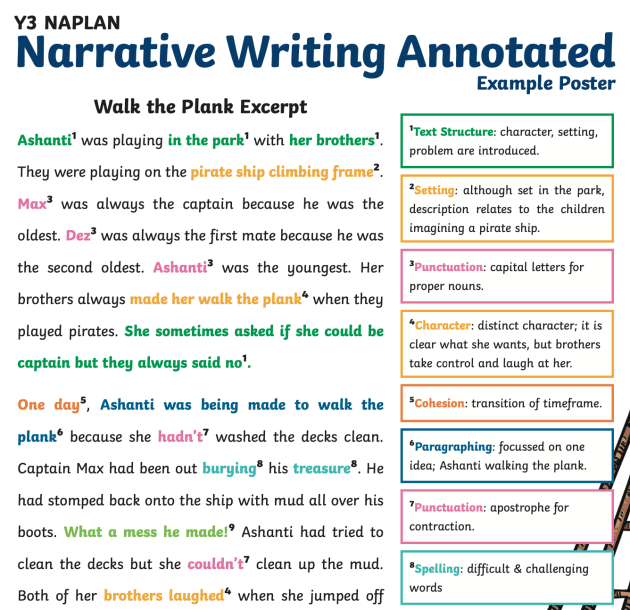
The process shown in the video—highlighting, circling, and making notes in the margins—is a physical manifestation of close reading. The simple example poster below also illustrates this idea of marking up a text to capture different observations.
To help you generate these observations, you can use prompts. The "Diction and Word Choice Analysis" resource below includes a helpful list of "Questions to Ask When Analyzing Diction" that can guide your thinking.

Conclusion
In this lesson, we have moved from the theory of close reading to the practical skill of observation. You have learned to dissect a passage by focusing on its most fundamental components and gathering evidence like a detective.
Here are the key takeaways:
- Observation is the first step: Before you can interpret, you must notice the specific details of the text.
- Focus on the fundamentals: Diction (word choice), syntax (sentence structure), and punctuation are the primary data points for analysis at the sentence level.
- Look for patterns and peculiarities: Pay attention to repetition, contrasts, and anything that seems unusual or out of place. This is often where the most interesting insights are found.
- Annotate actively: Marking up your text is a crucial way to track your observations and begin organizing your thoughts.
You have now built a solid foundation for the "observe" part of our "observe then interpret" model. In our next lesson, we will address the next logical step: "Formulate analytical questions about a passage based on initial observations." We've gathered our data; next time, we'll learn how to ask the right questions about it to start building an interpretation.