Hello! Welcome to the final lesson in our module on Formalwear & Evening Gowns.
In our previous sessions, we assembled a complete technical toolkit. You learned how to select neckline shapes, how to engineer support with underpinnings and garment structure, and how to choose fabrics based on their unique properties of drape, sheen, and weight. Now, we will bring all of that knowledge together and apply it in the real world.
Today's lesson addresses the learning outcome: Adapt cleavage-forward gown styling across different formal event dress codes (e.g., black tie, cocktail). We will move from the "how-to" of construction to the "when and where" of social context. Your work as a social researcher has likely given you a keen sense of social norms and expectations; today, we'll apply that same analytical lens to fashion.
1. Decoding Formal Dress Codes
A dress code is essentially a shared social agreement about what is appropriate to wear for a specific occasion. For formalwear, the two most common dress codes you will encounter are "Black Tie" and "Cocktail." Understanding the distinction is the first step in adapting your styling.
- Black Tie: This is one of the most formal dress codes, second only to White Tie. It traditionally calls for floor-length gowns. The atmosphere is one of elegance, drama, and high sophistication. Fabrics are typically luxurious—think velvets, satins, silks, and structured crepes.
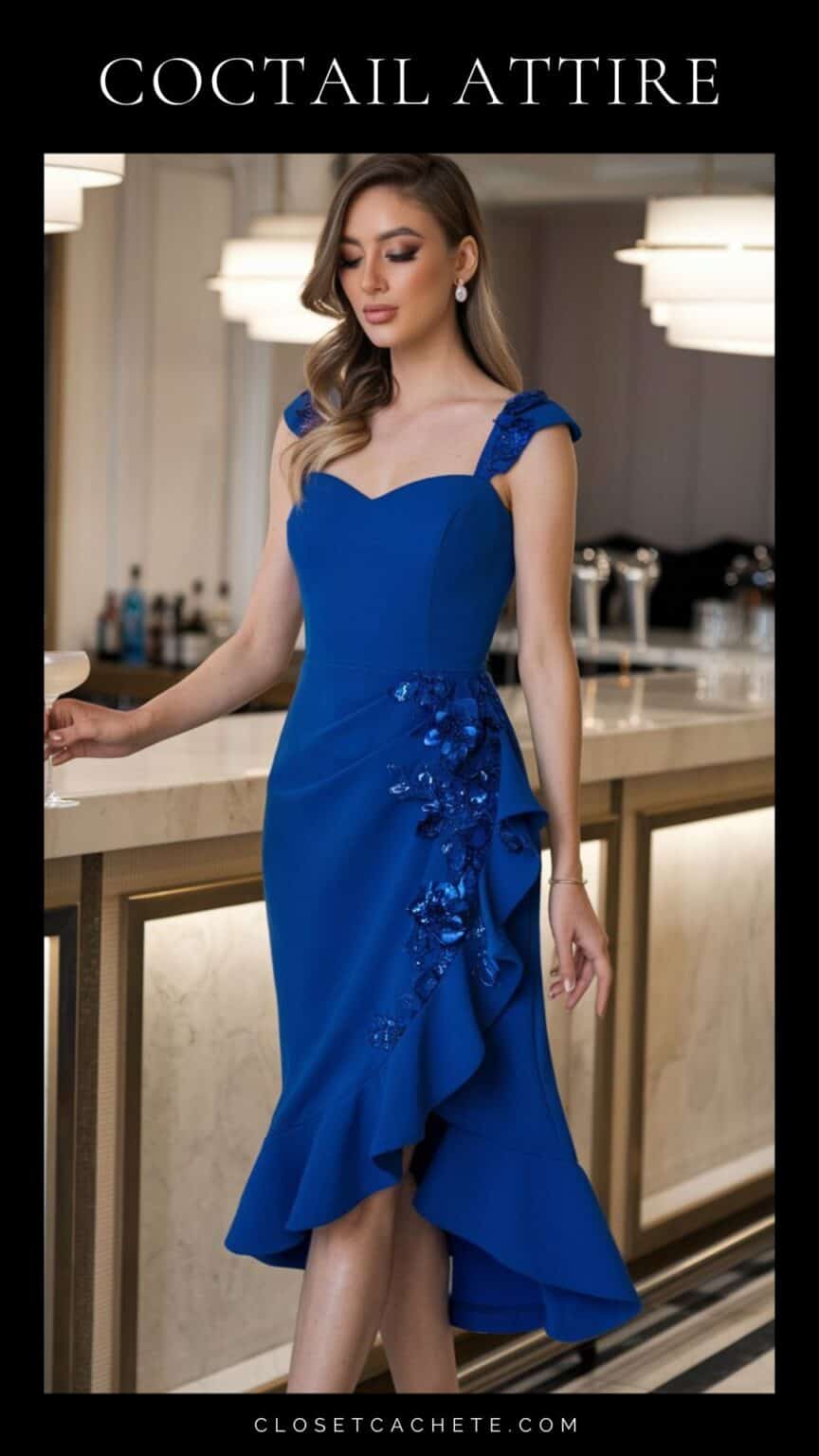
- Cocktail Attire: This is a step down in formality from Black Tie. It offers more flexibility and room for personal expression. The defining feature is a shorter dress length, typically ranging from just above the knee to mid-calf (midi). The vibe is chic, polished, and celebratory.
The key difference is the level of prescribed formality. Think of it this way: Black Tie has stricter rules and higher stakes, while Cocktail offers more freedom to play with trends, colors, and cuts.
2. The Art of Calibration: Styling for Black Tie
For a black-tie event, the goal is elegance. A cleavage-forward look must feel intentional, sophisticated, and integrated into the overall grandeur of the gown. It should be a deliberate design statement, not an accident.
Key Principle: Balance
Because the dress code demands a floor-length gown, you already have a strong element of formality. This allows you to be more daring with the neckline. However, the most successful looks achieve balance. A plunging neckline might be paired with:
- Long sleeves
- A full, voluminous skirt
- A high, conservative back
This creates a single, stunning point of focus (the décolletage) without overwhelming the entire look. The message is one of confidence and refined glamour.
Applying Your Fabric Knowledge:
- Sculptural Hold (Crepe, Mikado): A gown in one of these fabrics can create a powerful, architectural frame for the cleavage, as we discussed. The crisp lines feel intentional and modern.
- Rich Depth (Velvet): The light-absorbing quality of velvet makes it perfect for adding drama and opulence suitable for black tie.
- Liquid Drape (Satin, Silk): A bias-cut satin gown creates a timeless, liquid-gold look that uses sheen to highlight the body's curves in a very glamorous way.
Let's look at some examples.

3. The Art of Calibration: Styling for Cocktail Attire
Cocktail attire is chic, festive, and less constrained. Since the hemlines are shorter, the overall impression is less formal. This context changes how a revealing neckline is perceived.
Key Principle: Playfulness & Polish
You have more freedom with necklines, fabrics, and even colors. However, the shorter length means you need to be mindful of overall proportion. A dress that is both very short and has a very deep neckline can sometimes risk feeling unbalanced for a more conservative cocktail event.
Applying Your Fabric Knowledge:
This is where all fabric families can come into play. Lighter fabrics, prints, and even the "Ethereal Tease" family (chiffon, organza) are more common here. An organza overlay on a bustier cocktail dress can be a perfect example of a playful, yet sophisticated, way to hint at cleavage.
4. A Strategic Framework for Dress Code Interpretation
Given your background in statistics and probability theory, you might find it useful to think of dress codes not as absolute rules, but as probability distributions for what is socially acceptable.
-
Black Tie can be seen as a narrow probability distribution with a high peak. The most probable (and safest) outfits are floor-length gowns made of formal fabrics. As you move away from that peak—for example, with a much shorter hemline or a very casual fabric—the probability of social acceptance decreases. A plunging neckline is an acceptable variation, but it works best when other variables (like hem length) remain close to the peak.
-
Cocktail Attire represents a wider, more uniform probability distribution. A broader range of lengths, fabrics, and neckline styles fall within the high-probability zone of acceptance. There is more room for experimentation, and the "risk" associated with a bold choice is generally lower.
This framework allows you to make a strategic choice: are you aiming for the center of the distribution (a classic, safe choice) or are you intentionally styling for the tails of the distribution (a high-fashion, high-risk, high-reward statement)?
Conclusion
You have now completed the formalwear module, progressing from the technical details of a gown's construction to the nuanced art of adapting it for a specific social context. You understand that styling for cleavage is not just about maximizing exposure, but about calibrating that exposure to match the formality and mood of an event.
Key Takeaways:
- Dress codes like Black Tie and Cocktail provide a social context that dictates the rules of styling.
- For Black Tie, the key is sophistication and balance. A cleavage-forward neckline should be a deliberate statement, often balanced by conservative elements like a long hemline.
- For Cocktail Attire, the key is chic playfulness. There is more freedom in cut and fabric, but proportion remains important.
- Adapting your styling means using your knowledge of necklines, support, and fabrics to create a look that is appropriate for the "probability distribution" of the event's dress code.
Next Lesson Preview:
This concludes our deep dive into formalwear. In our next module, we will shift contexts dramatically, moving from the ballroom to the beach. Our next module is Swimwear & Beach Attire, and the first lesson will focus on the fundamental building blocks of swim styling: Analyze how different swimwear top styles (e.g., triangle, balconette, halter) visually sculpt and present cleavage. Get ready to apply your knowledge of support and shape to garments designed for sun, sand, and water.