The previous lesson compared pain relievers: NSAIDs reduce prostaglandin production during a painful period, while paracetamol relieves pain differently. Hormonal treatments take a longer-term approach. By changing how the uterine lining develops—and, with some methods, preventing ovulation—they can reduce the bleeding and cramps associated with future periods. This lesson explains that shared idea without treating every hormonal method as interchangeable.
The lining is the link to cramps
The endometrium is the lining inside the uterus. During a menstrual cycle, it builds up and, if pregnancy does not occur, part of it is shed. Around menstruation, the lining releases prostaglandins, which contribute to uterine contractions and cramping. Hormonal treatments can keep the lining thinner, so there is generally less tissue to shed and less prostaglandin-driven activity. Some methods also prevent the cycle of ovulation that normally helps regulate these changes.
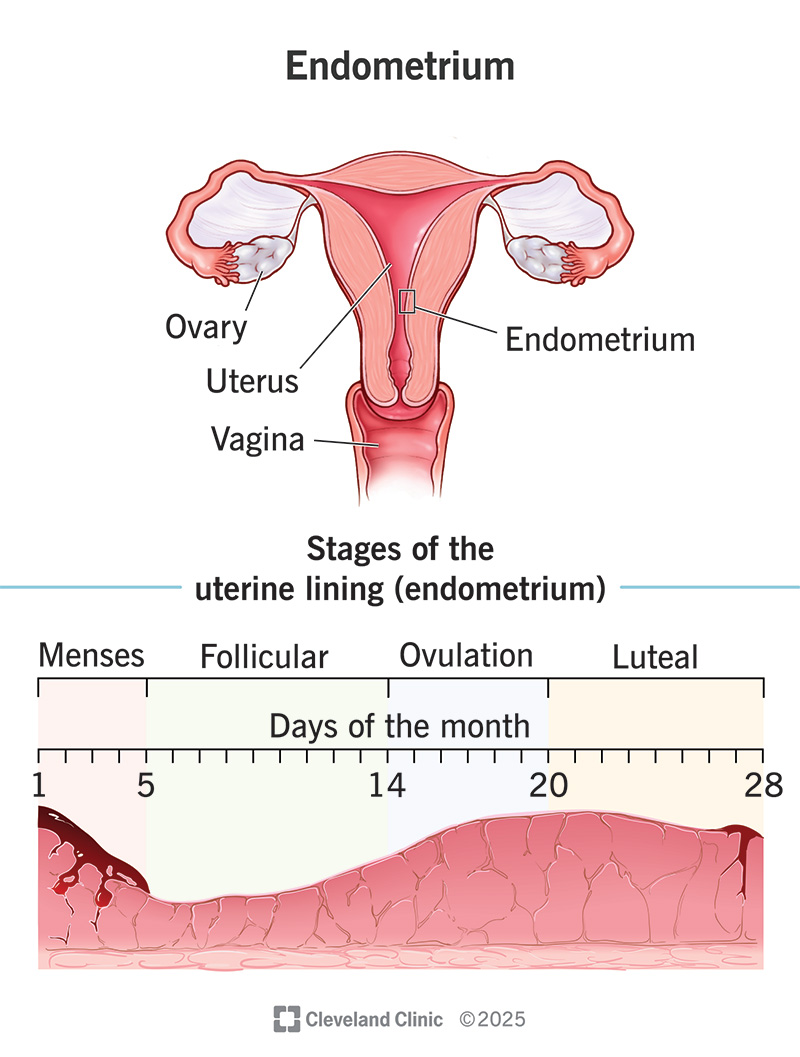
This is a different point of intervention from taking an NSAID when cramps begin. Hormonal treatment may make periods lighter, less frequent, or absent and reduce pain over time; it is not an immediate pain reliever, and the response varies. A thinner lining also does not mean every cause of pelvic pain has been addressed.
Combined methods: lining changes and ovulation suppression
Combined hormonal methods contain estrogen and a progestin. They include the combined pill, patch, and vaginal ring. These methods usually prevent ovulation and thin the uterine lining. Those effects can make bleeding lighter and shorter and can reduce menstrual cramps. With an individually suitable regimen, some people use a combined method continuously to reduce or avoid scheduled bleeding; that is a choice to discuss with a clinician rather than an instruction to change a regimen independently.
Read the American College of Obstetricians and Gynecologists (ACOG) FAQ to connect the mechanism with its benefits and its important cautions.
Combined Hormonal Birth Control: Pill, Patch, and Ring | ACOG
ACOG explains what the combined methods do to ovulation and the uterine lining, then why their benefits must be weighed against individual risks.
In the FAQ, find the explanation of how combined methods work. Read mechanism and benefits, ending with the list of benefits beyond contraception. Then, in the discussion immediately following that list, read continuous use and risks. Focus on why reducing menstrual symptoms does not make an estrogen-containing method suitable for everyone.
The FAQ also notes that combined methods can be used to treat heavy bleeding and pain associated with conditions such as fibroids or endometriosis. Symptom improvement is not a diagnosis: relief does not establish which condition, if any, caused the pain.
Progestin-only methods: the same lining target, different ovulation effects
Progestin-only methods help show why “hormonal treatment stops ovulation” is too broad a rule. Progestin can thin the uterine lining even when ovulation continues. A progestin-only pill may therefore lessen bleeding and painful periods without reliably stopping ovulation. The effect on ovulation also depends on the particular pill formulation. By contrast, the progestin injection suppresses ovulation as well as thinning the lining.
ACOG’s progestin-only FAQ makes that distinction explicit. Read its pill and injection passages rather than assuming their effects are identical.
Progestin-Only Hormonal Birth Control: Pill and Injection | ACOG
ACOG describes what progestin-only pills and the injection do, how bleeding may change, and why neither is automatically suitable for every person.
In the pill portion of the FAQ, before the instructions about when to start a pill, read pill effects. Later in that portion, find the paragraph beginning “Progestin-only pills offer benefits beyond birth control” and read painful-period benefits. In the later discussion of pill suitability and side effects, read suitability and bleeding. Under “Birth Control Injection,” find the list of effects just before the instructions for a first shot. Read injection effects. Later in that section, read bleeding changes. Notice that reduced bleeding may be a benefit, while unpredictable spotting can also occur.
A hormonal intrauterine system, often called a hormonal IUD or IUS, provides another useful contrast. It releases a progestin in the uterus and keeps the lining thin; many people continue to ovulate. It may substantially reduce bleeding and cramps even without consistently stopping ovulation. A copper IUD is different: it has no hormone that thins the lining and can make bleeding or cramps worse for some people.
Watch this short explanation of the hormonal IUS and its distinction from a copper device. Treat the video’s estimate of how many people stop having periods as an illustration, not a prediction for every device or person.
Should Periods Hurt? - Causes, Treatments, Medication
In Should Periods Hurt? - Causes, Treatments, Medication, Dr Simi Adedeji explains the lining-focused effect of a hormonal intrauterine system and contrasts it with a copper device.
Watch the IUS comparison. Focus on why keeping the lining from building up can reduce bleeding and discomfort, and why a copper device should not be assumed to have the same effect.
Choosing a method requires more than matching it to cramps
The central distinction is now clear: thinning the lining is a common route to pain relief; suppressing ovulation happens with some methods, but is not required for every method to help. The appropriate option depends on more than that mechanism.
For example, a clinician assessing an estrogen-containing combined method needs to consider factors such as migraine with aura, blood pressure, a history of blood clots, and smoking or other cardiovascular risks. A progestin-only method may be an alternative for some people, but it has its own cautions; a history of breast cancer is one consideration. Preferences also matter: whether contraception is wanted, how someone feels about irregular spotting or having no periods, and—particularly for the injection—plans for pregnancy after stopping treatment. Other medicines and the possibility of pregnancy may affect the discussion. Availability without a prescription for some progestin-only pills does not remove the need to check whether a particular product is appropriate.
Hormonal treatment can help primary dysmenorrhea and may also relieve symptoms when a condition such as endometriosis contributes to pain. It does not replace assessment of pain that is worsening, occurs outside periods, disrupts daily life, or comes with other concerning symptoms. Pain relief is valuable, but it should not be used as proof that no underlying condition needs attention.
Key takeaways
Hormonal methods can reduce cramps chiefly by limiting growth of the uterine lining and the bleeding and prostaglandin activity associated with shedding it. Combined methods and the progestin injection also suppress ovulation; progestin-only pills and hormonal IUDs illustrate why ovulation suppression must not be assumed for every method. Benefits, bleeding changes, health risks, and reproductive plans make suitability an individual decision.
The next lesson turns to non-drug comfort measures, including what heat and gentle activity may offer and how to use them safely.