The previous lesson looked at treatments that change prostaglandin activity or the uterine lining. This lesson turns to measures you can use for comfort without medication. Heat and gentle movement may ease cramps, but relief is individual, and neither measure identifies or treats every possible cause of pelvic pain. The aim is to choose options that feel useful, use them safely, and understand what the evidence does—and does not—show.
Heat: comfort without a diagnosis
A warm pad or hot water bottle on the lower abdomen or back can make cramps easier to bear. A warm bath or shower may help too. Heat can soothe the area and alter how pain feels, but you should not interpret a response to heat as proof that cramps are primary dysmenorrhea. Pain from an underlying condition can also feel better temporarily.
The image shows several ways people apply warmth to the lower abdomen. They are examples of use, not evidence that the methods are equally effective or safe.
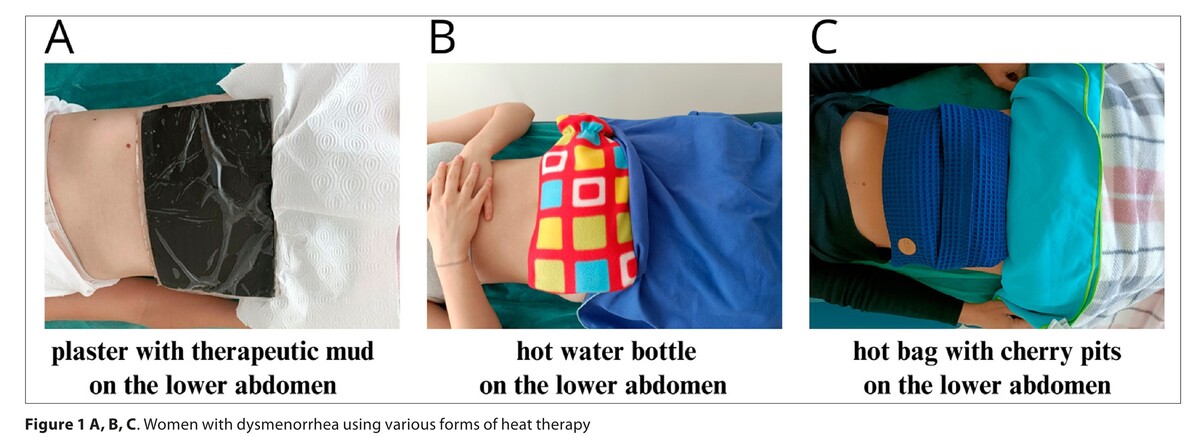
The practical goal is comfortably warm, never painfully hot. Put a cloth barrier between a hot water bottle or heat pad and your skin, follow the product’s heating and time instructions, and check your skin during use. Do not use a leaking bottle, fall asleep with a heat source against you, or keep applying heat to skin that becomes very red, numb, or painful. Extra care is needed if you have reduced skin sensation or cannot readily move the heat source away. A warm bath is preferable to one so hot that it makes you light-headed.
This short NHS video brings together heat, massage, bathing, and movement as home comfort options. Notice its specific instruction to cover a hot water bottle to protect your skin.
Painful periods: Pain relief and when to seek help | NHS
Watch “Painful periods: Pain relief and when to seek help” from the NHS for a concise overview of non-drug options.
Watch home comfort options. The passage moves from protected heat on the lower back or abdomen to rubbing sore areas, a warm bath or shower, and light stretching.
Gentle movement: an option, not an obligation
Walking, easy cycling, swimming, stretching, or gentle yoga may be more appealing on some days than others. You can start at a comfortable level and stop or change position if movement increases pain, makes you dizzy, or otherwise feels wrong. Rest is also a reasonable choice when activity feels unhelpful. There is no requirement to push through significant pain to gain a benefit.
The research makes an important distinction between regular exercise across the month and a few gentle stretches during cramps. A Cochrane review found that exercise may meaningfully reduce pain in people with primary dysmenorrhea. Most studies tested sessions of roughly 45–60 minutes at least three times weekly, often throughout the month. That finding does not establish that a brief walk during a painful period will have the same effect, though you may still find one comfortable. The studies also do not show that exercise works better than NSAIDs or reliably prevents disruption to daily life.
Exercise for dysmenorrhoea | Cochrane
Read Cochrane’s “Exercise for dysmenorrhoea” to separate a promising result from the limits of the studies behind it.
In “Key results,” read from the opening sentence beginning “Exercise, whether low-intensity” through the final sentence about absence from work or school. Focus especially on what was tested. Then read the paragraph immediately before “Quality of the evidence” and that subsection’s first paragraph, from comparisons to limitations. Note the small studies, differing results, and difficulty blinding participants.
Yoga can be one way to explore gentle movement, not a special treatment you must perform. The following practice demonstrates supported positions and unhurried transitions. Use a pillow if it makes a position more comfortable; skip any pose that strains your abdomen, back, hips, or knees. Treat the instructor’s movement and relaxation cues as options for comfort, not as proof that a pose changes an underlying pelvic condition.
Yoga for Cramps and PMS | 20-Minute Home Yoga
Watch selected portions of “Yoga for Cramps and PMS” from Yoga With Adriene to see how a gentle practice can be adapted with support.
In seated movement, notice the relaxed pace and the instruction not to force a stretch. In supported rest, see how a pillow can support Child’s Pose; skip it if that position is uncomfortable. In rest and massage, observe the option of knee support and light contact with the abdomen.
Other low-pressure comfort choices
Light massage of the abdomen or back may feel soothing, particularly alongside warmth or rest. Keep pressure gentle and stop if touching the area increases pain. A pillow, a comfortable resting position, and slow breathing can likewise make a difficult period more manageable. These are ways to support comfort, not substitutes for investigating a new or concerning pain pattern.
A useful way to select a measure is to match it to what is happening now. If stillness feels best, protected warmth or rest may be easier than exercise. If being still makes you feel more tense, a short, comfortable walk or gentle stretch may be worth trying. You can combine a comfort measure with an appropriate pain medicine if needed; choosing a non-drug option does not mean you must avoid other relief.
Keep the limits in view. Seek medical assessment rather than repeatedly trying home measures when pain is worsening, occurs outside periods, or disrupts daily activities. Sudden severe pelvic pain, possible pregnancy with pain, fever, fainting, or heavy bleeding accompanied by symptoms of blood loss calls for prompt assessment according to the urgency covered earlier in the course. A measure that eases pain for an hour should not delay needed care.
Key takeaways
Protected heat, warm bathing, gentle movement, rest, and light massage are reasonable comfort options. Prevent burns, let comfort guide activity, and do not force movement through pain. Exercise research suggests a possible benefit for primary dysmenorrhea, but its quality is limited and it mainly examines regular exercise rather than a brief activity during cramps. No response to a comfort measure can rule out an underlying condition.
The next module turns to preparing a concise symptom record for an appointment and understanding what common assessments can—and cannot—establish.