Welcome to the first lesson of your UGC NET crash course! We're kicking things off with a foundational and high-scoring unit from Paper 1: Teaching Aptitude. Since your goal is to crack the JRF, mastering Paper 1 is just as crucial as Paper 2, and this topic is an excellent starting point.
In this lesson, you will learn to explain the core concepts of teaching aptitude. We will cover the fundamental objectives of teaching, explore the three distinct levels at which teaching occurs, and analyze the key characteristics of adolescent and adult learners. Understanding these concepts is essential, as they form the basis for many questions in the exam and will help you think like an educator—a key skill for your future as a professor or researcher.
1. The What and Why of Teaching
Before we dive into different teaching methods, it's important to establish what "teaching" fundamentally is and what it aims to achieve in higher education. Teaching aptitude isn't just about subject knowledge; it's the inherent capability to understand learners and facilitate their growth effectively.
Just as in UI/UX design, where an effective interface depends on a deep understanding of the end-user's goals and cognitive load, effective teaching hinges on understanding the learner's needs, motivations, and developmental stage.
To get a formal overview, let's start with a foundational reading.
Teaching Aptitude: UGC NET Paper 1 - Lawsikho Blog
This article from the Lawsikho blog provides a concise, exam-oriented introduction to the key concepts of teaching aptitude. It will give you a clear definition of teaching, its objectives, and the characteristics of effective teaching.
Please read the introduction and the following two sections. Focus on these parts: The definition of Teaching Aptitude. What teaching is and Morrison's definition. The core objectives, especially the shift in focus for higher education. The hallmarks of what makes teaching good.
This reading establishes that the goal of teaching transcends mere information transfer. It's about developing cognitive abilities, fostering critical thinking, and enabling learners to become independent thinkers.
2. The Three Levels of Teaching
One of the most frequently tested concepts in Teaching Aptitude is the hierarchy of teaching levels. These levels describe the depth of cognitive engagement required from the learner, moving from simple memorization to complex problem-solving.

Let's break down each level.
A Video Introduction
For a clear and simple explanation with relatable examples, this video from Arpita Karwa is an excellent starting point.
UGC NET Paper 1 | Levels of Teaching | Unit 1: Teaching Aptitude | Simple Explanation | Arpita Karwa
This video provides a straightforward breakdown of the three levels of teaching, their proponents, and their key features. The use of examples makes the concepts easy to grasp.
Watch the following segments to get a good overview: Memory Level: This part explains the 'thoughtless' level of teaching, rote learning, and uses an amusing example from the movie 3 Idiots. Understanding Level: This segment discusses the 'thoughtful' level, where the focus shifts to grasping meaning and forming connections. Reflective Level: Here, the video covers the 'most thoughtful' or 'boss level' of teaching, which involves critical thinking and real-world application, often seen in MBA programs. Summary: This quick recap reinforces the hierarchy and key characteristics of each level.
A Deeper Dive for Exam Mastery
Now that you have a conceptual overview, let's turn to a resource that is specifically designed for exam success. It not only explains the concepts but also provides keywords, highlights common pitfalls, and analyzes question patterns—perfect for your crash course approach.
Levels of Teaching: Memory, Understanding, Reflective – Dr. Vishwanath Bite
This guide by Dr. Vishwanath Bite is exceptionally useful for NET aspirants. It moves beyond simple definitions to provide analogies, classroom scenarios, and exam-specific strategies.
Please read the sections on each of the three levels, paying close attention to the exam-focused parts. Memory Level Teaching (MLT): Read the section Building the Foundation. Focus on the key characteristics and classroom examples. Understanding Level Teaching (ULT): Continue to the section Building the Bridge. Note the "Transition Indicators" which help you identify when learning has moved beyond simple memory. Reflective Level Teaching (RLT): Read the next section, Reaching the Pinnacle. The key here is to understand the distinction: this level is about creating new knowledge, not just applying existing knowledge. Exam Strategy: Finally, review the section Strategic Exam Mastery. The Keyword Recognition Strategy is particularly high-yield for MCQs. Also, look at the Quick Reference Comparison Table under the 'Quick Revision Toolkit' for a final summary.
Key Proponents to Remember:
- Memory Level: Herbart
- Understanding Level: Morrison
- Reflective Level: Hunt
Understanding these levels is not just about memorizing names; it's about recognizing the cognitive process described in a scenario-based question and correctly classifying it.
3. Learner Characteristics: Adolescent vs. Adult
Effective teaching requires adapting to the audience. The UGC NET syllabus specifically requires you to know the characteristics of two key groups: adolescent and adult learners. Their motivations, cognitive abilities, and social needs are vastly different.
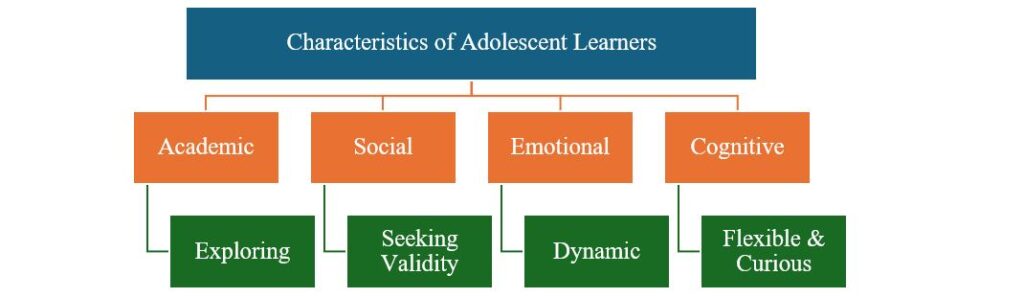
To explore these differences, let's watch a dedicated lecture on this topic.
Teaching Aptitude For UGC NET 2024 | Adult Learners Vs Adolescent Learners By Anshika Pandey
This video by Anshika Pandey from Adda247 UGC NET provides a clear comparison between adult and adolescent learners, which is a crucial syllabus topic.
Focus on these specific parts: Learner Domains: First, watch the segment from 08:00 to 13:11 which explains the four key domains of learner characteristics: Personal, Social, Academic, and Cognitive. This provides a useful framework. Adult Learners: Next, watch from 15:24 to 21:38. Pay close attention to keywords like self-directed, problem-based, goal-oriented, and practical. Adult learners (like yourself in this MBA and NET preparation journey) are motivated by relevance and immediate application. Adolescent Learners: Finally, watch from 21:39 to 27:30. This part describes the "storm and stress" period of adolescence, marked by rapid physical and emotional changes, peer pressure, and a search for independence.
In summary, here's a quick comparison:
| Characteristic | Adolescent Learner | Adult Learner |
|---|---|---|
| Motivation | Primarily external (grades, parental approval) and social (peer acceptance). | Primarily internal (career growth, self-improvement, solving a problem). |
| Orientation | Subject-centered; learning what is required. | Problem-centered; learning what is relevant and applicable to their life. |
| Experience | Limited life experience; a relatively clean slate. | Brings a wealth of prior knowledge and life experiences to learning. |
| Direction | Dependent on the teacher for direction and structure. | Self-directed and autonomous; prefers a collaborative relationship with the teacher. |
| Thinking | Transitioning from concrete to abstract thinking. | Capable of abstract, critical, and reflective thinking. |
Conclusion
In this introductory lesson, we have laid the groundwork for Paper 1 by exploring the core of teaching aptitude. You learned that effective teaching is a goal-oriented process that aims to develop a learner's cognitive and critical abilities.
Here are your key takeaways:
- Teaching Objectives: The aim is to move beyond information delivery to foster independent thinking and problem-solving skills.
- Levels of Teaching: This critical concept follows a hierarchy—Memory (recall), Understanding (comprehension and application), and Reflective (analysis and creation). Knowing the proponents (Herbart, Morrison, Hunt) and keywords for each level is crucial for the exam.
- Learner Characteristics: Recognizing the differences between adolescent learners (dependent, subject-focused, emotionally volatile) and adult learners (self-directed, problem-focused, experienced) is key to understanding how to tailor teaching methods.
This foundation is vital as we move forward. In our next lesson, we will tackle another major component of Paper 1: Research Aptitude, where we will explore the types, steps, and ethics of research.