In our last lesson, we explored how to manage strategic course corrections by deciding when to pivot or persevere and communicating those shifts without eroding trust. This adaptive approach, however, requires a stable foundation. Without clear authority and processes, agile decision-making can descend into chaos.
This brings us to the topic of governance. In this lesson, we will design the formal structure that enables decisive, evidence-based action at scale. Your objective is to learn how to design a governance structure with clear roles, decision rights using the RACI framework, and well-defined escalation paths. Your extensive background in project management and organizational design will provide a strong practical context for these frameworks, allowing us to focus on applying them to the unique complexities of a company-wide transformation.
The Foundation of Transformation: What is Governance?
Before we design the structure, let's establish a clear understanding of what governance is and why it's so critical. It's not about bureaucracy or slowing things down; it's about ensuring the transformation program does the right things, in the right way, to achieve its strategic goals.
To ground our discussion, let's watch a concise overview of project governance.
Project Governance 101: A guide to the governance of projects
This video by Mike Clayton provides a clear, foundational definition of project governance, its core responsibilities, and the challenges involved.
Please watch the following segments: Start by watching the definition of project governance. Pay attention to the simple, powerful definition: "making sure that the project does the right things and that it does them in the right way." Next, watch the segment explaining the three fundamental responsibilities: Direction setting, decision-making, and oversight. Finally, listen to the discussion on the challenge of balancing rigor and agility. This is a central tension you will manage as a transformation leader.
The key takeaway is that governance provides the framework for direction, decision-making, and oversight. In a transformation context, this means:
- Direction: Ensuring every workstream and initiative remains aligned with the overarching transformation vision.
- Decision-making: Empowering the right people to make timely decisions at the right level.
- Oversight: Monitoring progress, managing risk, and ensuring accountability for outcomes.
Designing the Structure: The Three Tiers of Governance
With that foundation, let's build the "who" of our governance structure. For a large-scale transformation, a multi-tiered structure is essential to handle decisions at different levels of impact and authority. A widely used and effective model involves three primary layers.
The article "Program Governance 101" provides a clear blueprint for this structure.
Program Governance 101: Structures, Frameworks, and Routines ...
This article outlines the standard, three-tiered governance structure used in large-scale programs.
Please read the section titled Foundational Governance Structures. Focus on the distinct roles and composition of the three layers: The Executive Steering Committee (ESC), the Project Management Office (PMO), and Cross-Functional Workstreams.
This three-tiered model organizes the key players as follows:
- Executive Steering Committee (ESC): The highest level of governance. Comprised of senior leaders (C-suite, VPs), this body provides strategic oversight, approves major investments and scope changes, resolves high-stakes escalations, and champions the transformation across the organization. They focus on the "why" and the "what."
- Transformation Management Office (TMO) or PMO: The operational hub of the transformation. This team, which you would likely lead, is responsible for day-to-day coordination, risk management, progress tracking, and communication across all workstreams. They are the engine ensuring the "how" is executed effectively. We will dedicate our next lesson to a deep dive into the TMO's function.
- Cross-Functional Workstreams: These are the delivery teams on the ground, organized around specific transformation pillars (e.g., Product, Technology, GTM). Led by workstream leads, they are responsible for executing the initiatives and reporting progress and risks to the TMO.
This structure creates clear lines of authority and communication, ensuring that strategic decisions are made at the top, operational coordination happens in the middle, and execution occurs at the front line.
Who Decides What? The RACI Framework
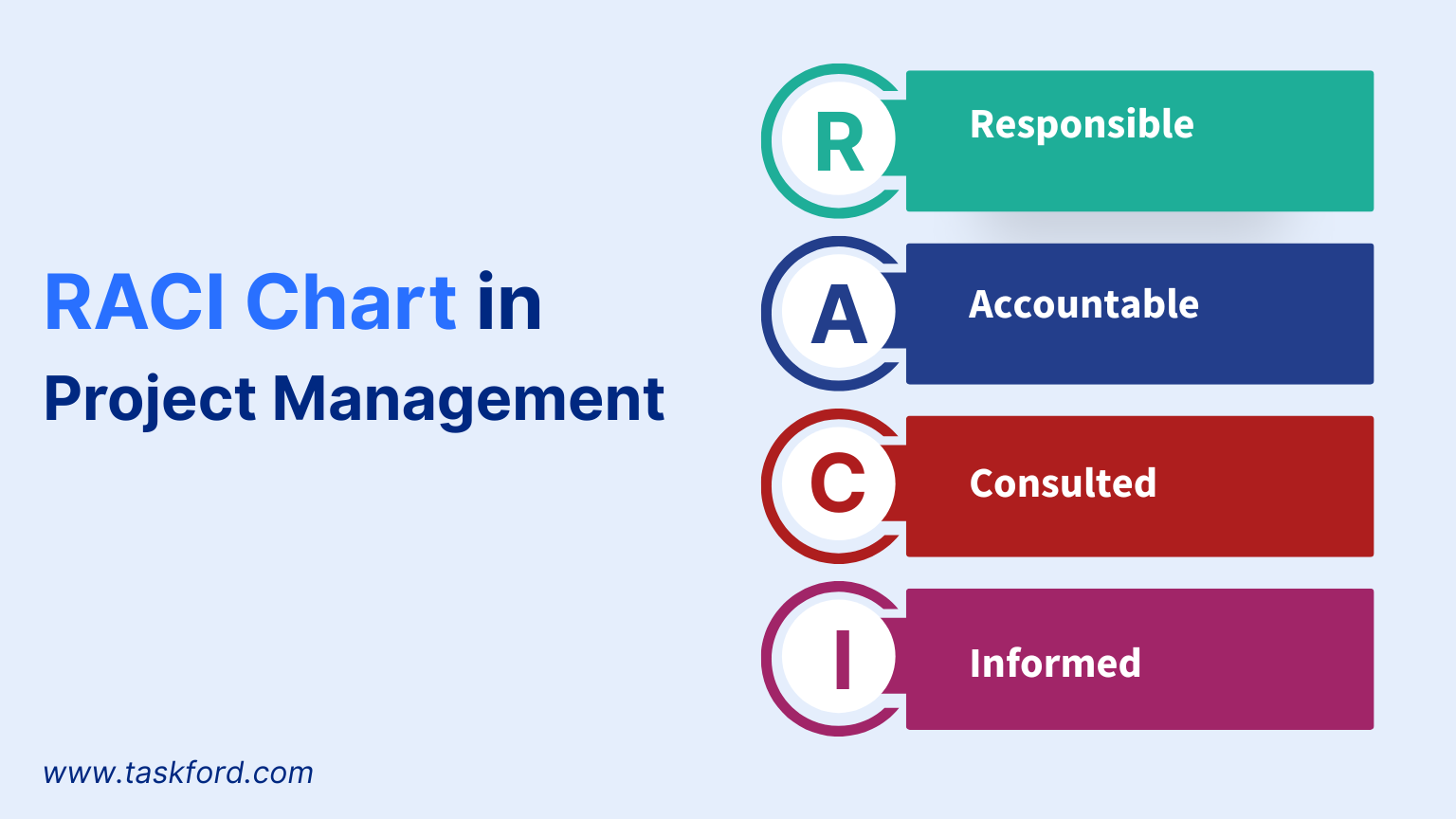
A structure is only as good as the clarity of the roles within it. The most common source of friction and delay in a program is ambiguity over decision rights. The RACI framework is a simple yet powerful tool to eliminate this ambiguity.
To see how this works in detail, let's watch a short, practical explanation.
RACI explained its simple yet powerful - The most watched RACI matrix video on YouTube
This video provides a clear definition of the RACI roles and a step-by-step guide to building a RACI matrix.
Please watch the full video. It's short and very informative. Pay close attention to: The critical distinction between Accountable and Responsible. This is the most important concept in RACI. The process of creating a RACI matrix by mapping tasks to roles. The rules for analyzing a completed RACI chart, such as "only one A per task" and what it means if there are no 'R's.
The core principle is that for any decision or task, there must be exactly one "Accountable" person—the single individual with the ultimate authority and responsibility for the outcome. While many people can be "Responsible" for doing the work, only one person can be accountable.
Let's look at a practical example from a software development context, which should be very familiar.

For example, for the activity "Define system architecture," the Project Manager (Brandon) is Informed, the Business Analyst (Maxwell) is Consulted, but the Developer (Warner) is Accountable. This clarity prevents disputes. If there's an issue with the system architecture, everyone knows Warner is the final decision-maker.
When designing your governance, you will create a RACI matrix for the key decisions of the transformation program, assigning A's, R's, C's, and I's to the roles in your governance structure (e.g., ESC, TMO Lead, Workstream Lead).
When Things Go Wrong: Designing Escalation Paths
No plan is perfect. Issues will arise that a workstream cannot solve on its own. An effective governance structure provides clear, pre-defined pathways for escalating these issues to the appropriate level for resolution. Without them, problems fester, and momentum dies.
The article "How do you manage transformation escalation procedures?" provides an excellent, detailed guide to this process.
How do you manage transformation escalation procedures? - optinus
This article breaks down the process of building a robust escalation framework, moving from reactive firefighting to proactive issue resolution.
Please read the following two sections: Start with When should you escalate issues. This section provides concrete, quantitative triggers for escalation. Next, read How do you build an effective escalation framework. This gives you a step-by-step guide to designing the tiers, roles, and protocols.
To build an effective escalation path, you need to define three things:
-
Triggers: What specific conditions trigger an escalation? As the article suggests, these should be objective and measurable. Examples include:
- A projected milestone delay of more than 10%.
- A budget variance exceeding a pre-set tolerance (e.g., 5%).
- A resource conflict that remains unresolved for more than 48 hours.
- A proposed scope change that impacts the business case.
-
Tiers: Where do issues go? The path typically follows your governance structure.
- Level 1: Issues are raised from the workstream to the TMO.
- Level 2: If the TMO cannot resolve the issue (e.g., it requires a major policy change or more funding), it is escalated to the Executive Steering Committee.
-
Protocols: How is an issue escalated? This involves defining standardized templates for escalation reports (capturing the problem, impact analysis, and recommended solutions), communication channels, and agreed-upon response timeframes for each level.
A specific, structured type of escalation is the change control process. This process, often managed by the TMO, provides a formal pathway for proposing, evaluating, and approving any changes to the project's scope, timeline, or budget, with high-impact changes escalating to the ESC for final approval.
Conclusion
In this lesson, we have designed the complete architecture for transformation governance. We moved from the conceptual "why" of governance to the practical "who," "what," and "how."
Key Takeaways:
- Effective governance provides the direction, decision-making, and oversight needed to guide a complex transformation.
- A robust governance structure is typically tiered, with an Executive Steering Committee for strategic oversight, a TMO for operational control, and Workstreams for execution.
- The RACI framework is an essential tool for creating clarity by assigning who is Responsible, Accountable, Consulted, and Informed for every key decision, with the rule of "only one A."
- Escalation paths are pre-defined routes for moving issues up the governance chain for resolution, based on clear triggers, tiers, and protocols.
This structure is the skeleton that gives form and strength to your transformation. It turns the adaptive strategies we discussed previously from a nice idea into a repeatable, scalable process.
In our next lesson, we will put the Transformation Management Office (TMO) under the microscope. We'll move beyond its place in the org chart to define its specific mandate, operating model, and the key functions it must perform to drive the transformation forward day by day.